Episcopal Church Women

About Episcopal Church Women

This author has not yet filled in any details.
So far Episcopal Church Women has created 452 blog entries.

The Square – Issue 3

Issue 3 – Winter 2023
Dennis Clark, PPP
NECW Parliamentarian

This series of articles, under the byline “The Square,” is dedicated to the proposition that just as that tool was used by the ancient masons to construct edifices that would stand for hundreds, if not thousands of years, the same principle may be applied to other affairs of civilization. For purposes of these articles, I would propose that rules adopted by pluralist societies as small as only a handful (associations, clubs, etc.) to those of entire nations are built upon principles of fairness to all, as well as equal rights and treatment for the whole. History teaches this must be the case if a democratic society is to stand the test of time.

Just as the Coliseum of ancient Rome, the pyramids of the Egyptian and Mayan civilizations, and the Parthenon and temples of that first democracy, ancient Greece, rose from cornerstones made square by the builders, the U.S. Constitution stands as the oldest written constitution in the world today. This is a tribute to our founders who, nearly two and a half centuries ago, created a framework of government that has served as a bulwark against the forces of gluttony and greed, bigotry and hate, demagogues, extremists and anarchists. Those behind these forces, both at home and abroad, have sought to divide us as a nation throughout our history. I think it never hurts to remind ourselves that the acronym for the United States is US, We the People.

Perhaps the overriding principle of a democracy is the precept of rule by a majority of the people—or for societies (associations), their members. This truth is rightly tempered by the certain protection of those who find themselves in the minority. Under the Constitution those rights are stated in its first ten amendments, known as the Bill of Rights.

Throughout our history the Constitution, standing on the leveled principles of fairness, justice and liberty for all, has stood firm through economic upheavals, foreign wars, demands for broadened civil rights for those in the minority, even civil war.

However, there exists a thin line between the right of the majority to govern, without treading on the rights of the minority. This line does not extend to the infinite degree. That is, the wants, the desires, perhaps even the needs of every member may not be fully addressed to their liking. To do so would lead to anarchy. It would lead to society’s inability to progress, to govern itself, to melt down into what many call a tyranny of the minority.

General Henry M. Robert was acutely aware of this conundrum when he wrote in one of his three books on parliamentary procedure:

“The great lesson for democracies to learn is for the majority to give to the minority a full, free opportunity to present their side of the case, and then for the minority, having failed to win a majority to their views, gracefully to submit and to recognize the action as that of the entire organization, and cheerfully to assist in carrying it out until they can secure its repeal.”

Parliamentary Law
Gen. Henry M. Robert

From the time of Thomas Jefferson, this nation’s first parliamentarian, having authored Jefferson’s Manual, the first manual of procedure for the United States Senate, until today, each and every author of parliamentary manuals has embedded in their rules methods to prevent a minority of the members (especially fewer than one-third) from being able to bring the business of an assembly to a grinding halt simply because they can’t have their way. Many non-governmental societies, such as the NECW, use the latest version of Robert’s Rules of Order Newly Revised (12th Edition) as their parliamentary authority. In a later issue of this column we will explore the methods therein designed to protect the rights of the majority from those who seek to hijack a society’s ability to work harmoniously to achieve its objectives.

Meanwhile, in the halls of government from both sides of the aisle comes a new generation of faux parliamentarians who believe their way is the only way. Whether it is their philosophy of government, economics or perhaps even religion, they insist on imposing their oft-narrow will on the remainder of the society. As I type, a tiny minority of the U.S. House of Representatives has managed to bring the proceedings of that house, and thus much of the machinery of our nation’s government, to a standstill. In the U.S. Senate the current rules allow for a minority, as few as one member, to thwart the will of the majority. This is NOT patriotism; it IS tyranny, the very ideal for which they profess to condemn. Theirs is a philosophy that is wrong and wrongheaded and one which is destined, if not thwarted, to bring our democratic form of government to its very knees as the chasm between the political parties grows ever wider.

With so much turmoil rampant in the world today, this is not the time to have anarchy run amok in our halls of government. In fact, it is never time to allow for such. That way of thinking is not what this nation is about—it is diametrically opposite.

There are those who say we should not bring up this type of debate in “polite company” or in this case on the pages of a magazine dedicated to the teachings of Scripture. This parliamentarian believes, however, this is exactly where the debate must be joined; if not here and in like media throughout our pluralistic society, then just where will it be? How can we stand idle while the very foundations of our democratic way of life are under assault?

Who then is to decide the issue of whether a tyranny of the minority is the wave of a certain, uncertain fate of our collective society? The answer is, ALL of us will so decide, not just a few. WE the People decide by letting our elected members of the Congress and state legislatures as well as our friends and neighbors know that we want our country back. We want it back from extremists on either side of the political spectrum who reflect the views of a tiny minority instead of the vast majority. If not us, the People, then who? If not now, when?

2024-04-09T15:19:04+00:00April 9th, 2024|

Arte para niños El Poder de una Mujer Episocpal

Art for Children GirlTu nunca deberías preguntarse si las mujeres episcopales pueden cambiar el mundo. Lo ves todos los días. Pat Sanger de Park City, Utah, fue una de ellas ya que vio una necesidad en la Reserva Ute en la pequeña ciudad de Whiterocks, Utah, y actuó de manera consecuente sobre ella.
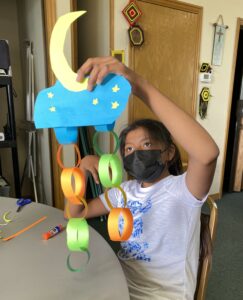
Pat era una enfermera registrada en psiquiatría avanzada avocada a los jóvenes que cuidaba. Imaginó un programa extracurricular basado en actividades creativas abiertas, por medio del cual los niños y adolescentes pudieran manifiestan lo que sienten. Ella catalogó a su programa bajo el nombre de Arts-Kids (Arte para niños) y lo perfeccionó en las escuelas de Park City, para niños de esa comunidad turística que padecían de TDAH, problemas de socialización o problemas de enseñanza. Si bien las escuelas primarias de Park City se aceleraron a incorporar el programa, Pat se preguntó cuál podría ser su impacto en una comunidad traumatizada por tiempo prolongado.

Cuando Pat se unió a un grupo de la Iglesia Episcopal de San lucas (St. Luke) en Park City para visitar la Iglesia Episcopal de Santa Elizabeth (St. Elizabeth) en Whiterocks, ocurrió un gran avance. Durante el almuerzo tuvo una larga tertulia con una joven madre que llevaba por nombre Emmy y aprendió sobre los retos de la comunidad: alcoholismo, familias rotas o disfuncionales, e incluso muertes prematuras de jóvenes.

Emmy se instruyó en lo que harían sus hijos en “Arte para Niños” o Arts-Kids en inglés: después de la merienda, participarían en un círculo de charla presentándose y determinando sus intenciones para la tarde. Los mentores adultos estarían dispuestos a escuchar y a aupar, produciendo de esa manera confianza. Posteriormente, un artista lideraría un proyecto de artes expresivas, que podrían traducirse en artes visuales, danza, teatro y yoga, o artes tradicionales Ute, que incluyen contar cuentos, tocar tambores, cantar y hacer cuentas. Se desarrollarían hábitos de vida saludables mediante juegos activos al aire libre y comidas nutritivas.

Se ha dicho que, en las comunidades indígenas, si tres abuelas le dan su bendición a un programa, el mismo surge y tiene éxito. El entusiasmo de Emmy por el “Arte para niños” (Arts-Kids) fue afirmado ese día por tres abuelas locales, incluyendo a la Rev. Sue Duffield, otrora el sacerdote en la Parroquia de Santa Elizabeth. Gentes de todas las edades colaboraron monetariamente para ayudar al programa. Compañías de petróleo locales, la Diócesis Episcopal de Utah y benefactores otorgaron dichos fondos.

Una de las inspiraciones de Pat Sanger fue la de crear un cartel con una breve lista de intenciones. Divertirse fue la primera opción y la más fácil, pero los niños también podían elegir Mantener el control, Ser creativo, Ayudar a alguien más, Tomar un riesgo, Aprender algo nuevo o Estar abierto y presente. A medida que los jóvenes se relajaron, fueron más allá del programa Have Fun para establecer intenciones más complejas, todas las cuales fueron revisadas en un círculo de conversación de clausura antes de la cena.

Pat Sanger falleció en 2022, sabiendo plenamente que su legado perduraría en el tiempo sin ella. Nosotros llevamos un concurso para escoger un nuevo nombre, y un joven alumno graduado del programa ideo el siguiente nombre “El Arte Empodera”. Acto seguido, procedió a crear el logo.

Durante los últimos 17 años, toda una generación de niños de Ute han expresado sus intenciones y desarrollado todo tipo de arte. Ellos han bailado y jugado y hecho amistades y compartido innumerables comidas. “El Arte Empodera” los ha ayudado a crecer y convertirse en los jóvenes adultos que son hoy en día, con un gran futuro por delante.

Talentosas Mujeres Episcopales han hecho arte que ha empoderado, y estamos profundamente agradecidos por ello.

by Lola Beatlebrox y Rev. Michael Carney


2024-04-09T15:13:58+00:00April 9th, 2024|

Art For Children and The Power of One Episcopal Woman

Art for Children GirlYou never need to wonder whether Episcopal women can change the world. You see it every day. Pat Sanger of Park City, Utah, was one of them because she saw a need on the Ute Reservation in the tiny town of Whiterocks, Utah, and acted on it.

Pat was an Advanced Psychiatric Registered Nurse devoted to the young people she served. She imagined an after-school program based on open-ended creative activities, through which children and teens could express whatever they were feeling. She named her program Arts-Kids and refined it in the Park City schools, for children in that resort community who had ADHD, socialization challenges or learning disabilities. While Park City elementary schools were quick to incorporate the program, Pat wondered what its impact might be in a chronically traumatized community.

When Pat joined a group from St. Luke’s Episcopal Church in Park City to visit St. Elizabeth’s Episcopal Church in Whiterocks, a breakthrough occurred. Over lunch she had a long conversation with a young mother named Emmy and learned about the community’s challenges—alcoholism, broken families and even untimely deaths of young people.

Emmy learned about what her children would do in Arts-Kids: After snack, they would participate in a Talking Circle by introducing themselves and setting their intentions for the afternoon. Adult mentors would be ready to listen and offer encouragement, thus building trust. Then an artist would lead an expressive arts project, which could be visual arts, movement and dance, drama and yoga, or traditional Ute arts, including storytelling, drumming and singing, and beading. Healthy living habits would be encouraged by active, outdoor games and shared nutritious meals.

It’s said that in Indigenous communities, if three grandmothers give their blessing to a program, it will thrive. Emmy’s enthusiasm for Arts-Kids was affirmed that day by three local grandmothers, including The Reverend Sue Duffield, then the priest at St. Elizabeth’s. People of all ages pitched in to help the program get started. Local oil companies, the Episcopal Diocese of Utah and grantors provided funding.

One of Pat Sanger’s inspirations was to create a poster with a short list of intentions. Have Fun was the first and easiest choice, but kids could also pick Stay in Control, Be Creative, Help Someone Else, Take a Risk, Learn Something New or Be Open and Present. As young people became more at ease, they branched out beyond Have Fun to set more complex intentions, all of which were reviewed at a closing Talking Circle before dinner.

Pat Sanger passed away in 2022, fully knowing that her legacy would continue without her. We held a contest to choose a new name, and a young graduate of the program came up with “Art Empowers.” She then created our logo.

Over the past 17 years, a whole generation of Ute children have set intentions and made all kinds of art. They’ve danced and played and made friends and shared countless meals. Art Empowers has helped them grow into the teens and young adults they are today, with bright futures ahead of them.

Talented Episcopal women made Art Empowers happen, and we are deeply grateful.

by: Lola Beatlebrox and Rev. Michael Carney

2024-04-15T14:14:30+00:00April 9th, 2024|

l Proyecto de Historia de las Mujeres Episcopales (EWHP)

EWHP LogoEl Proyecto de Historia de las Mujeres Episcopales (EWHP) se fundó en 1980 para preservar las historias de las mujeres de la Iglesia Episcopal. Sus fundadoras, Mary Donovan y la fallecida Joanna Gillespie, colaboraron con mujeres líderes de la iglesia para comenzar esta organización, y hasta el sol de hoy todavía cuenta historias de mujeres. La declaración de nuestra misión es: El Proyecto de Historia de las Mujeres Episcopales honra los ministerios de las mujeres en la Iglesia Episcopal escuchando, grabando y contando sus historias continuamente.
El Proyecto de Historia de las Mujeres Episcopales (Siglas en Ingles: EWHP) es principalmente conocido por tres caracteristicas: La manera en que cuenta historias, principalmente a través de series en la Cuaresma; sus subvenciones; y sus galardones. La serie durante la Cuaresma surgió de una idea de la presidenta de EWHP, Rev. Jo Ann Barker, y esta próxima Cuaresma marca la cuarta serie.

Cada semana de Cuaresma, alguien presenta a una mujer episcopal que cuenta su historia y su contribución única. Las historias destacadas han sido sobre diaconisas, maestros poderosos, activistas de derechos civiles, sacerdotisas, incluida una de los Once de Filadelfia, la primera mujer obispo, una escritora de textos de himnos, una misionera, mujeres en órdenes religiosas, entrevistas filmadas con mujeres que persuadieron a los diputados de la Convención General para aprobar la ordenación de mujeres, un juez y otras figuras interesantes y a veces coloridas. Estas historias han sido grabadas y están disponibles en el canal de YouTube del Proyecto de Historia de las Mujeres Episcopales.

EWHP también otorga subvenciones a académicos para que culminen investigaciones sobre las mujeres en la Iglesia Episcopal. A menudo se otorgan para cubrir los viáticos a los sitios de investigación y, en una subvención reciente, incluso para cubrir el costo de publicar la historia de una orden religiosa. EWHP financió algunos de los costos iniciales de la realización de la película Philadelphia Eleven, recientemente estrenada, que marca el aniversario número 50 de la ordenación de las primeras sacerdotisas en la Iglesia Episcopal.

Finalmente, ofrecemos premios a quienes hayan publicado un artículo o libro importante sobre la historia de una mujer en la Iglesia Episcopal, y reconocemos a las mujeres que han marcado una diferencia en sus parroquias o diócesis.

Tenemos una nueva beca bajo el nombre de Matilda Dunn para una mujer de color no tradicional que curse estudios de educación superior o en el seminario. También hemos colaborado con la Sociedad Histórica de la Iglesia Episcopal y la editora de Historia Anglicana y Episcopal, la Reverenda Dra. Sheryl Kujawa-Holbrook, para volver a publicar muchos artículos sobre las mujeres y sus contribuciones en la iglesia. Este número especial se lanza junto con la película Philadelphia Eleven en la celebración del aniversario número 50 de la ordenación de mujeres.

2024-04-09T15:02:05+00:00April 9th, 2024|

Episcopal Women’s History Project (EWHP)
EWHP LogoEpiscopal Women’s History Project (EWHP)

The Episcopal Women’s History Project (EWHP) was founded in 1980 to preserve the stories of women in the Episcopal Church. Its founders, Mary Donovan and the late Joanna Gillespie, collaborated with women church leaders to start this organization, and it is still telling women’s stories. Our mission statement is: The Episcopal Women’s History Project honors women’s ministries in the Episcopal Church by listening, recording, and continuing to tell their stories.

EWHP is principally known for three things: its storytelling, primarily through the Lenten series; its grants; and its awards. The Lenten series was born from an idea of EWHP President, The Rev. Jo Ann Barker, and this coming Lent will mark our fourth annual Lenten series.

Each week of Lent an Episcopal woman is featured by someone telling her story and unique contribution. Featured stories have been about deaconesses, powerful teachers, civil rights activists, women priests including one of the Philadelphia Eleven, the first woman bishop, a hymn text writer, a missionary, women in religious orders, filmed interviews with women who persuaded General Convention Deputies to approve the ordination of women, a judge and other interesting and sometimes colorful figures. These have been recorded and are available on the Episcopal Women’s History Project YouTube channel.

EWHP also gives grants to scholars to complete research about women in the Episcopal Church. These are often awarded to cover travel costs to research sites—and in one recent grant to cover the cost of publishing the history of a religious order. EWHP funded some of the early costs of making the recently released film Philadelphia Eleven, marking the 50th anniversary of the ordination of the first women priests in the Episcopal Church.

Finally, we offer awards to those who have published a major article or book on the history of a woman in the Episcopal Church, and we recognize women who have made a difference in their parishes or dioceses.

We have a new scholarship called the Matilda Dunn Scholarship for a non-traditional woman of color pursuing higher education or seminary. We also have collaborated with the Historical Society of the Episcopal Church and the editor of Anglican and Episcopal History, The Rev. Dr. Sheryl Kujawa-Holbrook, to republish many articles about women and their contributions in the church. This special issue is being released in conjunction with the Philadelphia Eleven film in celebration of the 50-year anniversary of the ordination of women.

2024-04-09T14:57:48+00:00April 9th, 2024|

El Gremio de Sepultureros en la Capilla de la Cruz en Madison, Mississippi

Grave Diggers AngleEn nuestro sitio web, Chapelofthecrossms.org, uno puede notar algo un poco diferente a la página web habitual de la iglesia. En la pestaña “Participar” hay una sección que se exhibe como Gremio de sepultureros.  Así mismo, esto es lo que a continuación aparece: nosotros, como grupo, cavamos las tumbas de nuestros miembros. Si hace clic en la pestaña indicada, dice: “Aquí en la Capilla cavamos nuestras tumbas a mano. Todos y cada uno de nosotros están invitados a unirse a esta experiencia verdaderamente espiritual. Hay algo en ser parte de la excavación que te hará meditar sobre tu propia vida. Usando picos y palas, amorosamente brindamos un lugar de descanso eterno para aquellos de nosotros que hemos ido a estar con Él. Ya sea que quieran excavar u observar, todos son bienvenidos. Algunos traen una espalda fuerte para laborar, otros traen comida y bebida (esto es el sur), algunos traen oraciones y otros traen un corazón agrietado. Hay algo muy especial en el compañerismo que proporciona y rodea ser parte del Gremio de Sepultureros. Únete a nosotros.”

De la manera que lo escuche, el gremio fue formado algún tiempo atrás alrededor del año 1990 después que un fallo de maquinaria mientras se cavaba una tumba en la sección histórica del cementerio. Acto seguido, fue sugerido que los miembros de la iglesia deberían cavar sus propias tumbas a mano, “de la manera que solía hacerse.” La idea fue presentada a la sacristía. Se decidió que el gremio seria formado y que todas las futuras tumbas serian cavadas a mano. En consecuencia, un ministerio especial comenzó. Al ojo humano, parecería un sin sentido considerando que hay maneras más fáciles de cavar tumbas. Pero, ciertamente, no se trata de hacerlo de la manera más eficiente.

Lo que comenzó como una forma de preservar y proteger las lápidas, el cementerio, y la historia de la iglesia, se ha transformado en un ministerio excepcional que fortalece las familias y las amistades. Este ministerio único nos vincula como familia de la iglesia y también nos conecta estrechamente con los familiares y amigos de aquellos que han muerto. El compañerismo que se da durante una excavación crea un lazo espiritual. Al unirse con palas y picos, los involucrados forman un vínculo profundo y brindan un servicio a la familia que es mucho más amoroso y humano que el que una retroexcavadora podría proporcionar. Como dice la canción: “Hermano, déjame ser tu siervo”.

El ministerio también es una manera, haciendo a un lado los servicios religiosos normales que provee la iglesia, de que los miembros de la Capilla se conozcan entre sí. La comunidad formada por medio de esta actividad es similar en muchos aspectos a nuestras otras funciones de la iglesia (¡excepto por la parte de excavar!). Hay comida y bebida. Hay momentos serios y momentos alegres. Hay momentos de alabanza, oración y reflexión. Hay lágrimas y carcajadas. Participan jóvenes y mayores, hombres y mujeres. Se cuentan historias y se rememoran recuerdos. Pero creo que lo más importante es que el servicio ofrece a la familia una sensación de cierre, paz y un lugar para empezar el proceso de sanación.

Mi esposa y yo comenzamos a asistir a la Capilla en 1995. En aquel entonces, estábamos empezando una familia que rápidamente creció hasta llegar a tener cuatro hijos. Durante los primeros años, ayudé con algunas excavaciones, pero no fui un miembro central del grupo. En el ano de 2011, el gremio había disminuido en miembros y, por consiguiente, se extendió un llamado de ayuda. ¿Quién puede decir exactamente por qué una llamada toca tu corazón? Pero por alguna razón, Ross Harjes y yo levantamos el auricular para contestar la llamada. Esperábamos que como equipo pudiéramos involucrar a más personas. Con la ayuda del correo electrónico, listas de contactos y mensajes de texto, así como una membresía cada vez mayor en la Capilla, pudimos incrementar la membresía del gremio. Cavar una tumba en arcilla tan dura como una roca con un grupo pequeño es un trabajo arduo. ¡Es maravilloso tener un equipo robusto de excavadores, incluidos algunos jóvenes!

Cuando un miembro de la Capilla muere y es enterrado en nuestro cementerio, nos ocupamos de llamar a voluntarios. Generalmente, la excavación ocurre el día (y la noche) antes del servicio de entierro. Primero, se debe marcar el sitio de la parcela y colocar paneles. Aprendimos que es más fácil devolver la tierra a la tumba más tarde si se coloca sobre madera contrachapada tras iniciar la excavación. Una vez que el sitio está listo, se comienza a excavar. Mientras excavamos, contamos historias de los difuntos. Compartimos historias de excavaciones pasadas, así como cualquier otra cosa que tengamos en mente. Cavamos hasta alcanzar la profundidad pertinente y tener la tumba cuadrada. Una vez que la tumba está completa, el sacerdote (a menudo uno de los voluntarios que ayudan con la excavación) la bendice. Nos reunimos en círculo en derredor de la tumba y nos descubrimos la cabeza cuando el sacerdote comienza. Al concluir la liturgia del Libro de Oración Común, descorchamos una botella de güisqui escocés o la bebida favorita de los difuntos. La botella se pasa alrededor del círculo y todos tienen la oportunidad de honrar y saludar al alma del difunto. Cuando se ha completado el círculo y de esa manera la oración final, vertemos lo que queda de la botella en la tumba en forma de cruz. Hay una gran alegría al completar una excavación y ayudar a una familia. Es una experiencia muy personal y espiritual para todos los presentes.

Y, casi me olvido, la botella se reserva y es dada a la familia.

Jon Woodward – Líder del Gremio de Sepultureros

2024-04-09T14:52:43+00:00April 9th, 2024|

Gravediggers Guild at the Chapel of the Cross in Madison MS

Grave Diggers AngleOn our website, Chapelofthecrossms.org, one might notice something a little different from the usual church website. Under the “Get involved” tab there is a section listed as Gravediggers Guild. Which is pretty much what it sounds like, we as a group dig the graves of our members. If you click on the tab it says, “Here at the Chapel we dig our graves by hand. Any and everyone is invited to join this truly spiritual experience. There is something about being a part of the digging that will have you reflecting on your own life. Using picks and shovels, we lovingly provide an eternal resting place for those of us that have gone to be with Him. Whether you want to dig or watch, all are welcome. Some bring a strong back, some bring food and drink (this is the south), some bring prayers and some bring a broken heart. There is something very special about the fellowship that is provided by and surrounded by being a part of the Gravediggers Guild. Join us.”

The way I heard it, the Guild was formed sometime around 1990 after a machinery mishap occurred while digging a grave in the historical section of the cemetery. Following this, it was suggested that members of the church should dig the graves by hand, “the way it used to be done.” The idea was presented to the vestry. It was decided that a Guild would be formed and that all future graves would be dug by hand. And thus, a very special ministry began. At face value it might seem nonsensical considering there is a much easier way to dig a grave. But, in truth, it’s not about efficiencies at all.

What began as a way to preserve and protect the headstones, the graveyard and the history of the church has grown into an exceptional ministry that strengthens families and friendships. This unique ministry brings us together as a church family and also closely connects us with the family and friends of those who have died. The fellowship that occurs during a dig creates a spiritual connection. In coming together with shovels and picks, those involved form a deep bond and provide a service to the family that is much more loving and human than a backhoe could ever do. As the song says, “Brother, let me be your servant.”

The ministry is also a way, outside of normal church services, that Chapel members get to know one another. The fellowship created through this activity is similar in many ways to our other church functions (except for the digging part!). There is food and drink. There are serious moments and joyful moments. There are moments of praise, prayer and reflection. There are tears and laughter. Young and old, men and women are involved. Stories are told and memories are shared. But most important, I believe, the service offers the family a sense of closure, peace and a place to begin to heal.

My wife and I started attending the Chapel in 1995. At that time, we were starting a family that quickly grew to four children. Over the early years, I helped with a few digs but was not a core member of the group. In 2011, the Guild had dwindled in members and therefore a call went out for help. Who can say exactly why a call touches your heart, but for some reason, Ross Harjes and I picked up the receiver to answer the call. We hoped as a team we could get more people involved. With the help of email, contact lists and text messages as well as an increasing membership at the Chapel, we were able to grow the guild membership. Digging a grave through rock-hard clay with a small group is tough work. It is wonderful to have a robust team of diggers, including some young backs!

When a Chapel member dies and will be buried in our cemetery, we get busy calling for volunteers. Typically, the dig occurs the day (and night) before the burial service. First, the plot site must be marked and boards set. We learned that it is easier to return dirt to the grave later if it is placed on plywood when digging. Once the site is ready, the digging begins. As we dig, we tell stories of the departed. We share stories of past digs as well as anything else on our minds. We dig until we reach the right depth and have the grave squared up. Once the grave is complete, the priest (often one of the volunteers helping with the dig) blesses the grave. We gather in a circle around the grave and uncover our heads as the priest begins. As the liturgy from the Book of Common Prayer concludes, we uncork a bottle of Scotch or the favorite beverage of the departed. The bottle is passed around the circle with everyone having a chance to honor and salute the departed soul. When the circle has been completed and with one final prayer, we pour what remains in the bottle into the grave in the shape of a cross. There is great joy that comes from completing a dig and helping a family. It is a very personal and spiritual experience for all involved.

And, I almost forgot, the bottle is saved and given to the family.

Jon Woodward – Gravediggers Guild Chair

2024-04-09T14:47:29+00:00April 9th, 2024|

Renewal Prayers – Communique Spring 2024

Lord,

Renew us with your love
Energize our souls
Nourish our spirit
Empower us to show our faith
Walk with you
Abide with us
Lead us and we will follow

Amen

By Cindy Mohr

God our Father, Lord of Creation

Refresh our spirits
Encourage inspiration
Nudge us to action
Enliven our hearts
Water buds of hope
Abolish seeds of doubt
Lift us with your light
To be new and greater visions of your love
As Episcopal Church Women
In this time and place.

by Rev. Jennifer Kenna

Dear Lord, again we come to you, weary and worn. Listening and watching conflict, rudeness, discrimination, war, and hatred must be as hard for you as it is for us. You gave us the way to lasting peace, but we have turned away. Please give us that spark, that hope, that flame that cannot be quenched. Please let us honor you with our actions and words. Touch hearts, dear Lord, touch minds, that we will remember the gift of your son, Jesus, and listen to his words and follow his example.

By Beth Agar

2024-04-09T14:43:04+00:00April 9th, 2024|

Ayudando a las Mujeres de Pakistan – Pedido de Subvencion

De Mujer a Mujer es un programa de Mujeres de la Iglesia Episcopal que ayuda otorgando capital inicial a proyectos caritativos o generadores de ingresos que mejoran vidas y fortalecen a las comunidades. La subvención de esta Trienal se otorga a la organización del Desarrollo y Servicio de Mujeres (Siglas en Ingles WDS), ubicada en la Diócesis de Raiwind-Iglesia de Pakistán.

La participación económica de las mujeres ayuda a impulsar el crecimiento a nivel nacional y la reducción de la pobreza. Las sociedades que hacen un mejor uso de las habilidades, talentos y el tiempo de todos sus miembros tendrán más probabilidades de prosperar. Las mujeres suelen tener más probabilidades que los hombres en lo atinente a utilizar los ingresos para promover el desarrollo dentro de sus familias. Aumentar los ingresos de las mujeres puede fortalecer su participación en la toma de decisiones en sus hogares. En ese sentido, se necesitan análisis e intervenciones cuidadosas para que la participación económica de las mujeres sea fortalecida y no apuntale a profundizar las desigualdades. Ahora, en Pakistán, los ministerios de mujeres, las ONG (Annie, ¿qué es ONG, es correcto?) y los institutos religiosos también están abocados al mismo efecto.

Los Servicios de Desarrollo de la Mujer (siglas en ingles WDS) de la Diócesis de Raiwind comenzaron su misión en 1989, bajo el amable control del Obispo diocesano y la Junta ejecutiva. El objetivo era construir una comunidad justa, libre de todo tipo de discriminación y explotación. El arduo trabajo y la lucha continua ayudaron mucho a establecer el Departamento de la Mujer. Los resultados de estos esfuerzos nos alentaron a dar un paso adelante hacia las comunidades oprimidas bajo un mensaje de justicia e igualdad junto con las actividades para cambios de desarrollo. Los Servicios de Desarrollo de la Mujer (siglas en ingles WDS), es el lugar donde las mujeres aprenden a vivir con dignidad dentro de una sociedad violenta. También se esfuerzan por reconocer su propia identidad como mujeres y su concepto de autoestima. La capacidad debe mejorarse a través de la conciencia jurídica y social. Sin duda alguna, esta es una lucha contra la violencia que corroe la vida de mujeres y niñas en dicha región.

Evaluación para la necesidad

Las mujeres paquistaníes están siendo tratadas culturalmente como ciudadanas de segunda clase, especialmente en lo que respecta al porcentaje de educación femenina, que es muy bajo en comparación con la tasa de alfabetización de los hombres, que es del 69 por ciento. La desigualdad de género es un problema global, pero en Pakistán está en la raíz de muchos problemas.

La desigualdad de oportunidades y en el trabajo en lo atinente a las barreras de Pakistán contra el empoderamiento económico de las mujeres generalmente incluyen la falta de políticas sensibles al género, desigualdad de ingresos, actitudes/acoso en los lugares de trabajo y estereotipos que definen el papel de las mujeres en la sociedad.

Importancia

Su importancia radica en la mejora de los conocimientos, las prácticas y las habilidades de las mujeres y aumento de sus probabilidades para convertirse en miembros exitosas, independientes, empoderadas y activas de una sociedad. También se aboca a facilitar a las mujeres los conocimientos y habilidades requeridas en lo esencial para el acceso a los factores de la oferta-demanda laboral, y a los factores sociales.

Es un hecho establecido que la educación técnica y la formación profesional pueden llevar a las personas a generar ingresos y contribuir al crecimiento económico y al desarrollo social de un país. La mano de obra capacitada se considera un factor importante para tal desarrollo.

En vista de todo esto, la educación técnica y vocacional es la preparación de individuos para adquirir habilidades prácticas, así como conocimientos científicos básicos; proporciona mano de obra calificada, para el mundo laboral, el cual está aumentando la dicha fuerza en el país,

Aunque esta contribución representa el 65 por ciento del total de la moneda pakistaní (PKR) que son 400 mil millones (equivalente en dólares americanos a 2,8 mil millones) en la economía informal de Pakistán, las mujeres ganan sólo 3.000-4.000 (USD 15-20) Rupees pakistaníes por mes y, como resultado, enfrentan vulnerabilidades multidimensionales, incluyendo bajos ingresos, malnutrición y problemas de salud ocupacional.

Beneficios

Hay muchos beneficios que se derivan del desarrollo de habilidades vocacionales en las niñas. No sólo aprenderán valiosas habilidades para afrontar la vida, sino que también desarrollarán confianza y autoestima. Las habilidades vocacionales también enseñan responsabilidad, disciplina, autosuficiencia y perseverancia. Apoyemos a las trabajadoras para la mejora de los salarios, las condiciones laborales, la seguridad y eliminar la discriminación.

Las habilidades empresariales eliminan las barreras que enfrentan las mujeres emprendedoras, incluida la brecha en la oferta laboral que impide que las mujeres accedan a métodos de financiamiento.

Esta capacitación está diseñada para niñas y mujeres analfabetas y abandonadas que estén interesadas en aprender habilidades y así aprender a ganar dinero de una manera digna.

Servicios otorgados

Las mujeres aprenderán habilidades básicas y tradicionales tales como la costura, crochet, tejido, pintura para tela, bisutería, y costura.

Esta oportunidad seria aprovechada para estudiar el mercado y establecer vínculos para la venta de sus productos a nivel local. El Servicio del Desarrollo de la Mujer (WDS) ya está vinculado con el mercado. En la etapa inicial, durante 3 meses, El Servicio del Desarrollo de la Mujer (WDS) les ayudará a vender sus productos y así poder sacarles provecho.

Durante el entrenamiento serán enseñadas en cómo aplicar a bancos para solicitar préstamos.

Objetivos

  • Capacitar a que las jóvenes puedan continuar su formación profesional de forma permanente.
  • Ofrecer sesiones de concientización para aumentar el conocimiento y la capacidad de toma de decisiones.
  • Promover el debate sobre cuestiones sociales, legales y religiosas locales.
  • Discutir temas personales y familiares cuando exista una relación de confianza con la comunidad.
  • Formar a mujeres analfabetas y no cualificadas para que ganen dinero y vivan honorablemente.

¿Cómo se lograrán los objetivos?

  • El 95% de las mujeres capacitadas conseguirán empleo o iniciarán su propia pequeña empresa.
  • 90% de los Grupos de Mujeres se enfocarán en la toma de conciencia para con sus derechos legales y sociales y de esa manera ser parte de la autoridad en la toma de dichas decisiones.
  • Se mejorará el 80% del desarrollo de capacidades entre las mujeres.
  • 75% Los grupos de mujeres estarán enfocadas al asesoramiento personal. Se les permitirá luchar por sus derechos.
  • El 80% de los formados vocacionalmente tendrán más confianza e independencia después de encontrar trabajo o iniciar su propio negocio.

¿Cómo se evaluará el programa/negocio?

  • Por la reducción de la tasa de pobreza.
  • Por los cambios observados en la actitud y el comportamiento.
  • El hecho de que las mujeres podrán apoyar a sus hijos en materia de educación y formación.
  • Por el registro del número de alumnos desmayados.
  • Por La participación de la comunidad en cuanto a la cuantía y frecuencia en todas estas actividades.
  • Por la formación de grupos de mujeres y niñas en zonas remotas y su continua participación en este programa.
  • Por el empoderamiento que se les dé a las mujeres para luchar contra los males de la sociedad.

El Servicio de Desarrollo de Mujeres (WDS) ya tomó una iniciativa en la prevención del VIH/SIDA entre trabajadoras sexuales (Siglas en ingles TSF) en la comunidad local en julio de 2001. El Servicio de Desarrollo de Mujeres (WDS) está trabajando principalmente con Trabajadoras sexuales de calle. Nos hemos puesto en contacto con un buen número de Trabajadoras Sexuales (TS) que se ven obligadas a incorporarse a esta profesión o tienen algún otro motivo para ejercer la prostitución. Nuestra experiencia con ellas ha demostrado que la mayoría se prostituyen debido a un alto nivel de pobreza. También establecimos un centro de rehabilitación para el bienestar comunitario en octubre de 2005. Allí tenemos una clínica para el día a día. También se brindan oportunidades de capacitación en trabajo vocacional y partería dentro de ella.

Ellos han iniciado el programa para salvar a quienes son víctimas de la industria del sexo y quieren rehabilitarse para que tanto ellas como sus familias puedan vivir una vida mejor. 

La Solicitud de la Subvención aprobada

Estimada Alice Garrick

Director Ejecutiva

El Servicio de Desarrolo de Mujeres (WDS)

Diocesis de Raiwind-Iglesia de Pakistan

Gracias por su reciente solicitud de una subvención para el proyecto de Mujer a Mujer vinculada a la Junta Nacional de la Iglesia Episcopal de Mujeres por el monto de $10,500.00 para ayudar a financiar en proyecto antes mencionado.

Nos sentimos honrados de financiar esta subvención porque ayudará a las mujeres de la comunidad que se encuentran en situaciones vulnerables.

Asegúrese de presentar un informe final escrito al NECW sobre cómo se utilizaron los fondos y cómo se logró y evaluó el propósito/objetivo.

Nuevamente, felicidades y esperamos tener noticias suyas.


Dios los bendiga,

Annie Kate Jacobs, Encargada de la Junta

Justicia Social de la NECW


2023-12-08T15:59:32+00:00December 8th, 2023|

Helping the Women of Pakistan

The Women to Women grant is a program of the Episcopal Church Women which helps by granting seed money to charitable or income-producing projects which improve lives and strengthen communities. This Triennial’s grant is awarded to Women Development & Services (WDS), Diocese of Raiwind-Church of Pakistan.

Women’s economic participation helps to drive growth at a national level and reduce poverty. Societies that make better use of the skills, talents and time of all members will more likely prosper. Women are often more likely than men to use income to support development outcomes within their families. Increasing women’s earnings can strengthen their hand in decision making in their households. Careful analysis and interventions are needed so women’s economic participation is empowering and does not degrade inequalities.

Women Development Services (WDS) of Raiwind Diocese started its mission in 1989, under the kind control of diocesan Bishop and executive board. The aim was to build a just community, which would be free from all sorts of discrimination and   exploitation. The hard work and continuous struggle helped a lot to establish the Women’s Department. The results of these efforts encouraged us to step forward towards targeted oppressed communities with the message of justice & equality along with the activities for development changes. WDS is the place where women learn how to live with dignity in the most violent society. They also make effort to recognize their own identity as women and the concept of self-esteem. Capacity must be enhanced through legal and social awareness. We are struggling to fight against violence which is destroying women and girls’ lives.

Need Assessment

Pakistani women are being culturally treated as second-class citizens, especially when it comes to female education percent, which is very low when compared to the literacy rate for men, which is 69 percent. Gender inequality is a global problem but in Pakistan, it is at the root of many issues.

Inequality in opportunity and in working Pakistan’s barriers against women’s economic empowerment generally include lack of gender-sensitive policies, income inequality, attitudes/harassment at workplaces, and stereotypes defining women’s role in society.

Importance

It improves women’s knowledge, practices and skills and enhances their probabilities of becoming successful, independent, empowered and active members of a society. To facilitate women with expertise and skills is not only essential to access to supply-side factors of work but also for the social factors.

It is an established fact that technical education and vocational training can help individuals to generate income and contribute towards economic growth and social development of a country. Trained Labor Force is considered an important factor for the development.

In the light of this, technical and vocational education is the preparation of individuals to acquire practical skills as well as basic scientific knowledge; it provides skilled manpower, for the world of work, that is increasing the work force in the country,

Even though this contribution accounts for 65 per cent of the PKR 400 billion (USD 2.8 billion) in the informal economy of Pakistan, women earn just PKR 3,000-4,000 (USD 15-20) per month and as a result face multidimensional vulnerabilities including low-income security, poor nutrition, and occupational health issues.

Benefits

There are many benefits of developing vocational skills in young girls. Not only will they learn valuable life skills, but they will also build confidence and self-esteem. Vocational skills also teach responsibility, discipline, self-reliance, and perseverance. Support women workers to improve wages, working conditions, safety, and remove discrimination.

Business skills remove barriers faced by women entrepreneurs, including the market supply-side gap preventing women from accessing finance.

This training is designed for illiterate and dropped out girls/women, who are interested to learn skill and earn money.

Provided Services

Women will learn traditional skills of stitching, crochet, knitting, Fabric Paint, jewelry making and sewing.

They will avail the opportunity to survey the market and make links for their product sale locally. WDS already linked with market. At initial stage for 3 months WDS will help them to sell their products.

During the training they will be trained how to apply to  banks for business loan.

Objectives

  • Enable young females to continue vocational training on permanent basis.
  • Offer awareness sessions to increase knowledge and decision making capacity.
  • Promote discussion on local social, legal and religious issues
  • Discuss personal and family issues when there is a trusting relationship with community.
  • Train illiterate and unskilled females to earn and live honorably

How will the objectives be achieved?

  • 95% Trained skilled women will be employed or will start their own small-scale business.
  • 90% Women groups will be focused to be aware about their legal and social rights and to be the part of decision-making authority.
  • 80% Capacity building will be enhanced amongst the women folk.
  • 75% Women groups will be focused for personal counselling. They will be enabled to fight for their rights.
  • 80% Vocational trained will be more confident and independent after finding work or starting their own business.

How will the program/business be evaluated?

  • Poverty rate will be reduced.
  • Change has been observed in attitude and behaviour.
  • Women will be able to support their children  for education and training.
  • It will be recorded the number of passed out trainees.
  • Community participation will be increased and regular in all such activities.
  • Women and girls groups will be formed in remote areas and will continue this program.
  • They will be strong to fight against evils of the society

WDS has already taken an initiative in prevention of HIV/AIDS among Female Sex Workers (FSW) in local community in July 2001. Primarily WDS is working with street prostitutes. We have contacted a good number of FSWs who are either compelled to join this profession or have some other reason for prostitution. Our experience with them has shown that the majority of the FSWs are in prostitution due to a high level of poverty. We also established a Rehabilitation center for community welfare in October 2005. There we are running a daily clinic.  They also provide skill-training opportunities in vocational work and midwifery.

They have initiated the program to save those who are victims of the sex industry and want to rehabilitate themselves so that they and their families may live a better life. 

Grant Request Approved

Dear Alice Garrick

Executive Director

Women Development Service

Diocese of Raiwind-Church of Pakistan

Thank you for your recent request for a National ECW Board’s Women to Women Grant for $10,500.00 to help fund your Women to Women Project.

We are honored to fund this Grant because it will be helping community women who are in vulnerable situations.

Please make sure that you file a written final report to the NECW on how the funds were used and how the purpose/objective was achieved and evaluated.

Again, congratulations and we look forward to hearing from you.

God bless,

Annie Kate Jacobs, Chairperson

NECW Social Justice

2023-12-08T15:57:35+00:00December 8th, 2023|
Go to Top