
Gravediggers Guild at the Chapel of the Cross in Madison MS
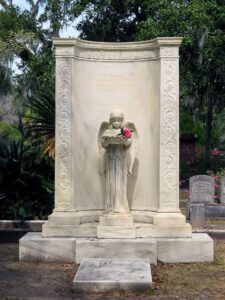 On our website, Chapelofthecrossms.org, one might notice something a little different from the usual church website. Under the “Get involved” tab there is a section listed as Gravediggers Guild. Which is pretty much what it sounds like, we as a group dig the graves of our members. If you click on the tab it says, “Here at the Chapel we dig our graves by hand. Any and everyone is invited to join this truly spiritual experience. There is something about being a part of the digging that will have you reflecting on your own life. Using picks and shovels, we lovingly provide an eternal resting place for those of us that have gone to be with Him. Whether you want to dig or watch, all are welcome. Some bring a strong back, some bring food and drink (this is the south), some bring prayers and some bring a broken heart. There is something very special about the fellowship that is provided by and surrounded by being a part of the Gravediggers Guild. Join us.”
The way I heard it, the Guild was formed sometime around 1990 after a machinery mishap occurred while digging a grave in the historical section of the cemetery. Following this, it was suggested that members of the church should dig the graves by hand, “the way it used to be done.” The idea was presented to the vestry. It was decided that a Guild would be formed and that all future graves would be dug by hand. And thus, a very special ministry began. At face value it might seem nonsensical considering there is a much easier way to dig a grave. But, in truth, it’s not about efficiencies at all.
What began as a way to preserve and protect the headstones, the graveyard and the history of the church has grown into an exceptional ministry that strengthens families and friendships. This unique ministry brings us together as a church family and also closely connects us with the family and friends of those who have died. The fellowship that occurs during a dig creates a spiritual connection. In coming together with shovels and picks, those involved form a deep bond and provide a service to the family that is much more loving and human than a backhoe could ever do. As the song says, “Brother, let me be your servant.”
The ministry is also a way, outside of normal church services, that Chapel members get to know one another. The fellowship created through this activity is similar in many ways to our other church functions (except for the digging part!). There is food and drink. There are serious moments and joyful moments. There are moments of praise, prayer and reflection. There are tears and laughter. Young and old, men and women are involved. Stories are told and memories are shared. But most important, I believe, the service offers the family a sense of closure, peace and a place to begin to heal.
My wife and I started attending the Chapel in 1995. At that time, we were starting a family that quickly grew to four children. Over the early years, I helped with a few digs but was not a core member of the group. In 2011, the Guild had dwindled in members and therefore a call went out for help. Who can say exactly why a call touches your heart, but for some reason, Ross Harjes and I picked up the receiver to answer the call. We hoped as a team we could get more people involved. With the help of email, contact lists and text messages as well as an increasing membership at the Chapel, we were able to grow the guild membership. Digging a grave through rock-hard clay with a small group is tough work. It is wonderful to have a robust team of diggers, including some young backs!
When a Chapel member dies and will be buried in our cemetery, we get busy calling for volunteers. Typically, the dig occurs the day (and night) before the burial service. First, the plot site must be marked and boards set. We learned that it is easier to return dirt to the grave later if it is placed on plywood when digging. Once the site is ready, the digging begins. As we dig, we tell stories of the departed. We share stories of past digs as well as anything else on our minds. We dig until we reach the right depth and have the grave squared up. Once the grave is complete, the priest (often one of the volunteers helping with the dig) blesses the grave. We gather in a circle around the grave and uncover our heads as the priest begins. As the liturgy from the Book of Common Prayer concludes, we uncork a bottle of Scotch or the favorite beverage of the departed. The bottle is passed around the circle with everyone having a chance to honor and salute the departed soul. When the circle has been completed and with one final prayer, we pour what remains in the bottle into the grave in the shape of a cross. There is great joy that comes from completing a dig and helping a family. It is a very personal and spiritual experience for all involved.
And, I almost forgot, the bottle is saved and given to the family.
Jon Woodward – Gravediggers Guild Chair
 Escrito por Elizabeth Agar
 La Junta Nacional recientemente aprobó una subvención para las vacas. Las Vacas Lecheras para niños en el Sur de Sudan. La Señora Kate Jacobs, encargada de la Justicia Social para la Junta, anunció la subvención vía correo electrónico:
  Cristianos Unidos por el Evangelismo, Educación y Desarrollo (Siglas en ingles CUEED) es una organización sin fines de lucro, y apolítica fundada en el año 2010 y actualmente operada en el condado de Rual en Awan Pajok, diócesis de Gogrial en el Sur de Sudan.
 Todos deberíamos estar familiarizados con estas palabras proferidas por Cristo al final del evangelio según San Mateo. Cristo ordena evangelizar a lo largo del mundo entero mientras nos recuerda de que no estamos solos. ¡Ciertamente, no estamos solos! Podemos encontrar el cuerpo de Cristo, alrededor nuestro y entre nosotros, durante nuestro diario vivir y en el ministerio.
 Escrito por Lisa Bortner
 En su primer año de universidad, Adrienne aprendió el término vocación, que puede considerarse como “el lugar donde Dios te llama… donde tu profunda alegría se encuentra con la profundo necesidad del mundo”, tomado de Frederick Beuchner. Esta intersección transformó su comprensión sobre quién era ella en relación con el colectivo y se convirtió en una herramienta para discernir adónde debían ir su energía y su tiempo, incluso más allá de lo que hacía para ganarse la vida. El amor de Adrienne por la Iglesia Episcopal también creció cuando aprendió cuán vital era el discernimiento vocacional en nuestra formación como ministerio de bautizados. “Al escuchar y prestar atención a mi propia vida, descubrí que mi “carril vocacional” se encontraba en algún lugar dentro del ámbito de la justicia racial, económica y climática y el cuidado de nuestras comunidades que implementan dicha justicia”, explica Adrienne. He aquí algunos puntos de cómo fue eso para ella: