Episcopal Church Women

About Episcopal Church Women

This author has not yet filled in any details.
So far Episcopal Church Women has created 453 blog entries.

Collection From ECW Board Meeting October 2015
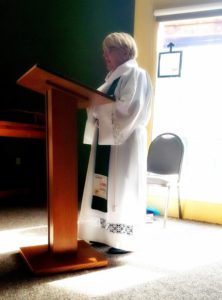
Jennifer KennaFour prayers and blessings from Jennifer Kenna

Celtic Invitation
A Blessing
Reading from Soul Weavings
Homily, Sunday October 25, 2015 – NECW Board Eucharist

Celtic Invitation

This is the table not of the church, but of the Lord.
It is made ready for those who love God and those who want to love God more.
So come, you who have much faith and you who have little; you who have been
here often and you who have not been here long; you who have tried to follow
and you who have failed.
Come, because it is the Lord who invites you.
It is his will that those who want him, can meet him here.

Blessings

The Wisdom of God, the Love of God and the Grace of God equip you to be Christ’s hands and heart in this world. And the blessing of God, Creator, Redeemer and Sustainer be upon you and remain with you, and all those you love and pray for, this day and always. Amen.

Reading Soul Weavings

Spirit of love, who moves in creation,
drawing the threads to color and design
life into life, you knit our true salvation:
Come work with us, and weave us into one.

Though we have frayed the fabric of your making,
tearing away all that you intend,
yet to be whole, humanity is aching:
Come work with us, and weave us into one.

Great loom of God, whose history is woven,
You are the frame that hold us to the truth,
Christ is the theme, the pattern you have given:
Come work with us and weave us into one.

Homily, Sunday October 25, 2015 – NECW Board Eucharist

In the name of God, Creator, Redeemer and Sanctifier. Amen.

It is probably the most famous scene in the Jack Palance-Billy Crystal mid-life crisis movie “City Slickers.”

Curly: Do you know what the secret of life is? (holds up one finger). THIS!

Mitch: Your FINGER??!!

Curly: One thing, just one thing. You stick to that and the rest don’t mean [nothin!] (my word – not a literal quote)

Mitch: But what IS the “one thing?”

Curly: That’s what you have to find out! ( Taken from “Gnaw on This” commentary. Rev. Mike Kinman, Christ Church Cathedral, St. Louis, MO website, Proper 25B, 2012)

Billy Crystal’s young Mitch is trying to find some meaning in his life, and it is the OLD cowboy, Curly(Palance) who tells him, he just has to answer one question for himself: What is YOUR one thing? What is the one thing that will make all the difference? What is the one thing that means the most? What is the one thing that will make you whole again? What is YOUR one thing?

AND I am going to take it one step further today. As I look around this room I see women who arrived as strangers to each other – well, SOME of us – and now are trying to figure out OUR ONE THING. We are trying to build relationships with each other. We are striving to weave ourselves together so we can best reach and lead and support the women and ALL of this wonderful Episcopal Church in new ways. We are looking for the ONE FOCUS, the ONE THEME that will sum up ALL of our experiences and ideas and hopes and longings – that will guide us in creating a new vision for the future of ECW.

Today we see the blind Bartimeus – sitting by the side of the road, shouting to Jesus, constantly told to STOP. This sightless outcast begging for Jesus’ time and mercy – calling him Son of David – recognizing him as MESSIAH! A BLIND man RECOGNIZES Jesus and names him.

Remember those three times when Jesus told his totally clueless followers that he was the Messiah and what that meant for them? NOBODY got it . . . . oh, except for the BLIND beggar now sitting on the side of the road. Jesus invites that outcast into the inner circle, into the midst of that community. And unlike last week’s gospel – you know, the one where James and John try to cash in on THEIR relationship with Jesus to get him to do whatever he could for THEM – unlike that story, we now see Jesus calling this man living on the edges of society – this Bartimeus – and asking HIM “what do you want ME to do for YOU? What is your one thing – what will make YOU whole – what will make a difference?”

For Bartimeus it is his sight – Jesus’ mercy meant that he could SEE again. And Jesus, without even TOUCHING Bartimeus, points out that his FAITH has made him well – his sight is restored. And then Bartimeus follows Jesus on the way – the only person healed in Mark’s gospel that does that, by the way. Jesus heads for Jerusalem – for his death and resurrection – with Bartimeus by his side.

This story takes place in Jericho – a place that rests in the hearts and minds of the Jewish people as a place where a miracle happened, a place where their faithfulness to God was rewarded – where against all odds that well-fortified city was taken by the Israelites. The writer reminds those first-century followers of Jesus that God can do seemingly impossible things when his people are faithful.

And here WE are in Bean Blossom, IN. And I don’t THINK we can count on any miracles happening – altho’ ya never know I guess. But we can be Bartimeus, as individuals and as a Board – crying out to Jesus, not backing down if and when we are told to stay by the side of the road. I think history has proven that WE don’t do that EASILY! Cooperation and attention to each other and kind listening may well be rewarded by the quiet whisper of the voice Jesus saying “what do you want me to do for you?” It may even be in the whisper of one of our sisters here. IMAGINE THAT!!!!

For Jesus and Bartimeus it’s about something deep down and vital to life – the ability to SEE. It made all the difference to Bartimeus, who kept on until he was right there with Jesus. It was about RELATIONSHIP. And I pray that it will be the same for us over the next three years – first and foremost our relationship with God and Jesus  – and finally with each other – bringing our gifts and talents, sharing our memories and our dreams, opening our hearts and minds and eyes to see all the possibilities that lie ahead. We just have to be PERSISTENT, grounding ourselves in prayer, going to God as Bartimeus went to Jesus, and let the faith that brought us to this place lead us and guide us!

SO what DO we hope that God will do for US and ALL of this great church?  What does the path to the future look like – what is OUR one thing? It’s time to leave the side of the road, be persistent and walk with Jesus.

Let us pray.

May the Lord bless [us] and keep [us]. May God’s face shine upon [us] and be gracious unto [us].

May God give [us] the grace never to sell ourselves short; grace to risk something big for something good; grace to remember that the world is too dangerous for anything but truth and too small for anything but love.

So may God take [our] minds and think through them; may God take [our] lips and speak through them; may God take [our] hearts and set them on fire. Amen (William Sloane Coffin, adapted)
2020-05-26T13:01:40+00:00April 7th, 2020|

Fear of Transformation

Evita KrislockFrom “The Essene Book of Days” by Danaan Parry
Sometimes I feel that my life is a series of trapeze swings. I’m either hanging onto a trapeze bar swinging along or for a few moments I’m hurtling across space in between bars.

Most of the time I’m hanging on for dear life to my trapeze bar of the moment.

It carries me along at a certain steady rate of swing and I have the feeling that I’m in control of my life. I know most of the right questions and even some of the right answers. But once in a while, as I’m merrily swinging (or not so merrily) swinging along, I look ahead of me into the distance and I see another bar swinging towards me. It’s empty and I know, in that place in me that knows, that this new trapeze bar has my name on it. It is my next step, my growth, and my aliveness coming to get me. In my heart-of-hearts I know that for me to grow, I must release my grip on the present, well-known bar to move to the new one.

Each time it happens, I hope and pray that I won’t have to grab the new trapeze bar. But in my knowing place I realize that I must totally release my grasp on my old bar and for some time I must hurtle across space before I can grab onto the new bar. Each time I am filled with terror. It doesn’t matter that in all my previous hurtles across the void of unknowing, I have always made it. Each time I am afraid I will miss – that I will be crushed on unseen rocks in the bottomless chasm between the bars. But I do it anyway.

Perhaps this is the essence of what the mystics call the faith experience. No guarantees, no net, no insurance policy, but you do it anyway because somehow, to keep hanging onto that old bar is no longer an alternative. And so for an eternity that can last a microsecond or a thousand lifetimes, I soar across the dark void of “the past is done, the future is not yet here.” It’s called transition. I have come to believe that it is the only place that real change occurs.

I have noticed that in our culture this transition zone is looked upon as a nothing – a no-place between places. Surely the old trapeze bar was real and that new one coming towards me, I hope that’s real, too. But the void in between?

That’s just a scary, confusing, disorienting “nowhere” that must be gotten through as fast and as unconsciously as possible. What a waste! I have a sneaking suspicion that the transition zones in our lives are incredibly rich places. They should be honored-even savored. Even with all the pain and fear and feeling of being out-of-control that can accompany transitions, they are still the most alive, most growth filled, most passionate, most expansive moments in our lives.

And so, transformation of fear may have nothing to do with making fear go away, but rather with giving ourselves permission to “hang out” in the transition between trapeze bars. Transforming our need to grab that new bar – any bar, is allowing ourselves to dwell in the only place where change really happens. It can be terrifying. It can also be enlightening, in the true sense of the word. Hurtling through the void-we just may learn how to fly.

Offered at two National ECW Board gatherings during conversations about change. by Evita Krislock

2020-05-26T13:02:37+00:00April 7th, 2020|

Navajo Blessingway Prayer

Navajo Bessingway“WALK IN BEAUTY”

In beauty may I walk
All day long may I walk
Through the returning seasons may I walk
On the trail marked with pollen may I walk
With grasshoppers about my feet may I walk
With dew about my feet may I walk
With beauty may I walk
With beauty before me, may I walk
With beauty behind me, may I walk
With beauty above me, may I walk
With beauty below me, may I walk
With beauty all around me, may I walk
In old age wandering on a trail of beauty, lively may I walk
In old age wandering on a trail of beauty, living again, my I walk
It is finished in beauty
It is finished in beauty.

From the women of the Episcopal Church in Navajoland

2020-05-26T13:03:09+00:00April 7th, 2020|

Perseverance and Renewal

As we pause to feed our bodies in the middle of the day, we pause also to feed our souls by vowing again to live faithfully.
Living God,
long ago, faithful women
proclaimed the good news
of Jesus’ resurrection,
and the world was changed forever.
Teach us to keep faith with them,
that our witness may be as bold,
our love as deep,
and our faith as true. Amen.

From the midday gathering of Episcopal Church Women of the lower Cape Fear Deanery (Diocese of East Carolina), at St Paul’s Episcopal Church in Wilmington, NC May 23, 2017

2020-05-26T13:03:48+00:00April 7th, 2020|

El Amor de Dios

Aleluya, le daré gracias al Señor con todo mi corazón…grandes son los prodigios del Señor. Su trabajo esta lleno de majestuosidad y esplendor, y su justicia dura por siempre. El Señor obra sus prodigios para que sean recordados para siempre; El Señor esta lleno de gracia y compasión. Salmo 111

“Nuestras pequeñas rosas” es un lugar como ninguno en San Pedro Sula, Honduras. “Nuestras pequeñas rosas” es un lugar abusado, abandonado, olvidado y donde pululan las niñas huérfanas, que fue fundado por Diana Frade en el ano de 1988. No ha sido coincidencia que Diana haya estado visitando un lugar similar para niños en Tegucigalpa, Honduras por el ano 1986 y se haya preguntado: ¿Quién está haciendo lo más mínimo por las niñas pequeñas de Honduras? Nadie.

Por medio de los esfuerzos de muchas personas, especialmente de Diana y el Obispo Leo Frade, el amor de Dios ha quebrado el ciclo de pobreza y abuso para muchas niñas hondureñas. Estas niñas tienen ahora un ambiente seguro, un chance para aprender, el sueño de un futuro y una fundación en la fe.

La mayoría de las niñas reciben una educación secundaria en el lugar llamado “Nuestras pequeñas rosas” y luego de ello, muchas de las jovencitas asisten a la Universidad o Instituciones técnicas, lo cual les permite ejercer profesiones como dentista, abogados, enfermeras registradas, chef, y carreras militares.

Las niñas de los grupos hogareños de “Nuestras pequeñas rosas” tienen una familia como ninguna otra. Tienen hermanas…Muchas hermanas…alrededor de setenta y ochenta todos los anos. Ellas tienen un lugar donde crecer y ser amadas. Ellas están aprendiendo maneras y vías de escapar de las garras de la pobreza a través de la educación. Ellas has aprendido del amor de Dios y saben que jamás serán abandonadas otra vez.

Con cada visita, muchos de nosotros sentimos una especie de remordimiento divino para retornar y hacer más por ellas. Escuchamos un sonido tan cautivante que queremos descifrar su origen. Y luego descubrimos lo que buscamos. El sonido es el amor de Dios. El amor de nuestro Señor cobija a cada una de estas niñas y nos cobija a nosotros también. La buena nueva es que hemos sostenidos por él, cobijados por él, todo este tiempo.

No existe diferencia alguna el hecho de que hablemos español, o no. Lo que si importa es donde venimos y nuestro bagaje, porque todos estamos unidos en la presencia de Dios.

Estamos Unidos a través de nuestra fe en un Dios en el que se puede confiar y que es verdadero. Este es el Dios único que esta con nosotros por los parajes de nuestras vidas. La verdad es que nuestras vidas son un paraje. Esta en movimiento. Y aunque debatamos que queramos cambiarla o no, la realidad es que cambia constantemente. La vida de cada una de estas niñas en el lugar que lleva por nombre “Nuestras Pequeñas rosas” ha cambiado porque el amor que compartimos con ellas es el amor de Dios.

Sin duda alguna, Dios no los ha abandonado. Dios no las ha olvidado. En nuestras horas mas oscuras, Dios no nos abandona. En los momentos de mayor confusión, Dios no nos abandonara. Dios desea que de un mal aparente surja un bien. Dios puede ser confiado para obre su obra salvífica de cada experiencia humana. El amor Divino, que se auto sacrifica, está siempre presente. Jamás termina.

En el 2015, el Rev. Dee Ann deMontmollin, quien es también enfermera registrada, y que también ha realizado innumerables visitas a “Nuestras pequeñas rosas”, fue llevado a dejar a un lado su labor a tiempo completo de ministerio parroquial, confiando en que Dios continuaría guiándola a su próxima tarea ministerial. Parte de esa próxima tarea ministerial ha sido una expansión de su ministerio médico. Acto seguido a uno de nuestros viajes a “nuestras pequeñas rosas” La Reverenda Dee y yo fuimos invitadas a retornar y conducir exámenes físicos a las niñas de “nuestras pequeñas rosas’ y a darles charlas sobre la salud y el crecimiento y desarrollo de las niñas y jóvenes adolescentes.

La visita que nos llevo al desarrollo de un equipo para la misión medica que se avocaría solo a servir a los niños en la comunidad de San Pedro Sula. La doctora Martha Vázquez, una pediatra, se unió al equipo y presta servicios cada ano junto a otros profesionales de la medicina. Entre los niños que servimos se encuentran los niños de la “personas de Levee”, lo cual se traduce en los barrios mas pobres de la comunidad San pedro Sula.

En nuestra primera misión, durante el otoño del año 2016, no sabíamos que esperar. Nos sentimos bien ansiosas y nos preguntábamos si alguien iba siquiera a apersonarse en nuestras clínicas donde prestábamos servicios médicos gratis. Y de repente, en nuestra primera mañana, nos sorprendimos de la fila inmensa de madres esperando con sus niños para recibir atención médica. Algunas de ellas habían caminado millas y otras esperaron de sol a sol por largas horas hasta que pudimos examinar y tratarlas medicamente a todas. Al día siguiente, experimentamos el mismo volumen de personas y las filas continuaron. Curamos a los niños de parásitos estomacales, infecciones, enfermedades respiratorias, y otro tipo de dolencias y enfermedades. También distribuimos muchas vitaminas para niños y otros suministros médicos. Nos dimos cuenta de que descomposición dental es la causa principal de muchas infecciones infantiles. Durante la última misión, nos suministraron con un tratamiento de fluoride para usarlo con los niños. Por primera vez, los niños fueron instruidos en como cepillarse los dientes.

Si, ellos son los “más pobres de los pobres.” Pero cada una de las madres ama a su hijo de la misma manera que nosotros amamos a los nuestros y siempre quiere lo mejor para ellos. Con la ayuda de Dios, nuestra misión medica continuará y seguirá creciendo. Recientemente, en septiembre del año 2019, fuimos bendecidos con voluntarios médicos adicionales y con otro doctor más, quien se comprometió a poner sus dones médicos.

Afortunadamente, a través de nuestras plegarias y diligencias, estas madres y sus hijos sabrán lo que las niñas en “Nuestras Pequeñas Rosas” saben: Que Dios no los ha abandonado. Y a pesar de que sus vidas son oscuras, a luz divina las sostendrá con amor y esperanza. Nuestro grupo de doctores y enfermeras añoran con iluminarlas con el amor de divino a través de nuestra labor.

Al pasar de los anos, nuestras perspectivas se han expandido. Ahora, no solo le agradecemos a Dios por cada uno de los niños de “Nuestras pequeñas rosas” sino que le agradecemos a Dios por cada uno de los niños que vienen a nuestras clínicas. Le agradecemos a Dios por este amor.

¡Aleluya! Le daré gracias a Dios con todo mi corazón. Gracias, Señor.

Escrito por Sherre Henley, Enfermera registrada y Esposa de un clérigo

2020-04-02T16:40:06+00:00April 2nd, 2020|

Food, Glorious Food

GrapesThe climate crisis is a hot topic; talking about food can become visceral. Think about combining the two and it becomes a frightening prospect. Having grown up under the auspice of not bringing up religion in polite conversation adds its own challenges. Even so, the importance of bringing up all possibilities, inviting the conversation, cannot be over emphasized.

Perhaps you’ve never considered the topic of food as visceral. If you have any food sensitivities or preferences that don’t align with social norms, you’ve experienced such reactions. Consider all the messages sent and received regarding food, family connections, rewards and celebrations — at home, with friends and at church. Many of these subliminal messages are destructive to our health, yet we become oblivious to them and our society demonizes any who question the traditions, norms or consumptions of these special treats. Food is used as a way to show love. If this offering of love is turned away because the food is unhealthy for us, have we rejected that love? How do we unlock the tightly held beliefs and constraints that keep us in such dark places? It starts with intention, faith and conviction.

Each and every person is different with different needs. Years ago, we struggled to find solutions for one of our children’s health issues. We were willing to unlock our tightly held beliefs, for health. Being open to possibilities, truly becoming lifelong learners, became an ongoing process. A vital part of this process was the ability to listen — to listen to our bodies, our faith and our environment. Kay Lindhal offered a workshop at our last Triennial in Austin, “The Sacred Art of Listening.” In this practice we were called to pause: pause and listen. It takes time for our bodies to get the message through to us, how habits, or food choices, impact our heath, just as there is cumulative response to what is happening to Creation, and to our planet. Pause and listen. Practice this sacred art, going beyond the spoken word.

A choice many are making to address the climate crisis, their health and faith is moving toward a plant-based diet. This makes a difference in our carbon footprint, as individuals and collectively. Pause and listen. There are vegan and gluten-free products that are not any healthier or better for the planet. Consider choices. Be open, take personal responsibility and research. That goes a long way toward affecting change in habits and hope for the future. Start slowly, incorporate daily meatless meals, consume less processed food, and purchase meat or animal products from humanely treated sources. With all the options offered today, consider what is regenerative, what is more than sustainable. It is about new life. This is a social and spirit-filled response to our faith, food and all of Creation.

We are in a climate crisis. Different approaches are being lifted up as solutions, all starting with the individual. Now is the time to work together in all aspects of our lives, to share our concerns, to listen, learn and grow together, to do better. Choices about what we consume, the foods we eat and the products used in daily life top the list. Just as we share out corporate prayers on Sunday mornings, collectively we are all held responsible and accountable. We are many members, yet one body, all different yet one body in Christ. What we choose to consume needs to be what works for our health and the health of the planet. Our personal choices affect the whole, today and into the future.

Written by: Evita Krislock

2020-04-02T16:40:16+00:00April 2nd, 2020|

Earth Day April 22 – 2020

Earth Day Hands World MapEarth Day is an annual event celebrated around the world on April 22 to demonstrate support for environmental protection. First celebrated in 1970, it now includes events coordinated globally by the Earth Day Network in more than 193 countries.

OUR MISSION: Our mission? To build the world’s largest environmental movement to drive transformative change for people and planet.

Earth Day Network’s mission is to diversify, educate and activate the environmental movement worldwide. Growing out of the first Earth Day in 1970, Earth Day Network is the world’s largest recruiter to the environmental movement, working with more than 75,000 partners in over 190 countries to drive positive action for our planet.

Study group readings

Urgent Message from Mother: Gather the women, save the world, by Jean Shinoda Bolen
This book was written during the BP Deepwater Horizon Oil Spill – thought to be the biggest disaster in the history of the oil industry. The message resonates even more today – because the warnings that this disaster gave us were not heeded…

A Prayerbook for Peace, by John Philip Newell

Morning and evening prayers for the peace of the whole world. Following the pattern of his popular Celtic Benediction, Philip Newell provides lyrical and theologically profound prayers for morning and evening each day of the week. These devotions celebrate the spiritual legacy shared by Jews, Christians, and Muslims and articulate the longings for peace that are closer to the heart of these spiritual traditions than their divisions. Ideal for personal devotions, this book also provides a versatile liturgical resource appropriate for Christian or interfaith use. Each devotion features:

• A Beatitude
• A Prayer of Awareness
• Meditative Readings from the Psalms, the Gospel of Matthew, and the Qu’ran
• A Prayer for the Life of the World
• A Prayer of Blessing
• Rich full-color illustrations drawn from Jewish, Christian, and Islamic art

A Celtic Mass for Peace, Songs for the Earth

This recording of A Celtic Mass for Peace, Songs for the Earth with musicians and singers from both Scotland and the United States, of many diverse heritages, was made in the Vermont landscape where both words and music were written, and is a reflection and expression of the theology/spirituality of liberation and inclusiveness far beyond the confines of any single tradition. It includes a poignant prayer for the Earth:

Heaven and earth are full of your glory, O God.Your presence fills all things.
Yet what have we done?
Creation marred by neglect and abuse of life-forms torn forever out of the fabric of the universe nature ravaged, wealth wasted, earth’s community divided, nations at war, communities fractured, families broken, the human soul sick and far from home.
Great creating Spirit, hear our plea for mercy, hear our prayers for the earth.

2020-04-02T16:40:25+00:00April 2nd, 2020|

The Delegates’ Corner: The Stories We Bring

Michele Roberts

March 19, 2019 by Michele Roberts

I was in New York City at the United Nations, representing Presiding Bishop Michael Curry of The Episcopal Church. As a third generation Episcopalian, this gives me great joy. My grandmother would be so proud, and I feel her spirit every day. Her name was Alma B. Roberts. She considered it a blessing that she found a church in Wilmington, Delaware, that provided a safe space for her children and family to worship during the height of racial segregation. She was the epitome of love. My grandmother was a virtuous woman. She was grounded in her spirituality, and along with my parents, taught me the meaning of faith and service.

I have spent a great deal of time visiting groups that address gender violence. As I listened, I thought about the women and girls I serve living on the fence line to our nation’s most egregious polluting facilities and industrial operations. These women are bombarded by chemical assaults daily. Many of these polluting facilities assault the reproductive systems of women and men. According to our Native indigenous sisters from the International Indian Treaty Council, this is chemical violence. There are many hazards to the health from exposure to toxic chemicals including:

• Early puberty, abnormal breast development
• Sterility, miscarriages, birth defects, and low birth weight babies
• Reproductive systems cancer and breast cancers
• Uterine fibroids
• Toxics in breast milk, tissues, and cord blood
• Premature ovarian failure
• Damage to fetal reproductive organs, overall development
• Premature menopause

While engaged in this experience, I couldn’t help but think about my own personal environment racism story and stories of others. Being in this space of committed, faith-filled, vibrant women, I thought about my aunt, Loreda White, grandmother, Paulyne Dickerson, and their sisters.

Opening day of the United Nations 63rd Commission on the Status of Women would have been my aunt Loreda’s 99th birthday. However, due to the strains of racism and patriarchy, she died from a very painful cancer after also living with no pension. Aunt Loreda was a domestic worker and later worked in a segregated bomb-making facility where the majority of the workers were women. All of her sisters, including my grandmother, were also domestic workers with no pensions.

My grandmother, Paulyne, died in a state-operated, separate, and unequal tuberculosis facility. My aunt, Loreda, and grandmother lived along the Route 9 industrial corridor in Wilmington, Delaware, which got started as an answer to separate and unequal housing. Thanks be to God, my aunt Loreda, was able to raise my mother along with her husband, Charles White, after the death, of my grandmother. She eventually died from urethral cancer as well at age 86.

“I live in the center of a toxic donut,” said Mrs. Hazel Johnson, a keynote speaker at a legal conference in Washington, D.C., where I was in attendance about 30 years ago. Mrs. Johnson was a wife, mother, and grandmother who struggled to raise her family in Altgeld Gardens, a public housing project on the south side of Chicago.

Her story went on to describe the years of caregiving she provided to her family and herself. Hazel’s husband suffered and eventually died from cancer; her children had asthma, a daughter miscarried, and she herself had diabetes and high blood pressure. Mrs. Johnson was not alone. Her neighbors also lived through the same experiences. In essence, their lives were compromised daily due to what Mrs. Johnson considered to be the hundreds of hazardous waste and industrial facilities that surrounded her community.

The proliferation of these facilities was the result of policies that allowed their concentration to be low-income neighborhoods and communities of color. Mrs. Johnson learned about the impact toxins had on the human body, water, soil, and air and how communities like hers did not have the right “complexion for protection.”

She became a fighter for environmental justice. She became an organizer and activist grandmother who, on more than one occasion, would deny authorities by putting her body in front of a truck to stop it from unloading hazardous materials.

As I sat reflecting on these various stories, I gave thanks for the women who came before me. Women who were brave and courageous enough to create their own resistance. We must have a “do no harm” approach to creating and regulating chemicals. Too many of our sisters of color and the poor have been traumatized by chemical violence. This is indeed a reflection of man’s inhumanity to humanity.

As we call for an end to gender-based violence, I hope that the UNCSW will also see the need to include the narrative of chemical violence as well for the sake of Mother Earth and her children. Now is the time.

About the Author:

Michele Roberts (Diocese of Delaware, Province III) is a scientist, advocate and 3rd generation Episcopalian. She is one of several founding members of Delaware Concerned Residents for Environmental Justice (DCR4EJ), an environmental justice ministry at the Episcopal Church of Saints Andrew and Matthew (Wilmington, DE).

She is national Co-Coordinator of a National Coalition known as the Environmental Justice and health Alliance for Chemical Policy Reform (EJHA) and Director of Outreach for Coming Clean, which DCR4EJ is an affiliate of. She has participated in several UN COP meetings on Environmental Justice issues and Climate Change. Roberts has co-authored reports on environmental justice issues. She is also the environmental justice producer for a weekly radio program the On the Ground Show: Voices of Resistance From the nation’s Capital.

2020-04-02T16:40:36+00:00April 2nd, 2020|

The Love of God

Hallelujah! I will give thanks to the Lord with my whole heart…great are the deeds of the Lord. His work is full of majesty and splendor, and his righteousness endures forever. He makes his marvelous works to be remembered; the Lord is gracious and full of compassion. Psalm 111

Our Little Roses is a place like none other in San Pedro Sula, Honduras. Our Little Roses is a place for abused, abandoned, neglected and orphaned girls that was founded by Diana Frade in 1988. It was no coincidence that Diana was visiting a similar home for boys in Tegucigalpa, Honduras in 1986 and began asking: “Who is doing this for the little girls of Honduras?” No one.

Through the efforts of many people, especially Diana and Bishop Leo Frade, the love of God has broken the cycle of poverty and abuse for many girls in Honduras. These girls now have a safe environment, a chance to learn, the dream of a future and a foundation in faith.

Most of the girls receive high school educations while at Our Little Roses and many even attend university and technical schools, leading to professions such as dentist, attorney, registered nurse, chef, and careers in the military.

The girls of Our Little Roses group home have a family like no other. They have sisters . . . lots of sisters . . . between sixty and eighty in any given year. They have a place to grow up and know that they are loved. They are learning ways to escape the binds of poverty through education. They have learned about God’s love and know that they will never be abandoned again.

With each visit, many of us feel a tug from God to return and do more. We hear a sound that is so captivating that we want to know its source. And then we discover what we seek. The sound is the love of God. The love of our Lord embraces each of these little girls and it embraces us as well. The good news is that we’ve been held by it, embraced by it, all along.

It makes no difference if we know Spanish or not, it makes no difference what our background or where we are from, because we all are united in God’s presence.

We are united together through our faith in a God who is trustworthy and true. This God is with us through the passages of life. The truth is that all of life is a passage. It is movement. And even though we sometimes debate whether we want change or not, the reality is that change is constant. The life of each of the girls at OLR is changed because the love we share with them is God’s love.

Indeed, God has not abandoned them. God has not forsaken them. In our darkest times, God will not abandon us. In the most confused times, God will not forsake us. God wills that good come from bad. God can be trusted to be at work salvaging good from every human experience. Divine love, self-sacrificing love is at work. It never ends.

In 2015, The Rev. Dee Ann deMontmollin, also an R.N., who had made numerous visits to OLR, was led to leave full-time parish ministry, trusting that God would continue to guide her in her next ministry. Part of that next ministry has been an expansion of her medical mission work. Following one of our trips to Our Little Roses, Rev. Dee and I were invited to return and conduct physical assessments of the girls at Our Little Roses and to give them presentations on health and the growth and development of girls and young women.

That visit led to the development of a medical mission team just for serving the children in the San Pedro Sula community itself. Dr. Martha Vasquez, a pediatrician, joined the team and gives of her service each year along with several other medical professionals. Among the children we serve are some of the children of the “people of the Levee,” which means the people of the slums of San Pedro Sula.

On our first mission, in the fall of 2016, we did not know what to expect. We felt a bit anxious and wondered if anyone would even show up at our free medical clinic for children. And then, on our very first morning, we were amazed at the long line of mothers waiting with their children needing medical help. Some of them had walked miles and others waited in the sun for hours until we could examine and treat all of them. The next day was a repeat of the first day and the lines continued. We treated the children for parasites, infections, respiratory illnesses and other sicknesses. And distributed many bottles of children’s vitamins and other medical supplies. We have become aware that tooth decay is leading to many infections of the children. During the last mission trip, we were given fluoride treatments to use with the children. For the first time ever, the children were shown how to brush their teeth.

Yes, they are the “poorest of the poor.” But each mother loves her child as we love our children and wants the best for her child. With God’s help, our medical mission will continue to grow. Recently, in September 2019, we were blessed with additional medical volunteers and a second doctor who committed to give of their gifts that God has freely given to them. This latest trip was even more successful than the first; nearly 500 children and babies were examined and treated in a five-day period.

Hopefully, through our diligence and prayer, these mothers and their children will know what the girls at Our Little Roses know: that God has not abandoned them. And even though their lives are dark, that the light of God will sustain them with love and hope. Our group of doctors and nurses hopes to shed some of the light of God through our love for them.

Over the past years, our worlds have expanded. Now, we not only thank God for each child at Our Little Roses but we also thank God for each child who comes to our clinic. We thank God for this Love.

Hallelujah! I will give thanks to the Lord with my whole heart. Thank you, Lord.

By Sherre Henley, R.N, and Clergy Spouse

2020-04-02T16:40:48+00:00April 2nd, 2020|

Tried-and-True Ideas for Earth Day Sunday Celebrations

Earth Day 50th AnniversaryPray—Plan an Earth Day-themed worship service. Find a wealth of Earth Day Sunday worship resources at www.creationjustice.org/educational-resources.

Educate—Have bulletin inserts or handouts for congregation members. Most of Creation Justice Ministries’ Earth Day Sunday worship resources have bulletin insert handouts included, but you can also opt for something your congregation is currently working on. For instance, “Ten Steps to Green Your Home” or “Products to Green Your Home” – include energy-efficient light bulbs, environmentally friendly cleaning supplies, low-flow faucets and showerheads, information on energy-efficient appliances, 100% post-consumer waste recycled printer paper and more.

Invite a guest speaker to your church for after worship to talk about your Earth Day theme with a local focus.

Lead by Example—Host a special “Creation Justice Fellowship Time.” Serve organic, fair-trade coffee and treats from a local organic bakery; use re-usable plates, cups, silverware and napkins, or if that isn’t possible, recycled or biodegradable disposables; and post big, easy-to-read signs to educate people about what makes your fellowship oriented toward “Creation Justice.”

  • Have a Creation Justice Church workday to set up rain barrels, install faucet aerators, do native landscaping on church grounds and replace incandescent light bulbs with energy efficient bulbs.
    Examine your church’s energy use by per-forming an energy audit and present your findings on Earth Day Sunday.
  • Hold a “town hall” discussion about how your church can reduce energy use.
  • Plan to officially join your denomination, fellowship or communion’s ecological ministry and announce/celebrate it on Earth Day Sunday.

Serve Your Community—Plan a community service project like a cleanup in a local park, along a local body of water or near a highway.

Revel in – and Celebrate – God’s Good Creation—Organize a hike at a local trail, park or natural area. Make sure you organize carpools for transportation to and from the site. If you’re not sure where to go, check www.findyourpark.com for ideas.

Plan an Earth Day Festival—Ask local environmental groups to set up informational booths. Invite local growers/food producers and artisans to set up booths to showcase and/or sell their products. Arrange for a variety of brief informational or practical workshops where people can to go learn about Eco-Justice issues (especially your Earth Day theme) or learn how to do something (like make an effective call to an elected official, adopt sustainable office practices or start a compost pile at home).

2020-04-02T16:41:00+00:00April 2nd, 2020|
Go to Top