Food, Glorious Food
The climate crisis is a hot topic; talking about food can become visceral. Think about combining the two and it becomes a frightening prospect. Having grown up under the auspice of not bringing up religion in polite conversation adds its own challenges. Even so, the importance of bringing up all possibilities, inviting the conversation, cannot be over emphasized.
Perhaps you’ve never considered the topic of food as visceral. If you have any food sensitivities or preferences that don’t align with social norms, you’ve experienced such reactions. Consider all the messages sent and received regarding food, family connections, rewards and celebrations — at home, with friends and at church. Many of these subliminal messages are destructive to our health, yet we become oblivious to them and our society demonizes any who question the traditions, norms or consumptions of these special treats. Food is used as a way to show love. If this offering of love is turned away because the food is unhealthy for us, have we rejected that love? How do we unlock the tightly held beliefs and constraints that keep us in such dark places? It starts with intention, faith and conviction.
Each and every person is different with different needs. Years ago, we struggled to find solutions for one of our children’s health issues. We were willing to unlock our tightly held beliefs, for health. Being open to possibilities, truly becoming lifelong learners, became an ongoing process. A vital part of this process was the ability to listen — to listen to our bodies, our faith and our environment. Kay Lindhal offered a workshop at our last Triennial in Austin, “The Sacred Art of Listening.” In this practice we were called to pause: pause and listen. It takes time for our bodies to get the message through to us, how habits, or food choices, impact our heath, just as there is cumulative response to what is happening to Creation, and to our planet. Pause and listen. Practice this sacred art, going beyond the spoken word.
A choice many are making to address the climate crisis, their health and faith is moving toward a plant-based diet. This makes a difference in our carbon footprint, as individuals and collectively. Pause and listen. There are vegan and gluten-free products that are not any healthier or better for the planet. Consider choices. Be open, take personal responsibility and research. That goes a long way toward affecting change in habits and hope for the future. Start slowly, incorporate daily meatless meals, consume less processed food, and purchase meat or animal products from humanely treated sources. With all the options offered today, consider what is regenerative, what is more than sustainable. It is about new life. This is a social and spirit-filled response to our faith, food and all of Creation.
We are in a climate crisis. Different approaches are being lifted up as solutions, all starting with the individual. Now is the time to work together in all aspects of our lives, to share our concerns, to listen, learn and grow together, to do better. Choices about what we consume, the foods we eat and the products used in daily life top the list. Just as we share out corporate prayers on Sunday mornings, collectively we are all held responsible and accountable. We are many members, yet one body, all different yet one body in Christ. What we choose to consume needs to be what works for our health and the health of the planet. Our personal choices affect the whole, today and into the future.
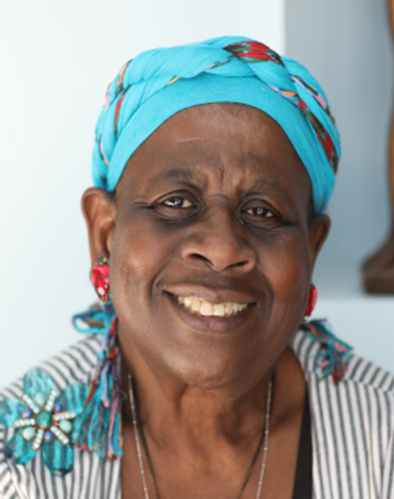
Written by: Evita Krislock
Earth Day is an annual event celebrated around the world on April 22 to demonstrate support for environmental protection. First celebrated in 1970, it now includes events coordinated globally by the Earth Day Network in more than 193 countries.
Pray—Plan an Earth Day-themed worship service. Find a wealth of Earth Day Sunday worship resources at www.creationjustice.org/educational-resources.
“Gracias por esta comida. Esta comida. Esta gloriosa y maravillosa comida. Y los animales. Y los vegetales. Y los minerales que lo hacen posible.”
La Granja de Bellweather es un Nuevo cam-pamento, lugar de retiro, centro de educacional de la diocesis episcopal del Ohio. Al fungir como el ge-rente de la granja, una de mis metas principales cuando recorro la granja con los jóvenes es el facili-tar un encuentro con el sitio desde donde extrae-mos la comida, lo cual se traduce en una experiencia con la tierra misma. Algunas veces me pongo nervioso de que necesito comunicar una verdad profunda sobre el universo, del como todos estamos conectados o del como todos nosotros entramos en decadencia día, tras día. Y luego caigo en cuenta de que lo único que necesito hacer es que los jóvenes sean ellos mismos en la granja –con las plantas, con los animales y con el suelo. Comerse un pepino extraído de la planta es magia pura, aunque tu no entiendas de fotosíntesis. Es curativa. Despierta algo muy adentro de nosotros.
Before I go further, though, what is a Bellwether? I often hear this question while working at a place called Bellwether Farm. The term comes down to us from the Middle Ages, when shepherds singled out one ram in a flock to wear a bell and indicate where the flock was going—the Bellwether. In modern times, a bellwether has come to signify a herald of what is to come. In this sense, it is the Church’s vocation to be a bellwether of the kingdom of God, and the vocation of every Christian is to be a bellwether of God’s love, which includes our healing of the earth.
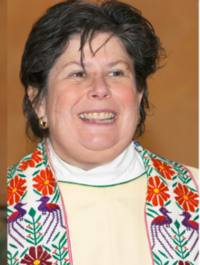
Escrito por las Rev. Dr. Margaret Bullitt-Jonas y Rev. Dr. Leah D. Schade
Margaret es una misionera para la diocesis Episcopal de Massachusetts en la parte oeste y la parte este del estado de Nueva Inglaterra, la iglesia unida de Cristo. Su página web es RevivingCreation.org.
Leah es una ministra ordenada en la Iglesia evangélica luterana de América, y es también profesora Universitaria en el semanario teológico de Lexington. Ella escribe en el blog www.ecopreacher.blogspot.com.