

Episcopal Church Women

About Episcopal Church Women

This author has not yet filled in any details.
So far Episcopal Church Women has created 550 blog entries.

Bellwether Farms

Bellwether FramsBellwether Farm is the new camp, retreat and education center in the Episcopal Diocese of Ohio. As the farm manager, one of my main goals when I walk the farm with young folks is to facilitate an encounter with where our food comes from, an experience with the earth herself. Sometimes I get nervous thinking that I need to communicate some deep truth about the universe, how we’re all connected or how we literally eat ourselves into existence each day. And then I realize that all I need to do is let them be on the farm — with the plants, with the animals and with the soil. Eating a cucumber straight off the plant is pure magic, even if you don’t understand photosynthesis. It’s healing. It awakens something deep within us.

Bellwether Farms Fall LeavesBefore I go further, though, what is a Bellwether? I often hear this question while working at a place called Bellwether Farm. The term comes down to us from the Middle Ages, when shepherds singled out one ram in a flock to wear a bell and indicate where the flock was going—the Bellwether. In modern times, a bellwether has come to signify a herald of what is to come. In this sense, it is the Church’s vocation to be a bellwether of the kingdom of God, and the vocation of every Christian is to be a bellwether of God’s love, which includes our healing of the earth.

As the virtue of that goal takes root in my heart, I begin to ask myself: How do we heal the earth? It feels like such an overwhelming aspiration at a time when global crisis, climate change and species extinction regularly headline the news. We have lost so much, and we continue to lose more. This is something to be suffered and mourned.

And while I sit here and mourn the loss, I’m reminded of those places in Scripture, where people cry out, “What must I do to be saved?”
I wonder if the more urgent question we are all crying out today is: “What must we do to save our home place?” How do we care for our beautiful earth? Scientific answers abound, which we must surely heed. However, a spiritual response is needed as well, which has to do with affection. How do we fall in love with the places we call home?

To paraphrase the Senegalese environmentalist Baba Dioum, we won’t save places we don’t love, we can’t love places we don’t know and we can’t know places we haven’t learned.

In keeping with this sentiment, the Diocese of Ohio has chosen a patch of earth we affectionately call Bellwether Farm as our place to learn, know, love and share with others. It is our place to stop, smell, listen and allow our roots to go down deep. The property itself is bordered on three sides by the ever-winding Vermilion River and includes farmland, woodlands, meadows, hiking trails, picnic pavilions, playing fields and a five-acre pond. This new center exemplifies green building and features super energy-efficient structures, renewable energy technology, water reclamation systems and repurposed materials. Together, the site and its facilities serve as vehicles for teaching the wider community about sustainable living and care of this good earth.

In November 2017, we were honored to host Bishop Curry at the dedication of Bellwether Farm. During his address, he saw a vision for this place being a root factory.

He said, “You aren’t just building a conference center, but you’re creating a root factory, where people can come and reconnect with their roots, to the source of life itself, finding strength in the soil, the strength of life, to find the God who made us and the God whose life force, called love, sustains us.”

We saw this vision really come alive this year as people from all walks of life came to Bellwether and experienced the beauty of the land, watched the stars in the vast open sky, walked the farm, pulled root vegetables straight out of the soil for meals, and connected with animals and “all God’s critters” (as the song goes).
We were able to offer immersion programs and hands-on experiences to school groups, 4-H clubs, Boy Scouts, volunteers, summer campers and retreat guests alike — seeking to teach healthy social, nutritional and environmental practices, while providing a safe context in which to encounter God’s creation. Among all the retreat groups, we were especially delighted to host the National ECW board meeting this past October.

As I reflect back on the year, I wish that I had written down all the profound moments people had on the farm as they connected with the earth and where our food comes from.
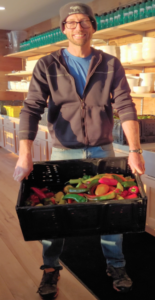
Kyle Mitchell

Written by: Kyle Mitchell, Farm Manager

However, I do remember one story of planting corn with our camp counselors. With the chickens nearby, the flowers starting to bloom around us and soil all over our hands from planting corn, I could see one of our counselors reaching for words to describe what she was experiencing.

She tried a few lines to explain and then finally blurted out, “I feel like a real person!” I smiled and nodded, not completely understanding and yet somehow fully understanding. She was reconnecting with her roots.

It is these experiences that we seek to model and cultivate in our work, worship, service and play — from our shared life on this land to our farm-to-table meals, our sustainable farming practices and our ever-growing affection for this place we call Bellwether Farm.

As we approach and celebrate Earth Day 2020, what patch of earth are you stewarding and growing in affection for?
2020-04-02T16:41:47+00:00April 2nd, 2020|

Greta Thunberg nos llama a ser profetas

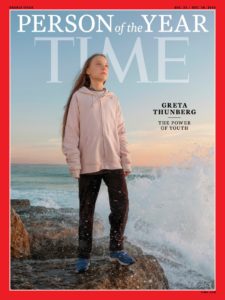
Greta Thunberg Time CoverEscrito por las Rev. Dr. Margaret Bullitt-Jonas y Rev. Dr. Leah D. Schade
La foto de Greta Thunberg en la portada de la revista Time como la persona del ano es tanto inspiracional y como aleccionadora.
Parada en el afloramiento de las rocas al borde del océano, ella divisa el mismo. El romper de las olas bajo sus pies es una señal inequívoca de que el cambio climático está a nuestro alrededor.

Los océanos del mundo están rápidamente perdiendo oxigeno – Es como si empezaran a sofocarse. Muchas de las señales vitales del ecosistema de nuestros océanos esta al punto del colapso. Y nuevas investigaciones indican el alzamiento del océano, debido al calentamiento global, podría afectar hasta tres veces más a las personas por el año 2050. Algunas de las grandes ciudades costales sarán borradas de la faz de la tierra, transformando a sus millones de habitantes en refugiados climáticos.

Basado en esta proyección y en las noticias que reportan incendios, huracanes, sequias, inundaciones, y extinciones de especies en masas, los efectos del cambio climático han alcanzado proporciones bíblicas. Por eso es por lo que Greta Thunberg es un profeta para nuestro tiempo.

En agosto del año 2018, a la edad de 15 años, esta adolescente protesto con su cartel que decía, “Paro escolar por el clima” en las escalinatas del parlamento sueco. Desde entonces, su voz ha resonado alrededor del mundo. Ella inspirado a millones de jóvenes a lo largo del planeta para organizar paros climáticos hacienda un llamado de atención a los adultos para tomar acción a nivel global.

Millones de estudiantes se han movilizado en protestas a nivel mundial. Su emocionante discurso en las Naciones Unidas fue un llamado profético al arrepentimiento por los pecados ecológicos que se han cometido en contra del planeta y aquellos que heredaran el desastre que le hemos dejado.
Por supuesto, ella también es vilipendiada por muchos, incluyendo a los presidentes de Brasil y de los Estados Unidos. Ellos la ridiculizan. Eso es lo que pasa cuando los profetas hablan la verdad ante el poder. Pero a pesar de ello, las personas están escuchando su mensaje. Los líderes mundiales también la están tomando en cuenta. Ella está calando a través de las distracciones y mentiras, y está diciendo la verdad sin que le remuerda la conciencia.

Este es exactamente el tiempo para que las comunidades de fe cabalguen al lado de Greta y la generación del cambio climático para ofrecer apoyo y liderazgo durante la crisis climática. Muchas más personas se están preguntando: “Que podemos hacer? Por medio de la colaboración, los lugares de culto pueden ayudar a su prójimo a encontrar respuestas innovadoras a la pregunta antes mencionada.

Pastores, sacerdotes, imanes, rabinos, y líderes espirituales de las religiones mundiales están perfectamente situadas para enmendar estos problemas desde el punto de vista teológico y de las sagradas escrituras para así galvanizar a sus feligreses a responder. Así como las Iglesias y sinagogas fueron el motor moral que empodero al movimiento de los derechos civiles, de esa misma forma nuestras casas de culto necesitan que los fieles actúen enérgicamente para lograr un cambio.

En muchas maneras esto ya está ocurriendo. Organizaciones tales como “Greenfaith, Interfaith Power & Light, ecoAmerica’s Blessed Tomorrow, y también las campanas de la gente pobre siguen educando a la gente al respecto, sin importar los talantes políticos o religiosos.

Las Iglesias están instalando paneles solares. Mezquitas están plantando jardines comunitarios. Sinagogas están llevando a cabo sesiones comunitarias acerca del cambio climático. Personas de fe están protestando, dispuestas a ser arrestadas por su desobediencia civil no violenta.

Este es el momento cuando las comunidades de fe no deben permanecer calladas. Si tú eres un miembro de una congregación, motiva a tu líder spiritual para pregonar y ensenar acerca de lo que las escrituras dicen al respecto de la madre tierra. Si tú eres un líder espiritual, habla con tus colegas sobre el cómo despertar el fuego sagrado que tiene el poder de encender una revolución de justicia.

Este es un problema que afecta a cada una de las personas en el planeta, especialmente a los desamparados que sufren los efectos colaterales del cambio climático. La crisis climática es una crisis global, nacional, estatal, y local, y los líderes de fe no solamente deben estar bien informados y bien letrados, pero a su vez deben ser profetas por la justicia.

La emergencia climática ofrece la oportunidad para una nueva vida dentro de los movimientos comunitarios a la vez que las personas de unen esfuerzos para combatir el cambio climático.

Como Greta nos ha ensenado – Es el momento de que todos seamos profetas.

Dr Margaret Bullitt-JonasMargaret es una misionera para la diocesis Episcopal de Massachusetts en la parte oeste y la parte este del estado de Nueva Inglaterra, la iglesia unida de Cristo. Su página web es RevivingCreation.org.
Dr Leah D SchadeLeah es una ministra ordenada en la Iglesia evangélica luterana de América, y es también profesora Universitaria en el semanario teológico de Lexington. Ella escribe en el blog www.ecopreacher.blogspot.com.

Las Rev. Leah D. Shade y Rev. Dr. Maragaret Bullitt-Jonas son coeditoras del libro que lleva por título en ingles “Rooted and Rising: Voices of Courage in a time of Climate Crisis” (Rowman & Littlefield), una antología de ensayos de activistas religiosos y ambientalistas para encontrar la sabiduría espiritual y así enfrentar los días venideros.

2020-04-02T16:41:56+00:00April 2nd, 2020|

Greta Thunberg Compels Us All to Be Prophets

Greta Thunberg Time CoverBy the Rev. Dr. Margaret Bullitt-Jonas
and Rev. Dr. Leah D. Schade

The picture of Greta Thunberg on the cover of Time magazine as its 2019 Person of the Year is both inspiring and sobering.
Standing on an outcropping of rocks at the ocean’s edge, she gazes toward the sea. The splashing waves at her feet are a poignant reminder that signs of the climate crisis are all around us.

The world’s oceans are rapidly losing oxygen — it’s as if they are beginning to suffocate. Many of the oceans’ vital ecosystems are at risk of collapse. And new research indicates that rising seas, due to global warming, could affect three times more people by 2050 than previously thought. Some of the world’s great coastal cities will likely be erased, sending the number of climate refugees into the millions.

Given this dire projection, along with news about wildfires, hurricanes, droughts, floods and mass species extinction, the effects of climate change have reached biblical proportions. This is why Greta Thunberg is a prophet for our time.

In August 2018, at age 15, this teenager stood with her sign, “School strike for the climate,” on the steps of the Swedish Parliament. Since then, her lone voice has struck a chord that has reverberated around the world. She has inspired young people across the planet to organize climate strikes calling on adults to take action on global warming.

Millions of students have mobilized in protests worldwide. Her stirring speech at the United Nations was a prophet’s call to repentance for the ecological sins we have committed against this planet and those who will inherit the mess we have made.

Of course, she is also vilified by many, including the presidents of Brazil and the United States. They mock her, attack her and ridicule her. That’s what happens when prophets speak truth to power. But people are listening to her message. World leaders are paying attention. She is cutting through the hubbub of noise, distraction and lies, and telling the truth without apology.

This is exactly the time for faith communities to step up alongside Greta and the climate generation to offer support and leadership during this climate crisis. More and more people are asking: “What can we do?” Through collaboration and community-building, houses of worship can help their neighbors find innovative answers to that question.

Pastors, priests, imams, rabbis and spiritual leaders of the world’s religions are perfectly situated to address these issues from a theological and scriptural perspective in order to galvanize the faithful to respond. Just as churches and synagogues were the moral engine that powered the civil rights movement, so now are houses of worship needed to harness the energy of the faithful to act.

In many ways this is already happening. Organizations such as Greenfaith, Interfaith Power & Light, ecoAmerica’s Blessed Tomorrow, and the Poor People’s Campaign are reaching across religious and political divides to educate and activate people of faith.

Churches are installing solar panels. Mosques are planting community gardens. Synagogues are hosting sessions on community organizing around climate change. People of faith are protesting pipelines, willing to be arrested for their nonviolent civil disobedience.

This is a moment when the faith community must not stand on the sidelines. If you are a member of a congregation, encourage your faith leader to preach and teach about what your scriptures say about this good Earth. If you are a faith leader, talk with your colleagues about how you can spark the sacred fire that has the power to ignite a revolution of justice.

This is an issue that affects every person on our planet, especially “the least of these” who bear the brunt of the effects of climate change. The climate crisis is a global, national, state and local issue, and faith leaders must not only become well-informed and well-read on this topic, they must also be bold prophets for justice.

The climate emergency offers the opportunity for new life to be breathed into community movements as people of faith join efforts to combat climate change.

As Greta has shown us — it’s time for us all to be prophets.

Dr Margaret Bullitt-JonasMargaret is Missioner for Creation Care for Episcopal Diocese of Western Massachusetts and Southern New England Conference, United Church of Christ. Her website is RevivingCreation.org

Dr Leah D SchadeRev. Dr. Leah D. Schade and Rev. Dr. Margaret Bullitt-Jonas are co-editors of the book “Rooted and Rising: Voices of Courage in a Time of Climate Crisis” (Rowman & Littlefield, 2019), an anthology of essays from religious environmental activists on finding the spiritual wisdom for facing the difficult days ahead.

Leah is an ordained minister in the Evangelical Lutheran Church of America, and is Assistant Professor of Preaching and Worship, Lexington Theological

2020-07-21T15:16:12+00:00April 1st, 2020|

A Cup of Cold Water

ECW OUTREACH IN MAUI

— Submitted by Kekuhaupi’o Akana ACCW Run Leader, Province VIII Episcopal Diocese of Hawaii

Thanks to Maui’s Episcopal churches and their friends, the Episcopal Diocese of Hawaii is now in its 5th year of service to our poor, needy, and house-less neighbors on Maui.

Envisioned by a small group of dedicated Episcopalians from the four Maui churches, A Cup of Cold Water (ACCW) launched its outreach ministry on October 13, 2013 at Trinity by the Sea Episcopal Church in Kihei teamed with Maui’s three other Episcopal churches – Good Shepherd (Wailuku), Holy Innocents (Lahaina), and St. John’s (Kula). Today ACCW has 80 plus volunteers from Catholic, Protestant, non-denominational, and Buddhist churches. This mission, beyond the church-of loving service, is strongly supported by the Episcopal Diocese of Hawaii and its bishop the Rt. Rev. Robert Fitzpatrick.

In 2013, the United Thank Offering made a grant to ACCW of $15,000.00 which was matched by an anonymous donor couple from Maui. Subsequently, the outreach van was purchased and outfitted for service.

In 4 ½ years, the van’s average annual statistics include over 9,000 service contacts with our poor, 5,000 miles of travel, and distribution of thousands of items of food, chilled water, basic first aid, and clothing, as well as spiritual supplies. It is the only roving food and clothing distribution program in Maui that operates regularly on Saturday and Sunday Sabbaths—along with a mid-week Wednesday run.

The Episcopal Church Women of Good Shepherd Church and our Episcopal Diocese of Hawaii ECW Chapter provide strong support for ACCW. They conduct various fund-raisers for the ministry which include “Rubber Slipper Sunday” (an annual gathering of rubber slippers), “Throw in the Towel” Sunday (a gathering of towels—a favorite item for street poor), and many other supportive services.

May we conclude with a thought from Mother Teresa: Hunger is not only for bread, hunger is for love, to be loved, to be wanted . . . . Nakedness is not only a piece of cloth, but nakedness is also the want of dignity, that beautiful gift of God. Homelessness is not only for a house made of bricks, homelessness is being rejected, being a “throw away” of society, unwanted, unloved, uncared for . . . . There among these people . . . YOU can put and I can put my love for God in living ACTION.

Verna Dozier, preacher, teacher, theologian, and Episcopal laywoman, was known for direct questions. Among them: The important question to ask is not, ‘What do you believe?’ but ‘What difference does it make that you believe?’ One of the biggest privileges of the 2015-2018 triennium was representing the National Board of ECW at events within parishes, dioceses, and provinces of the Anglican Communion, and exchanging information about growing and changing women’s ministries. It was those conversations that indeed showed the difference we can make as followers of Jesus.

Lisa H. Towle

2020-05-06T14:14:26+00:00November 6th, 2018|

To proclaim the Good News of the Kingdom

The First Mark of Mission: To proclaim the Good News of the Kingdom

United Thank Offering (UTO) generates a lot of excitement about its ministry because UTO awards grants—5257 grants and a whooping $137,094,170.52 since 1889. We’ve built churches and schools, paid salaries for new ministries, and even purchased a plane named the Blue Box for the Bishop of Alaska.

In this latest grant cycle, in support of the Presiding Bishop’s Jesus Movement initiative, the UTO Board focus was Becoming Beloved Community: Racial Healing, Reconciliation, and Justice. This focus has generated fascinating new ministries. Every penny of the coins and bills we collect from your Blue Boxes, given in gratitude for your many blessings, is given in grants. A highlight for the UTO Board each Triennial Meeting is that we announce the grant recipients and meet some to thank them for their ministries. UTO’s 2018 grant awards totaled $1,283,216.21.

A couple of unique grants this year were an award to Spain to purchase a building to create a center for teenage refugees. They will learn Spanish, job training, and circus performance skills. It is a unique ministry to youth as they acclimate to a new country, culture and language. Another small but important grant is to an Episcopal school in Idaho serving Shoshone and Bannock tribes. This grant pays the salary to add a class on racial healing, reconciliation, and justice.

A second way UTO shared the Good News was through the well-established tradition of the Ingathering Eucharist. UTO coordinators come from all over The Episcopal Church to participate in this event. It is a high point for UTO coordinators, and a powerful witness showing what small daily giving in gratitude can do when it is gathered and granted.

In addition to grant announcements and the Ingathering Eucharist, we also held three workshops—linking the Jesus Movement, gratitude and UTO; best practices in financial issues and stewardship; and our grants workshop. We used our office for most workshops and had robust attendance. We tried something new by scheduling UTO workshops on the days closest to the Ingathering Eucharist.

That allowed women who couldn’t afford to stay for the entire meeting to have all UTO activities over the long holiday weekend. The UTO Board visited the Archives of The Episcopal Church, had a large UTO booth in the Exhibit Hall shared with Navajoland, and featured a variety of UTO grant sites. While we were actively involved in the Triennial Meeting, some of our Board concentrated on networking with other groups at General Convention.

How do we teach, learn, or nurture that which the Second Mark of Mission asks of us? We do it by example – modeling and living into the mission of the Church which includes all Five Marks of Mission. Our recent Episcopal Church Women’s Triennial Meeting (TM) in Texas demonstrated just that through 33 workshops offered by 25 different presenters. As a former youth leader, school volunteer, and scout leader, my belief is that the greatest gift given is that of the big picture.

In this case, various aspects of the mission components were brought together by incorporating the Marks into the TM workshops and asking presenters to tie them into the presentations of their ministries.

Sacred Yoga: Although not named as addressing the Second Mark of Mission, yoga actually allows space to listen to God’s message and love. This activity was offered early in the morning before our Triennial Meeting sessions started. The Rev. Gena Davis provided a gentle, God-centered practice as a gift to attendees at the Triennial Meeting and General Convention. Our hope was to provide ideas that you could take home and consider how they might fit into the Marks of Mission and your community. The cathedral church in Spokane, WA offers yoga once a month, bringing in hundreds of people into a sacred space which is about inviting-in new believers. The Girls Friendly Society offered a workshop which gave examples and offered possibilities of how to engage and empower girls in our communities in service projects—another way to teach, nurture, and invite.

Consider, as well, Episcopal Camp and Conference Center ministries which bring people in from all walks of life, across the generations to learn about the Good News. This organization specifically reaches out and touches the hearts of new believers and those in need of an uplift or message of hope on their faith journey.

The number of baptisms and celebrations that happen as a result of the hospitality, teaching, and worship that happen in our Episcopal Camps and Conference Centers is measured in the thousands. “Everyday Spirituality”—deepening our faith and taking the time to be in a healthy, fulfilling relationship with God—is another example of teaching, welcoming, and nurturing new believers. We set the example; we become the teachers.

Perhaps the greatest gift is how the Marks of Mission can change our hearts, in turn teaching others, nurturing others, and inviting others to become baptized. Our challenge is to open our hearts and seek to understand how all of these parts are interconnected. May the gifts of learning and mission reside in your heart as you seek to bring these components together.

– Submitted by the National United Thank Offering Board

2020-05-06T14:02:53+00:00November 6th, 2018|

Transitions

Lisa H. Towle, Immediate Past NECW President

For the past six years I had the honor of serving Episcopal Church Women as a member of the National Board of Episcopal Church Women, first as secretary, then as president.

Now that the hand off to the 2018-2021 board is complete and it begins its first full year of operation, it’s time to say thank-you. Thank-you to the people of The Episcopal Church, most especially its women and girls, for walking what the Right Reverend Steven Charleston calls the “sacred path … sharing the same commitment to be true to our word, to practice what we preach.”

Years ago, a priest I know shared this story: At a construction site a worker on the ground was handing bricks to the other worker on the ladder. He was asked what he was doing. He said he was just handing bricks to his boss. A second worker who was handing bricks to the other worker on the ladder was asked what he was doing. He said he was just building a wall. A third worker was handing bricks to the other worker on the ladder and was asked what he was doing. He said he was building a grand cathedral.

Thank-you to the women in parishes, dioceses, and provinces who invited me to visit them in the triennium just ended to talk about the faith journey of ECW and how they’re using their bricks.

Thank-you to the Most Reverend Michael B. Curry, Presiding Bishop and Primate of The Episcopal Church, for framing our thinking about engagement in this time by stressing that as members of the Jesus Movement we are part “the ongoing community of people committed to Jesus’s way of love, a way that changes lives and changes the world.”

Thank-you to the 2015-2018 national board. With the theme, “GO! Share the Word: Every Day, Comunicamos, Every Where,” we refocused on the all-encompassing Five Marks of Mission to help build on the theme. Among other things:

  • We shared best practices how parish-based ECW branches were using the Five Marks to spread the love of Jesus.
  • Created a Universal Grant program to fund projects involving at least one Mark of Mission.
  • Awarded each of the nine dioceses that hosted a national board meeting $1,000 for outreach.

Planning for the culmination of the triennium, Triennial Meeting, was done with John 13:35 and the Five Marks in mind. There was everything from the use of tote bags made of canvas (Mark 5) to the recipients of the two gifts for work related to social justice (Mark 3).

Both of the social justice gifts involved caring for the homeless in Austin: the Unified Gift went to Community First! Village and came to $16,848.66, and the Community Connection Gift for the Trinity Center Shower Ministry totaled $14,770.00.

All these things spoke to the vision statement of Episcopal Church Women: As the eyes, ears, hands, and heart of Christ in the world, we will persist in the work of healing, justice, and peace.

This grew out of the work of the national board’s Ad Hoc Committee for Restructure, whose report was presented at Triennial Meeting in 2015, where delegates passed a resolution charging the national board with implementing the recommendations in the report.

Because the report is vast in scope, one triennium wasn’t nearly enough time to address everything. However, a foundation was laid, brick by brick, to address key items in the three areas of focus – superstructure, infrastructure, structure. Some examples:

UNITY: The ECW vision and mission statements, adopted in 2015, were used on a consistent basis, often in concert with the Way of Love and the Five Marks of Mission, to help unify focus in a large and varied organization and better live into our stated purpose – “to empower the women of The Episcopal Church to carry on Christ’s work throughout the world.”

INCLUSIVENES: To ensure multiple points of view were heard, a diverse group of women were invited at various times to advise the national board and/or use their skills for particular projects and outreach.

COMMUNICATIONS: To be better stewards of money, time, and our environment, channels of digital communications were opened or enhanced so that ECW is more transparent and better aligned with what’s happening within the Church as a whole. Thus, detailed information, including what was intended specifically for Triennial Meeting delegates, was put online. In addition, the mechanisms exist to make grant requests online and donate using credit cards. (Even so, the option to use paper and stamps still exist.)

The report is posted in the “Resources” section of the National ECW website. Since our creation by The Episcopal Church’s Board of Missions 148 years ago, we remain a work in progress, unique in scope. Julia Chester Emery, who led the precursor of ECW, the Women’s Auxiliary, for 40 years: “The Auxiliary stands ready to welcome change, hoping earnestly that change shall mean growth to greater and better things, more ways in which to serve, more weight of responsibility, the giving of leadership in different paths of service to those most competent to lead.”

Thank-you to Episcopal women past and present for their steadfast faith and willingness to share the word, to love, and to change as needed.

Godspeed, ECW.

2020-05-06T13:50:58+00:00November 6th, 2018|

The Fourth Mark of Mission

To seek to transform unjust structures of society . . . .

—Lois Frankforter
President of Girls Friendly Society USA

To attain the transformation sought by the Fourth Mark of Mission our ministry must focus on all levels of society – from national governments, to local communities, and even to the individuals we meet as we walk down the street. The Episcopal Church seeks to transform global social structures by participating in United Nations (UN) events like the Commission on the Status of Women (CSW). In March, I had the privilege to serve as a member of the Presiding Bishop’s CSW Delegation, and to advocate for specific policy changes to achieve gender equality and the empowerment of women and girls. Our faith based advocacy centered on the Presiding Bishop’s call for governments and civil society to:

• Prioritize resources and programs for marginalized groups of rural women and girls,
• Extend access to basic resources and services to rural areas,
• Address environmental concerns and extend land rights, and
• Promote gender equality education and practices and eradicate gender-based violence

The two weeks were filled with formal UN assemblies and panel discussions, side and parallel events, and opportunities to gather in worship with the Anglican Communion Women and the Ecumenical Women delegates. At our opening Eucharist Bishop Curry reminded us that “You have come to the seat of the nations of the earth to encourage our leaders and to show them how to end the nightmare and realize the dream [God has] for all of us.”

The Girls Friendly Society (GFS), since its inception over 140 years ago, has been at the forefront of social justice issues. At our 2017 World Council, GFS adopted a global Gender Violence Awareness Program designed to raise awareness of the issue and to take action to end the violence. Building on the UN campaign, GFS members resolved to dedicate the 25th of every month as #orangeday by wearing the color orange and speaking out on the issue, including posting information and resources on social media. In South Africa, GFS launched educational programs to foster a dialogue for girls and boys on gender issues that affect them. In England, GFS took to the malls to hand out oranges and speak to individuals about gender equality. In the USA members, like our National Youth Delegate Catherin Sopko, deliver Sunday sermons to area parishes, and other members in their TAKE ACTION t-shirts decorate their churches with orange ribbons and educational posters.

My time at the UN CSW and my participation in GFS reinforces that “The Mission is Global, the Work is Local” and that it is going to take all of us putting our faith in action to transform society and realize the dream that God dreams for the world.

2020-04-27T14:58:54+00:00August 1st, 2018|

Everything Connects

By Lisa H. Towle, NECW President

In January of 2018, 156 years after the then-Hawaiian monarchs personally petitioned Queen Victoria to establish the Anglican Church in their kingdom, the National Board of Episcopal Church Women held a meeting in the Diocese of Hawai’i. During our time in Maui, the Good Shepherd (Episcopal) Women in Ministry along with the Rev. Amy Crowe, Vicar at Holy Innocents Episcopal Church in Lahaina, provided mental, physical, and spiritual nourishment.

In the picture above I’m with Louise Aloy, who’s from Maui and currently serves as the Province VIII ECW president, and Mike White, general manager of the Ka’anapali Beach Hotel where the Board had its meeting. In 1953 and 1954, Mike’s grandmother was treasurer of the Women’s Auxiliary (the precursor to Episcopal Church Women). In 2018, the national ECW drew from its treasury to fund a $1,000 Province VIII grant to benefit the Ho’oikaika Partnership, a coalition of more than 60 Maui County agencies and individuals committed to preventing child abuse and neglect.

Sooner or later, everything connects.

In April of 2018, the Episcopal Church Women marked another first by meeting in Curaçao. Home to Juditta Ellis, who served as Province IX Representative to the national board this triennium, Curaçao is part of the Diocese of Venezuela. The two Anglican Episcopal congregations on the island came together at the Church of the Resurrection, which is led by the Rev. Louise de Bode-Olton, the first woman priest ordained in Curaçao, to welcome and worship with us.

And we had the gift of time to share our stories. One of the stories had to do with the efforts in Curaçao to address Alzheimer’s disease. To this end, the national board offered a $1,000 Province IX grant to an area non-profit focused on the needs of Alzheimer’s patients and their caregivers. The visit created enough buzz to get the attention of local newspaper. That’s certainly one way of addressing the first of the Five Marks of Mission, proclaiming the good news of the Kingdom.
Sooner or later, everything connects.

Seventeen years ago, during his speech at Marquette University’s commencement, Fred “Mister” Rogers, beloved cultural icon and ordained Presbyterian minister, said, “I believe that appreciation is a holy thing, that when we look for what’s best in the person we happen to be with at the moment, we’re doing what God does. So, in loving and appreciating our neighbor, we’re participating in something truly sacred.”

In Maui and in Curaçao and in the Episcopal Church’s seven other provinces where we met over the course of the 2015-2018 triennium, we sought to “GO!” and show in word and deed how much we appreciate and want to encourage the many ministries of the women of the Church.

In July, in Austin, Texas, at the 79th General Convention of the Episcopal Church, which includes the 49th Triennial Meeting of the Episcopal Church Women, thousands of people will be in the neighborhood and we’ll have the opportunity, individually and collectively, to participate in the sacred acts of loving and appreciating.

Key to planning the Triennial Meeting was answering this question: “What does it mean to be part of a beloved community that, as our Presiding Bishop Michael Curry has put it, is ‘committed to living the way of Jesus, loving, liberating, and life-giving.’

• This is why we will be sharing the stories of and fundraising on behalf of two stellar social justice programs based in Austin: Community First! Village and the Trinity Center Shower Ministry, both of which live into the Five Marks of Mission.

• This is why all our workshops will address, in various ways, the Five Marks of Mission and how we “GO!” forth.

• This is why our keynote speakers, the Rt. Rev. Steven Charleston and the Rev. Canon Stephanie Spellers, were asked to bring their prophetic and evangelistic voices to our proceedings.

• This is why our daily BYOB (Bring Your Own Breakfast) speaker series will loop back to the foundational Five Marks and the ways we can be in community.

• This is why the devotions in our gathering space, led by our chaplain, the Rev. Cathy Boyd, and musician, Dr. Linda Patterson, will center us, remind us about whose we are, and what we’re called to be.

All are invited to join us in Ballroom A of the Austin Convention Center. If you can’t be there in person, we’ll share the news of what’s happened in the neighborhood every evening via “Triennial Today” editions of our e-Communique. They will be emailed to subscribers and posted to the Triennial Meeting section of our website, www.ecwnational.org.

We are all connected.

2020-04-27T14:57:16+00:00August 1st, 2018|

Starting Over

A Story of ECW Resurrection at Trinity Church, Watertown, New York

— Submitted by Jennifer Kenna
Province II Representative
NECW Board

In the Fall of 2008, when I was Province II ECW President, the rector at Trinity Church, Watertown, NY, in my home Diocese of Central New York, invited me to speak to a group of retired women at his parish, interested in re-organizing the parish ECW. I wholeheartedly accepted the invitation and spent an evening sharing ECW materials with the women and left encouraged by their enthusiasm. Since that evening nine years ago, this group of women, who call themselves YARN group, has grown and flourished.

The group call themselves YARN, not because they sit around a table telling stories but because their hands are never idle. They are knitting, crocheting, and making fleece blankets, while planning the next event, and discussing the next mission involvement. They meet almost every Tuesday morning year- round, working together and supporting each other.

And this is some of what they do. These women host a luncheon every fall for the 80+ years-old-members of the congregation. They hold two fund-raisers a year: a holiday fair at Christmas and a rummage sale in the spring. Seventy-five percent of the proceeds are distributed to organizations like the Watertown Urban Mission, the El Salvador Medical Mission of the Diocese of Central New York, and Episcopal Relief and Development. They knit and sew chemo caps for the Cancer Treatment Center and baby caps for the Maternity Center at the Samaritan Medical Center. They sew dresses to participate in Dress A Girl Around the World, and provide blankets for the Wounded Warriors project. They make cat mats for the SPCA, and participate in the fund-raiser for the Watertown Urban Mission.

These tireless workers have also joined forces with women of other denominations. They work with Roman Catholic women from Immaculate Heart Central School in knitting sweaters and hats—particularly for Syrian refugees. They have aligned with First Presbyterian Church in supporting “Women of Grace,” a program that offers sewing workshops to create sustainable employment for women living in Malawi, Africa.

Using skills they already possess, the YARN group has found new ways to serve God’s mission and enhance and brighten the lives of others. They have regenerated ECW at Trinity Church, Watertown, NY, and are making a vital contribution to the parish, the community, the Church,
and the world.

2020-04-27T15:07:17+00:00April 1st, 2018|

Mary Ann Fargo

Founder, Church Periodical Club (1858 – 1892)

Near the end of the 19th century Mary Ann Drake Fargo, a member of the Church of the Holy Communion in New York City, founded the Church Periodical Club (CPC). After returning from a trip to the far west she shared— first with her rector and then her bishop—her vision of sending to the missionaries in remote locations in our country used church periodicals, that otherwise were unavailable to them. Upon receiving the blessing of her rector, she called a meeting at her home to interest the women of her parish in her plans for collecting and sending reading materials to aid ministers and lay workers out west. The women at that gathering became the eight charter members of the Periodical Club, January 10th, 1888. After the first Club was established in New York Diocese, branches were created soon in other dioceses.

Until her untimely death—four years after CPC’s founding—Mary Ann guided the Club with a deep sense of responsibility and passion. In particular, she stressed the value of personal service in the wrapping, addressing, and forwarding with a prayer each package of reading material. She sought to imbue the spirit of friendship by her encouragement of a letter-writing exchange between the senders and recipients. By 1892 there were a total of 42 diocesan and 409 parish branches; and more than 4,000 magazines sent regularly.

* * * * * * *

The work of CPC in its earliest years was fostered by the Women’s Auxiliary (now the Episcopal Church Women) which at that time was the strongest missionary agency in the Church. Today CPC conducts a world-wide ministry of the printed word. Its long affiliation with the Episcopal Church Women continues to be maintained in large part by the CPC directors who serve on ECW Boards at the parish, diocesan, and provincial levels.

2020-04-27T15:04:06+00:00April 1st, 2018|
Go to Top