

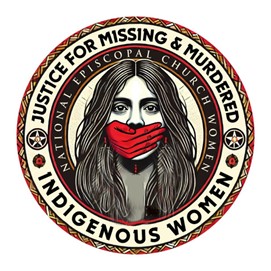
Episcopal Church Women Stand in Solidarity with Missing and Murdered Indigenous Women
 The National Episcopal Church Women (ECW) is called to action in support of Missing and Murdered Indigenous Women (MMIW), a crisis affecting Indigenous communities across the United States and beyond. As faithful women of prayer, compassion, and advocacy, the ECW recognizes the urgency of raising awareness, supporting healing, and partnering with Indigenous leaders to bring justice and protection to Native sisters and their families.
According to the U.S. Department of Justice, Indigenous women face murder rates more than ten times the national average in some areas, and thousands of Native women and girls have gone missing or been murdered with little attention or resolution. The crisis is a complex and ongoing issue rooted in historical injustices, systemic violence, and jurisdictional challenges.
How ECW Can Make a Difference
- Amplify Indigenous Voices
ECW groups across provinces, dioceses, and parishes are encouraged to learn from and partner with Native leaders and organizations already working tirelessly on the front lines. Listening to Native voices, inviting Indigenous speakers to ECW events, and sharing their stories can help center those most impacted. - Host Awareness Events
Local ECWs can organize prayer vigils, red dress installations, or film screenings to shed light on MMIW. The red dress has become a national symbol of remembrance and visibility. Hosting an event during Indigenous Peoples’ Month in November can bring communities together in sacred remembrance and advocacy. - Support Indigenous Ministries
Many Episcopal dioceses—including the Missionary Diocese of Navajoland and the Diocese of Alaska—have ministries deeply connected to Native communities. ECW can support these ministries with prayer, presence, financial resources, and grant applications dedicated to empowering Indigenous women and children. - Pray
The power of prayer remains at the heart of ECW’s mission. It is important that we include MMIW victims and their families in our prayers. Creating liturgies or including petitions for MMIW in Sunday services remind congregations of their shared responsibility.
The National ECW is committed to walking alongside our Indigenous sisters, holding space for grief, and lifting up the light of hope. Our baptismal covenant calls us to seek and serve Christ in all persons and strive for justice and peace among all people.

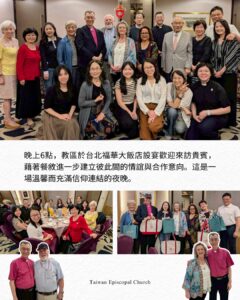 National ECW Officials Visit the Episcopal Diocese of Taiwan
 THE GIRLS’ FRIENDLY SOCIETY
 Orange Days” is not just a campaign, it’s a movement. It calls upon individuals, communities, and organizations to stand together in advocacy and awareness. By wearing orange, engaging in discussions, and supporting initiatives that address gender injustice, each person plays a role in creating a safer and more equitable world for all.

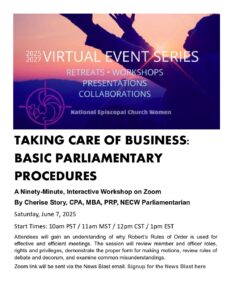
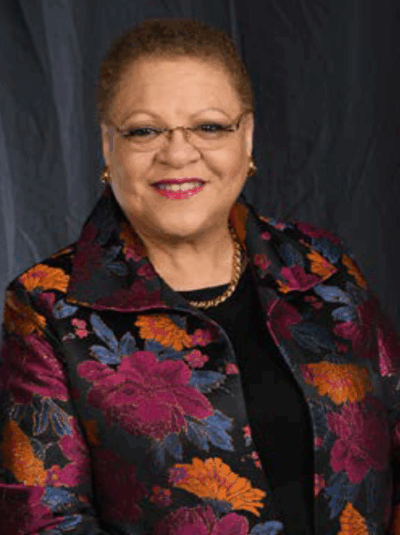 J CHERISE STORY, PRP is a Professional Registered Parliamentarian and active member of the National Association of Parliamentarians (NAP). She currently serves as the 2nd Vice President of the Texas State Association of Parliamentarians and was appointed coordinator for the NAP Leadership Conference in both 2024 and 2025.
 Wear Red on May 5 in Recognition of

 On their second board meeting, The National Episcopal Church Women spent part of their time commemorating the Birmingham Civil Rights Movement. The trip began with a tour of the 16th Baptist Church, the Kelly Ingram Park and The Birmingham Civil Rights Institute. The NECW would like to thank the tour guide for sharing so much information about the church. Just to mention, its history began in 1873 as the First Colored Baptist Church of Birmingham. The present-day church was built in 1911. The church met notoriety when a bombing took place on Sunday September 15, 1963. On this day four girls were killed in that bombing. They were Addie Mae Collins (age 14), Carole Robertson (age 14), Cynthia Wesley (age 14) and Denise McNair (age 11). After which the well-known Civil Rights Movement in Birmingham began.
 The tour of the Birmingham Civil Rights Institute was an individual tour in which each board member could walk through and see the many cultural and educational research that comprise this great Civil Rights Institute.