Episcopal Church Women

About Episcopal Church Women

This author has not yet filled in any details.
So far Episcopal Church Women has created 453 blog entries.

The True Meaning of Submission

By Kristen Pratt Machado

In March, the St. Timothy’s ECW meeting focused on Chapter 27: Women Who Speak in John from Bible Women. I am grateful to the author, Lindsay Hardin Freeman and National ECW President the Rev. Deacon Nancy R. Crawford for bringing this book to my attention.

Women and their role in the church, the Bible, and in society on a whole remain a source of con­troversy. While the Episcopal Church has been or­daining women as priests since 1976 and installed its first female bishop in 2006, the Church of En­gland just recently introduced its first female bish­op with many male members of the discernment process expressing disdain for the elevation of a woman to this high post.

In truth, Episcopalians and Anglicans remain ahead of the curve. Catholicism still bars women from the priesthood, and one of the fast growing religions, the Church of Jesus Christ of Latter-Day Saints prohibits women from leadership, recent­ly electing to excommunicate member Kate Kelly due to her efforts to provide equal opportunities for women within the Mormon church.

Evangelical Christianity has its own relationship with misogyny, with many denominations pur­porting the idea that women must submit to their husbands in order to lead Christian lives. I had a very personal experience with this idea when I tried to address an aspect of my life that remains a struggle — the fact that I don’t get much exercise. While perusing Facebook, I had seen some infor­mation about a health and fitness group located in my area that also incorporated Christian faith into the program.

The three dynamic women leading this group were, of course, extremely fit, but also seemed accessible and inspiring. The program offered healthy eating guidelines, recipes, online work­outs, and a private Facebook page where mem­bers could ask questions and the leaders would post their takes on living healthy, as well as holy lives. This sounded perfect to me.

I could do the workouts at home and I would have support from a group of women on this fitness journey. I enthusiastically paid the fee and started what I hoped would be the path to a healthier me.

And then I began noticing that some of the leaders’ posts were alluding to their husbands as the “leaders” of their families and the importance of submission.

Now these women are highly educated entrepreneurs who are clearly motivated go-get­ters. I struggled to reconcile this type of talk with the power these ladies emitted. And then one of the leaders wrote a post about how she had struggled mightily against the Christian doctrine that called for her, an accomplished businesswoman and health care provider, to submit fully to her husband. She spoke about how she real­ized that until she allowed her husband to be the sole deci­sion-maker in her family, she was not following Christ.

This line of thinking deeply disturbed me and I decided that this was not a path to health and wellness that I cared to follow.

The idea that Christianity requires the submission of women to men is, of course, not new. But I was curious about where it originated. The most in­teresting take I have come across is from Sarah Bessey, a Canadian charismatic Christian, who wrote the book Jesus Feminist (which I highly rec­ommend).

In January of 2014, Bessey wrote a blog post in response to the controversy surrounding actress Candace Cameron who included this gem in her book, Balancing It All:

My husband is a natural-born leader. I quickly learned that I had to find a way of honoring his take-charge personality and not get frustrated about his desire to have the final decision on just about everything. I am not a passive per­son, but I chose to fall into a more submissive role in our relationship because I wanted to do everything in my power to make my marriage and family work.

Mmm…this is from a woman in her 30s who has earned her own money, achieved success in the entertainment industry, and then somewhat re­tired to devote herself to motherhood and family (a noble endeavor to be sure).

Then why the need for submission? She espouses that the Bible teaches Christians that there is only one God and there can only be one leader in the family – the man.

Men submit to God, women to their husbands, which, in turn, is also submitting to God. Now, this seems like a lot of hogwash made up by men and I was inspired to read Bessey’s eloquent and in­formed writing about the topic:

The idea that a man is the head of the home has its roots in secular ancient culture, not in the Word of God or the created order of humanity. And the idea that, as a wife, I would need to ‘become passive’ or smaller or somehow less in order to make my marriage work is damaging and wrong… But don’t get me wrong: I believe in submission. I just don’t believe that our call to submission in marriage is restricted to me. I submit to my husband. And he submits to me, too. And together, we submit to Jesus.

Amen, Sarah Bessey! I highly recommend you read her remarks in their entirely on www.sarah­bessey.com. But what does this discussion mean for women of faith who refuse to buy into this pa­triarchal idea of what a relationship

2020-10-02T15:15:06+00:00October 29th, 2015|

‘And So It Begins’

“And so it begins.” This is a lovely little phrase from the movie, “About Time,” when the young couple gets married and a new life together begins.

By Nancy R. Crawford

I have thought of the phrase often during my time as president of the national ECW Board. Of course, there was THE beginning in 2012 at the commis­sioning ceremony in Indianapolis. But along the way there have been many beginnings: beginning to preside at board meetings and getting to know the other board members; beginning to address the concerns of the women of the church, and oth­ers, and develop a board response to the resig­nation of some UTO Board members; beginning to formulate a committee to study and make rec­ommendations on Resolution 101/104 on Restruc­turing; beginning to understand more fully the plight of those trapped in Human Trafficking and learning about organizations such as GEMS in New York and Rahab’s Sisters in my Diocese of Oregon; beginning to support and collaborate with Lindsay Hardin Freeman’s dream to write a book about the women who speak in the Bible; beginning to en­gage others with the President’s Blog’s bi-monthly reflections on Bible Women: All Their Words and Why They Matter; and beginning to travel as pres­ident of the Board.

Besides board meetings in our eight continental prov­inces, my travels as president began in Minnesota. There was a desire to reinvigorate ECW in the diocese and the seeds were planted at St. David’s, Minnetonka. Lindsay Hardin Freeman spoke to the women gathered together and I had the pleasure of preaching and shar­ing the Good News of Episcopal women’s ministry in the church. The next trip was a very big beginning for me. It was the ECW Pilgrimage to the Holy Land and the beginning of my passport being used for something other than identification. It also began my love for the people who live in the Holy Land and who tend the land where Jesus walked. I have been fortunate to go on pil­grimage a second time with another ECW-sponsored group and meet with the Archbish­op of Jerusalem, definitely a first! My travels have included meeting at Camp Allen, Texas; attending a gathering in the Diocese of Spo­kane; leading a 2-day spiritual retreat at Kanuga, North Carolina; gain­ing new insights at women’s leadership training in Colo­rado; speaking at the Honored Women Luncheon, Dio­cese of New Jersey; and attending and speaking briefly at the Province IX Synod Meeting, Quito, Ecuador. This spring I made visits to the Diocese of East Carolina and the Diocese of Ohio and shared what to expect at the upcoming Triennial Meeting in Salt Lake City.

All along the way I have had the privilege to meet won­derful women, just like you, who are working hard for ECW, who are questioning our role in the 21st Century, and who are shining forth the light of Christ. In each of them, in each of you, I see a child of God.

And now I should say “and so it ends.” It is hard to imagine that this is really the end of my service to ECW, my love for the women of the church, my passion for the cause of social justice for women, children, and men around the world, or my con­cern for those living in Palestine and the compli­cated struggles they face. It is so difficult to imag­ine that I know it will not end, but only change.

Over the past three years the Spirit has stirred up something within me and I forever will be thankful for the opportunity to serve and to learn as presi­dent of the national ECW Board.

2020-04-29T19:07:12+00:00October 29th, 2015|

A New Vision

By Lisa Towel

The following is a greeting given by Lisa H. Towle to the House of Deputies on July 1, 2015, in Salt Lake City, shortly after she was elected President of the National ECW.

My name is Lisa Towle, I am from the Diocese of North Carolina, and a few hours ago I was com­missioned as President of the National Episco­pal Church Women. It is a great day to be an Episcopalian!

It’s a great day but joy and sadness live side-by-side in me at the moment. Joy because some 300 Episcopal Church Women found the business of our Church important enough to travel far to at­tend the ECW’s Triennial Meeting here at General Convention.

Joy because you, the Deputies, have chosen to give your time to find a better way to better our common life. Joy because standing together we all form a beloved community.

My sadness – and selfishness, I suppose – is that to do the work I’ve been called to do at the national lev­el means I must give up the ECW work I’ve done at the diocesan level for 16 years.

And, if that weren’t enough, I will lose my beloved bishop, Michael Curry, to a higher calling. Life moves on, though, and so do we, to another beginning.

In the case of Episcopal Church Women, Resolution 101/104, co-authored by me in 2012, led to – what else, we are Episcopalians after all – an ad hoc com­mittee whose work was facilitated by consultants.

They set about studying the subject of restructur­ing and recommended, via a lengthy report, ways in which the National ECW Board can help our ministry move forward in a more inclusive, “more excellent way.”

Our delegates accepted this information and, af­ter conversation and debate, gave the Board its marching orders. A large majority of delegates said, in essence, “take the recommendations of the committee, take our traditions, engage in some careful listening, and then help us, the women in parishes and missions, find a new way because it’s a new day.”

All this concern about governance and structure may not exactly be the “Dirty, Sexy Ministry” we hear about on Facebook, but it will, I believe, help get us to where we need to be. And where does our ministry need to be? Well, speaking in the broadest sense, we need to be a place that shows, with words AND actions, how we are inclusive and em­bracing of all our sisters.

We are headed in the right direction. At our Triennial Meeting just concluded, women aged 20-something to 90-something actively participated in all proceedings. It was a multi-cultural, multi-eth­nic assembly. Many of those present were newcomers to Triennial Meeting and General Convention. It was a gathering that stirred up the spirit. It was Church, in the best use of that word. Let me tell you another little story about Church, or more to the point, becoming churched. This was shared with me by a dear friend who, knowing I was preparing for events here in Salt Lake City, sought to inspire me with a daily thought or prayer or story.

Here’s the story: “Once upon a time, group of villagers decid­ed to pray for rain. On the day that had been designated for prayer, all the people of the village gathered. Only one came with an umbrella.” Now that’s faith! So I say, come, stand un­der our umbrella. It’s big enough to cover all.

Come, let’s share the faith, and help us serve God’s beloved. Come, and in the words of the ECW prayer, “join us in making Christ’s love known throughout the world.” Most importantly, come, Lord. Be among us and remain with us always.

Thank you for sharing your time and for your kind welcome.

Blessings to all.

2020-04-29T19:01:13+00:00October 29th, 2015|

In Tune with Mr. Matt Lemmler

I had the wonderful experience of meeting Matt during an National ECW board meeting last year on Ender’s Island. We had an old-fashioned sing-a-long that kept me humming, “Lead Me, Guide Me” for weeks. I think you’ll find the music a real treat at this Triennial Meeting. Just to get you in the mood, here are eight quick questions, to introduce you to Mr. Matt Lemmler, Steinway Artist!

Did you have prior knowledge of the Episcopal Church or the Episcopal Church Women?

Yes. I’ve been involved and inspired in the Episcopal Church, mainly due to a creative priest, Father Bill Miller. He created the Jazz Mass at Trinity Church, Houston; St Michael and All Angels, Kauia, Hawaii and now at Christ Church, Covington, Louisiana. At all of these churches, I’ve had the privilege of helping create a new, transformative context for sacred hymns and text by infusing the spirit of jazz while honoring the spirit of the sacred. It led me into my path to form the New Orleans Jazz Revival and travel the world sharing these gifts with churches of all denominations. I was also blessed to spend time with the ECW this past year at Salt Lake City and on Ender’s Island and look forward to our time during the Triennial.

What were your first impression of ECW?

I love being around beautiful, uplifting and inspiring people, especially ECW women!

Do you have any special plans for Triennial?

I’m excited to be able to create, rehearse and present an UBUNTU Spirit Choir alongside Father Bill Miller in our Spirit of New Orleans Jazz Mass during the triennial. I also hope to present some outside concerts at the Steinway dealer and various clubs in Salt Lake City. Please visit my website for more info on my special plans during triennial. www.mattlemmler.com

What is your favorite tempo and why?

I loved playing Handel’s ‘Largo’ when I was first learning piano when I was six or seven years old — Beethoven’s ‘Moonlight Sonata’ too. Both were dirge-like tempos. Real slow and moody. Just like me:) Actually, the dirge is also found in our sacred New Orleans Jazz Funerals. Just a beautiful tradition I still witness to this day. It starts out mournful, at first, with the dirge, and then once the dead are buried, it’s time to party and celebrate life and the spirit!!

What song comes to mind first?

“Sing-Sing a Song. Make it simple to last your whole life long. Don’t worry that it’s not good enough, for anyone else to hear. Just Sing. Sing a Song..La la la lala la la la la lala la la la lala la la…” Singing heals me and I witness how it heals others. My mission is to get everyone singing and playing music together. The world, especially our internal world/spirit, would be uplifted and joyful if we just sang a happy tune each minute of the day. Sing a Song with me in the UBUNTU Spirit Choir!

Have you recently finished any projects?

I just premiered my solo Steinway show “Conversations with the Artist” a concert featuring musical stories from growing  up in the Lower Ninth Ward to musical portraits of the Living Legends/Immortal Steinway Artists including George Gershwin and Irving Berlin to Billy Joel, Randy Newman, Harry Connick, Jr. and my mentor, Ellis Marsalis.

Can you tell me about your next project?

I’m very blessed to be arranging, composing and producing for a group of over 300 middle school musicians making a trip from Atlanta, GA to my hometown, New Orleans, where their string orchestra, jazz band, concert band and choir get to perform together and record a CD to document this UBUNTU of middle school musicians recording alongside my New Orleans Jazz Revival Band. Some of the featured songs will include Ode to Joy, Colors of the Wind, Sing and several other inspirational songs!

What can the women look forward to most in regard to the music venue at the Triennial Meeting?

A great time to let loose and feel the presence of God’s voice through our music and singing!! Music is truly a Holy Spirit, and I hope we all can allow that to inspire and heal us the way God intended music to do. Praise and Heal!! Ubuntu of music and spirit!

2020-04-29T20:12:34+00:00June 29th, 2015|

Girls Friendly Society Triennial Delegation 2015

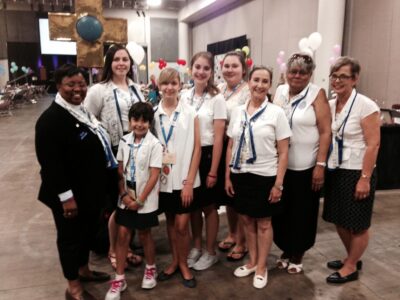
Girls Friendly Society delegation Triennial 2015

This year is the first year that the Girls Friendly Society has had a presence at the Triennial. The GFS is 138 years old having had its beginnings in England. Mrs. Elizabeth Townsend created the organization to assist young women who were coming into the cities to work. Their motto “Bear ye one another’s burdens and so fulfill the law of Christ” is carried out through various service projects both locally and internationally.

We welcome the GFS USA to Triennial.

2020-05-20T14:57:44+00:00June 25th, 2015|

Fortune-Telling Slave Girl

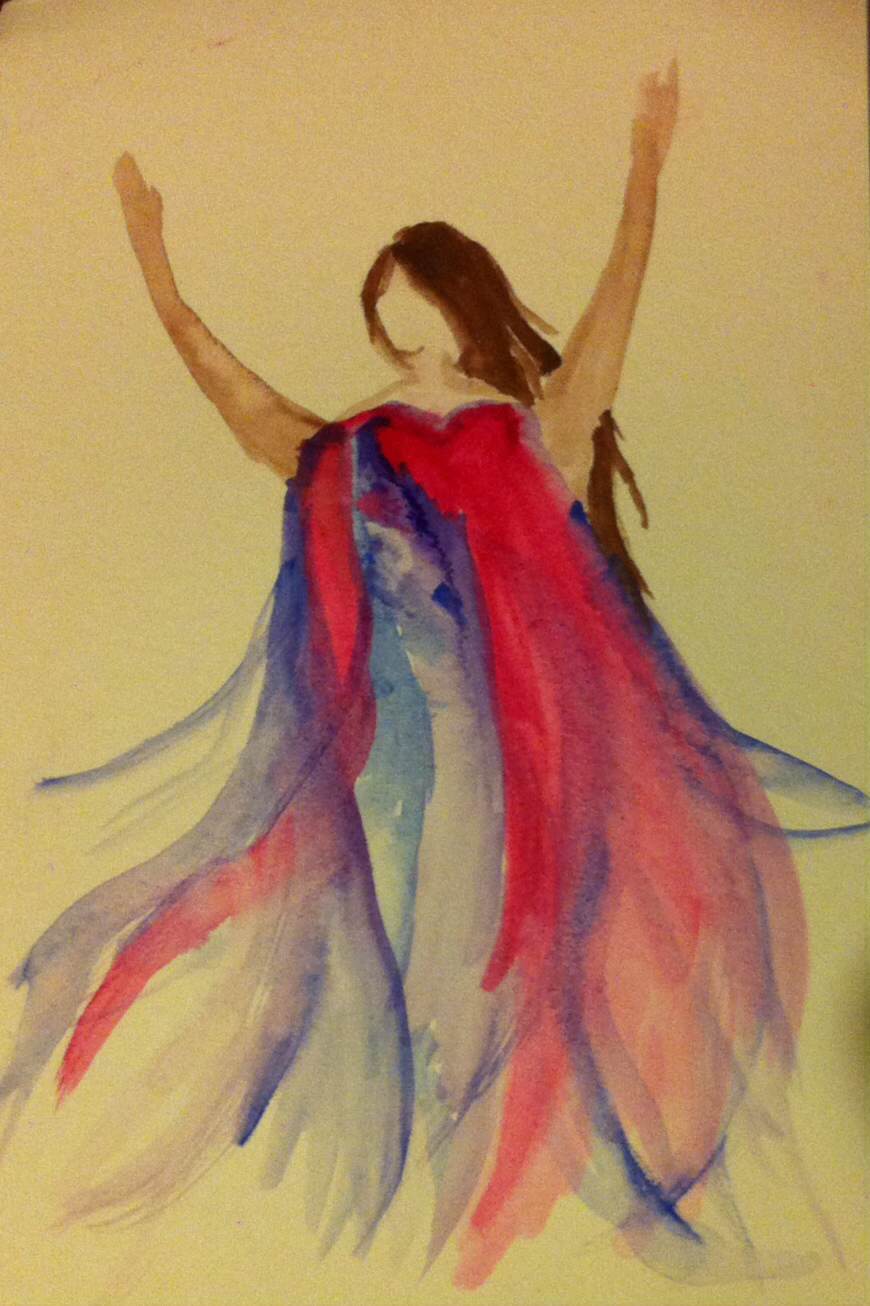
Fortune-Telling Slave GirlI find it intriguing that the voice within the slave girl had something wonderful and profound to say: “These men are the slaves of the Most High God, who proclaim to you a way of salvation.” And yet Paul was irritated and commanded the spirit to come out of the girl. My initial thought is to see her as quite the opposite of an irritant and more as a prophet, like John the Baptist, who came before another and declared the truth. Jesus never got irritated with John’s rantings, but then no one ever expects Paul to behave like Jesus.

William Barkley writes in his commentary on The Acts of the Apostles that the slave girl was called a Pytho, a person who could give oracles to guide others about the future. A Pytho was considered mad and was respected by the people who believed that the gods had taken away the mad one’s wits and replaced them with the minds of the gods.

Of course, I write from what I read, and on the surface I see a girl who is saying good things about Paul and the others, and so must be a prophetess to be heeded. But delving deeper and learning about the original Greek, I discover that the word used to describe the girl’s voice is “false prophet”. No matter what good may be said, if it comes from Satan it may be real but it is not good. And Paul’s irritation is not just with an annoying voice that follows him around, again understanding the original Greek, but irritation of anger and sadness, anger at the slave owners and sadness of the girl’s plight.

The beauty of Bible Women: All Their Words and Why They Matter is the depth of learning that the Rev. Lindsay Hardin Freeman has provided for us. We begin with Scripture and a few words spoken by a woman or a girl. We look at the verses surrounding those words and see why the woman is important to the story. We dig deeper, into others’ commentaries to learn more from the original text and centuries of study, and we dig deeper, into our hearts and our personal experiences. We bring each of the women into the 21st Century to understand why they are all still relevant today.

I give thanks to Lindsay+ for taking me on a journey to meet new friends, 93 extraordinary women who said enough to be included in the Holy Bible. I thank her for giving my imagination the freedom to end the stories as I want to see them ended. The fortune telling slave girl? Why, she came back to hear Paul and Silas speak again and there met Lydia, the seller of purple. The girl was adopted into Lydia’s household and adopted into the Household of Christ.

I give thanks to the Episcopal Church Women for coming along on the journey and for sharing their insights with me and with others, either through this blog or in book study groups. I know the studies will continue, long into the future.

++++ Coming June 26th, 2015 ++++

Breakfast with Lindsay Hardin Freeman

48th Triennial Meeting – Salt Lake City

Content provided by Author Lindsay Hardin Freeman

Illustration: Claire Elam

2020-05-22T18:42:26+00:00May 15th, 2015|

Sapphira and Lydia

Sapphira and LydiaHave you ever served on a stewardship or pledge campaign committee? I have. Not only does the committee work to encourage members of the congregation to give and hopefully tithe in support of the church’s programs and operating expenses, the committee works to educate people on the reason to pledge and how to pledge reasonably. Emphasis on the love of God, the love of God’s creation, and the love of God’s people are all elements of good stewardship education. And it doesn’t matter if the church is large or small, with a healthy endowment fund or none at all; there is always a need for everyone to participate and share in the financial wellbeing of the church. As the campaign goes along, the committee is able to gauge its success, and there may be a call for more giving with a supplemental pledge. The needs of the church are emphasized and the campaign pulls not only on the purse strings, but also on the heart strings. However, never is there a call for anyone to put their personal financial situation in jeopardy in order to meet the church’s goals.

Sapphira and her husband, Ananais, remind me of church members who get too caught up in the joy of giving. The stewardship sermon stirs the heart and there is a desire to solve all the problems and meet all the goals that have been brought to the people. These church members make a pledge, one they plan to fulfill, but as the year progresses the payments lag and by the end of the year the pledge is not met. And perhaps the budget income is not met, and the church scrambles to determine what program, what staff member, or what building need will have to take the hit. Ananais and Sapphira said they would sell their land and give all the proceeds to the Christian community. No one asked them to give up everything; it was their pledge to make. But when the time came to tell Peter and the others the sale price for the land, Ananais lied to Peter. When Peter confronted him, not about how much was given, but about the lie, Ananais fell dead. Wow! Peter is some pledge campaign committee chair! At my church we receive reminder letters if we still owe on our pledge; we hold a Catch-Up Sunday in February to give people one last chance to complete their previous year’s pledge. Peter’s style is quite different from the low-key Episcopal way.

And then Peter asked Sapphira about the pledge and the price for the land. Sapphira answered “Yes, that was the price.” Sapphira was caught up, too, in the excitement of supporting the fledgling community. She made the pledge, too, and she lied about the land’s proceeds. It is best to make an honest and reasonable pledge that can be met, than to raise expectations for those planning for the new year’s ministry.

Now Lydia is an ideal pledger. She was a businesswoman who also was stirred by the “stewardship” sermon. But she responded by pledging not only a portion of her wealth, but more importantly her heart and soul. She and her household were baptized, making a more important commitment to God than any money can buy. I can almost hear Jesus’ words being said about Lydia that Jesus spoke to Martha about her sister, Mary: “She has chosen the better part.” Lydia stayed committed to the new community by opening her home to those who were spreading the Good News to the people of Philippi. “If you have judged me to be faithful to the Lord, come and stay at my home.” Sapphira was judged to be a liar and died for her lies; Lydia was judged to be faithful in her pledge of time, talent, and treasure.

It is for each of us to look at our own commitments to God. What have you pledged from your stores of time, talent, and treasure? Have you set realistic goals? Is the Holy Spirit your partner in meeting those goals? Is there more that you can do to help spread the Good News of Jesus Christ?

++++ Coming May 15th ++++

 Chapter 28

The Fortune-Telling Slave Girl

Content provided by Author Lindsay Hardin Freeman

Illustration: Claire Elam

2020-05-22T18:40:43+00:00May 1st, 2015|

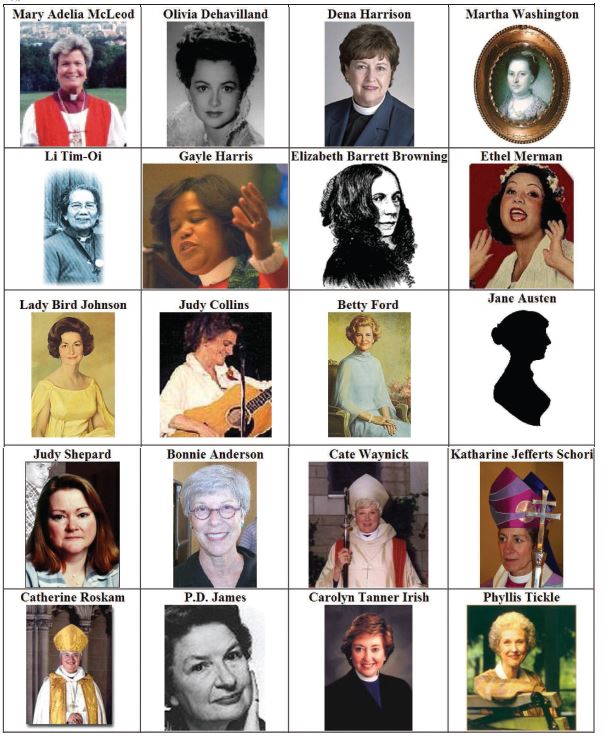
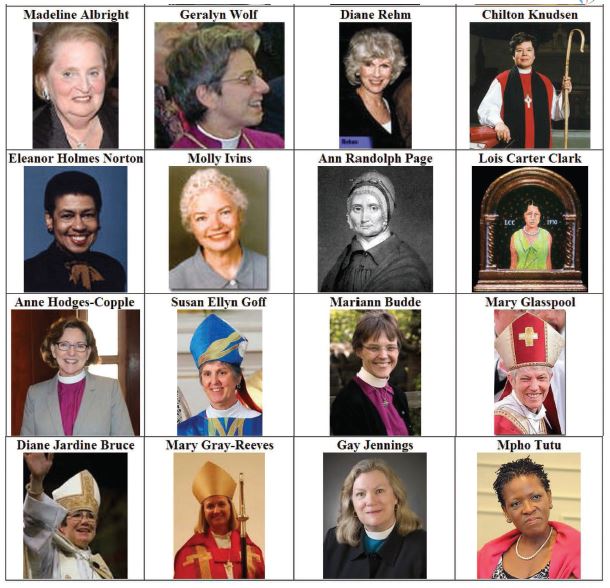
Famous Female Episcopalians

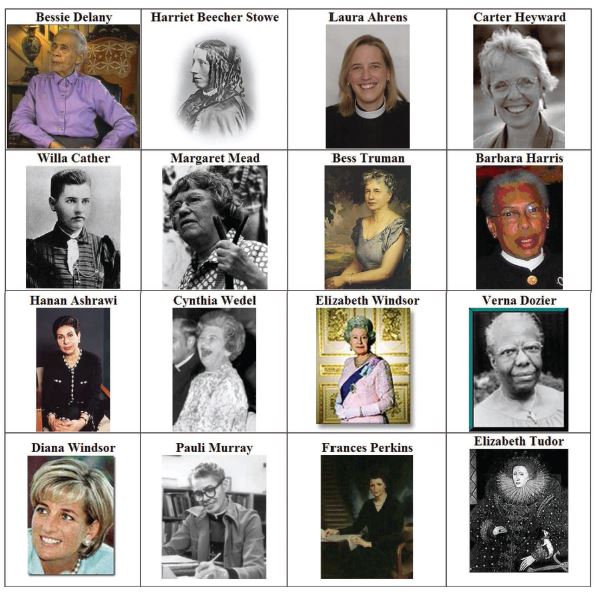
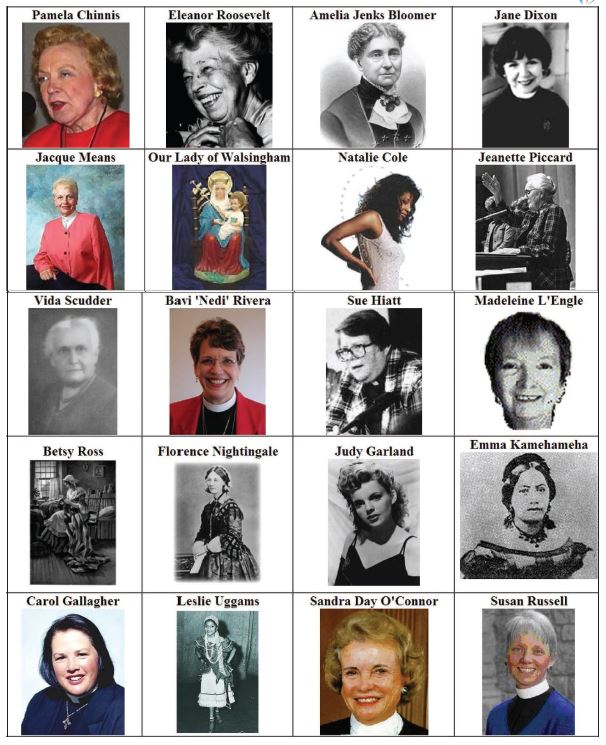
This poster feature, “Famous Female Episcopalians,” was created by activist, author, and artist Louie Clay (neé Louie Crew). The poster depicts the images of several well-known Episcopal women throughout history.

Clay, an Alabama native, is an emeritus professor at Rutgers and founder of Integrity USA, a U.S. not-for-profit organization working in the Episcopal Church in the United States of America (TEC) for the full inclusion of lesbian, gay, bisexual, and transgender (LGBT) members and their allies.

Clay has served as a deputy to six General Conventions from the Diocese of Newark, NJ. He holds honorary doctorates from EDS, GTS, and CDSP. He has published 2,363 of his manuscripts.†

To learn more about Louie Clay and his life’s work, go to http://rci.rutgers.edu/~lcrew/pubs.html
See also https://en.wikipedia.org/wiki/Louie_Crew.

Famous Female Episcopalians (1)
Famous Female Episcopalians (2)
Famous Female Episcopalians (3)
Famous Female Episcopalians (4)

2020-04-30T14:59:22+00:00April 30th, 2015|

Christine Hedgley Johnson: One Remarkable Woman

Deborah Smith Douglas profiles a distinguished woman.

She is a grandmother, a faithful communicant, and a pillar of the church. She knows the lit­urgy and most of the hymns by heart and she never misses a service. She taught Sunday school and vacation bible school for years. She served for years as the head of the altar guild and she still keeps an eagle eye on the young acolytes each Sun­day and, woe betide the crucifer who puts a foot wrong during communion.

In many ways, she is the institutional memory of the church, as well as the guardian of its traditions and identity.

You might assume that she is a cliché, a hat-wearing convention, a rock-ribbed conservative, pious and prim—the sort of “Church Lady” that Saturday Night Live made fun of, once upon a time. You would be wrong.

Christine Johnson is now near­ly eighty years old, and has been passionate about justice since, as a teenager, she watched crosses burn on the lawn of her family’s house in North Carolina.

Her father was a Black Baptist minister, and his in­volvement in civil rights in the late 1950s, and through­out the turbulent 1960s, made him a target for the Ku Klux Klan. This did nothing to stop him—or his fiery daughter (“I never did have the sense to be nice and quiet,” she admits)—from standing firm in their con­victions, rooted and grounded in their faith in God.

When Johnson asked her father if he was afraid of those who hated and opposed him, he answered calmly that his life was in God’s hands; that God had put him there and given him work to do, and that God would call him home whenever He liked. And until then, there was nothing anyone on earth could do to harm him—or, to stop him from doing what he knew was right.

The apple, as they say, doesn’t fall far from the tree. Johnson’s life has been marked by the same sort of fearless commitment to what is right. She has bound­less compassion for those who suffer, and bedrock awareness that in life and in death she belongs to God.

FOUND HER WAY TO THE EPISCOPAL CHURCH

As the daughter of a cradle-Methodist mother and a Baptist-preacher father, Johnson’s early religious for­mation was deep and strong. In her 20s, disenchanted with some aspects of the Baptist tradition, she found her way to the Episcopal Church. The riches of the Book of Common Prayer, with its Biblical resonance, prayers for all occasions, and Eucharistic liturgy, attracted her at once. She loved the round of liturgical seasons, and the fact that whatever Episcopal church she attended, worship would follow the same pattern—and she would be welcome. She was confirmed at Holy Trinity Episcopal, in Baltimore, where the Reverend Robert Powell, a prominent Black minister and community activist, was the rector.

Her involvement with civil rights began in her stu­dent days in New York City, when she joined Martin Luther King Jr. and other civil rights leaders in protests, marches, sit-ins, and demonstrations of all kinds, both in Harlem and in distant cities to which they traveled by bus. She recalls proudly that she was arrested once…but, she wistfully remembers, she wasn’t sent to jail because the Richmond jails were already full.

When she graduated from nursing school in 1961, she went on to earn a Master’s degree in medical-surgi­cal nursing, specializing in clinical practice and hospi­tal administration. In those days, her career options as a Black woman were limited: she could either work at a segregated Black hospital in the South, or an “inte­grated” hospital in the North—but only on night shifts “so people wouldn’t know what color I was,” she dryly explains. She could also join one of the U.S. uniformed services.

So she joined the U.S. Public Health Service Com­missioned Corps and began a career as a nurse, administrator, and educator in government hospitals across the United States—from New York’s Staten Island to Baltimore and Detroit and Santa Fe—a career that would last until she retired (as a Colonel) from active duty in 2001. The armed services weren’t ready for women in authority in the 60s, Johnson recalls, much less Black women: the prejudice was more subtle in the North, but just as real. She wore her dress blues, rather than street clothes, when she went out to restaurants, “to make it a little harder for them to refuse to serve me.”

She met David Johnson at Friendship Baptist Church in New York City, while she was in nursing school. They married in 1970 and had two daugh­ters, Deborah and Christel, “named for our Lord, not a chandelier,” says Johnson. David worked as a motorman for the New York transit authority, operat­ing subway trains until the day he died. The couple separated, out of necessity in 1982, when Johnson was sent to the Indian Hospital in Santa Fe, New Mexico to be the deputy director of Nursing. There were no motorman jobs in Santa Fe, so despite the initial hope that he would be able to join her and the girls, David remained in New York until his death in 1992.

Deborah and Christel are now grown women with graduate degrees of their own. They are both mar­ried with flourishing careers in health care admin­istration in Washington DC and physical therapy in Dallas, respectively. After they came to Santa Fe as children, they spent every summer with their father, so they could stay close to him and be with their cousins, so that they might be part of a larger Black community growing up connected with that part of their heritage (which was never going to happen in Santa Fe, where Blacks even now comprise only about 1% of the population).

This pattern of the girls spending summers in New York was beneficial for the extended family and for their father. The summer pattern also allowed her to take different tours of duty away from the Indian Hospital while the girls were away.

As sensible for everyone as this plan seemed to be, at the end of the day Christine Johnson was still a hard-working single mother in Santa Fe, far from her own family roots. She plunged into church and com­munity life with her whole heart and mind, however, putting down strong new roots that have held fast for decades.

Johnson has done just about every job, and held every office at St. Bede’s, that it is possible to do and hold, (except for church suppers) “I don’t do kitchens” she declares with a grin. She has long been active in the local chapter of the NAACP, she tutors in local schools, and has taught nursing at the com­munity college. She raises money every year for the American Cancer Society. She is a cancer survivor and she has volunteered with at-risk youth at the Santa Fe Mountain Center and served on the board of the local battered women’s shelter. Currently, she helps young people from Santa Fe’s large immigrant population move toward citizenship.

There is a common thread that runs through and unites all that compassionate service. Christine John­son has a large heart for women, children, young people, for the disenfranchised, and the oppressed. “Whatever I do,” she says, “it’s because it’s import­ant for struggling people to know that other people care about them, and that God loves them.”

Johnson is not a cliché, nor (Heaven knows) a caricature of a gloved-and-hatted-pursed-lipped “church lady.” She is an eagle-eyed and lion-heart­ed woman who has given her life to God and to the work God has given her to do.

The whole Body of Christ, the communion of saints, and the Episcopal Church are strengthened and enriched by her presence among us. †

— Author Deborah Smith Douglas has known Chris­tine Johnson for more than 30 years, since they met as new members at St. Bede’s Episcopal Church, Santa Fe, New Mexico. Author of The Praying Life: Seeking God in All Things, Douglas is a writer, retreat leader, spiritual director, and Benedictine oblate.

2020-04-30T14:46:56+00:00April 30th, 2015|

So, You Are Going to Be a Delegate

By Connie Skidmore

This is the first installment of three articles to help orient each of you to the upcoming 2015 Triennial Meeting adventure in Salt Lake City.

Are you going to be a first-time delegate to the Triennial Meeting in June 2015, or have you previously been a delegate? Whatever you are, the 2015 Triennial Meeting should be an exciting time, so it is important that you learn about what to expect.

First of all, you will be participating in the largest official gathering of Episcopal Church Women (ECW). Held every 3 years, the Triennial Meeting runs concurrently with General Convention. The meeting provides an opportunity to meet with ECW members from all nine provinces within the Episcopal Church, women from within the Anglican Communion, ecumenical guests, as well as a variety of speakers and special visitors.

Secondly, as an elected person from your diocese, you will be an integral part of the entire Triennial Meeting process—from registration, to special meetings and elections, to reporting on these privileged experiences upon returning home. Prior to attending the Triennial Meeting, each diocesan president, or other designated representative, will receive several packets of information to review and respond to as requested. (All mailed materials will also be available on the National ECW website, at www.ecwnational.org.) Included will be a schedule listing the times and locations of each day’s events.

As a delegate, you will be expected to attend the ECW plenary (meeting) sessions and events. Delegates will have the time and opportunity to visit the General Convention Exhibit Hall, as well as attend various General Convention meetings, participate in diocesan group for activities and/or meals during the General Convention/Triennial Meeting “shared time.” (A special bonus this triennium: The opportunity to see and hear the newly-elected Presiding Bishop.)

Upon arrival at the Salt Palace Convention Center in Salt Lake City, delegates will register and receive a finalized Triennial Meeting information packet. A delegate welcome/orientation meeting will take place in Plenary Room, where you will hear helpful information to get you started. As a Triennial Meeting delegate, you will be voting on officers, resolutions and motions in plenary sessions. A hearing may be held at a certain time to help you understand a resolution, or issue that will be voted on in a later plenary. In plenary sessions, there will be an opportunity to speak to issues as they are presented. Questions are welcome, although it is expected that all in attendance follow the decorum of parliamentary procedure.

One of the best learning times will be attending the ECW workshops that are offered during Triennial. There are so many good choices it will be difficult to select just a few during the time available. A suggestion is to have each delegate in your diocese attend something different so you can take home a variety of information and experiences to share with those in your diocese.

The goal of the ECW National Board is to make the 2015 Triennial Meeting in Salt Lake City a wonderful and memorable experience for each and every ECW delegate.†

2020-04-30T14:21:57+00:00April 30th, 2015|
Go to Top