

Caregiving and Alzheimer’s in Today’s World
Workshop scheduled for July 16, 2022
1:00 Eastern
This workshop is designed to give a face to Alzheimer’s disease from the caregiver’s and care recipient’s perspective. Participants will learn the importance of mind, body, spirit and the arts, how to find resources ad create a support system. The leader of this workshop has written a trilogy of her experience caring for her husband over the course of 9 years.
*Attendance is limited to the first 100 persons who log into the Zoom workshop.
*This Zoom workshop will be video and audio recorded and hosted on the NECW YouTube channel.
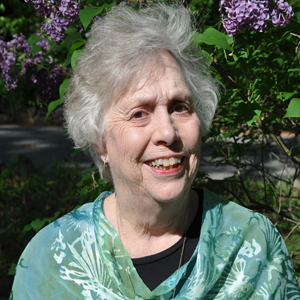
About the Author
Marjorie Burke grew up in Watertown, Massachusetts, and moved to Lexington when she married her husband, Donald; they raised their two sons there. She is a graduate of the Massachusetts College of Pharmacy and Health Sciences University and worked as a staff pharmacist at Children’s Hospital in Boston for a number of years, followed by substituting in many other Boston hospitals.
Marjorie has always been active in the Episcopal Church at all levels—parish, diocese, and national. She served as national president of the Episcopal Church Women and coedited Women’s Uncommon Prayers: Our Lives Revealed, Nurtured, Celebrated. Her poetry and prose have been published in literary magazines and local newspapers. She and her husband, together, wrote Melting Ice ~ Shifting Sand, which chronicled the first six years of his struggle with Alzheimer’s disease. She completed the trilogy with Pilgrimage on Ice and Sand, and Beyond Ice and Sand. When Will Someday Come is a collection of poems and meditations she wrote on grieving and living again.
Currently, Marjorie lives in Weare, New Hampshire, where she has just completed sixteen years on the Weare District School Board, five of them as chair. Her beloved husband, Donald, died in September 2018. Marjorie has been a weaver and a liturgical dancer in the past and likes to garden and cook.
Stress Self Reflection
List your warning signs of stress.
- Identify 2 major sources of stress.
- Are there steps you can take to change these stressors? If so, what are they?
- What action can you take to reduce or minimize stress?
Suggested Reading
Fiction
Genova, Lisa. Still Alice. Gallery Books, 2007. – The story of a woman suffering from early onset Alzheimer’s disease. Made into an award-winning movie starring Julianne Moore.
Memoir
Angelica, Jade C. Where Two Worlds Touch: A Spiritual Journey Through Alzheimer’s. Skinner House, 2014. – An ordained minister shares the story of her mother’s decline with Alzheimer’s disease; both a spiritual memoir and a pastoral guide.
Buchman, Sunny, with Paul Buchman. Precious Window of Time: Our Journey with Alzheimer’s. Author House, 2011. – The story of the author’s husband’s Alzheimer’s disease and how she made each moment left to them precious and meaningful.
Comer, Meryl. Slow Dancing with a Stranger: Lost and Found in the Age of Alzheimer’s. Harper One, 2014. – A deeply personal memoir of how one woman dealt with her husband’s Alzheimer’s disease.
Cooney, Eleanor. Death in Slow Motion: A Memoir of a Daughter, Her Mother, and the Beast Called Alzheimer’s. HarperCollins, 2003. – A story of how both mother and daughter face the realities of living with Alzheimer’s that is both poignant and humorous.
Davis, Robert. My Journey into Alzheimer’s Disease: A True Story: Helpful Insights for Family and Friends. Tyndale House, 1989. – A pastor’s personal journey with Alzheimer’s disease.
Gross, Jane. A Bittersweet Season: Caring for Our Aging Parents—and Ourselves. Alfred A. Knopf, 2011. – A moving story of a former New York Times reporter’s challenges finding appropriate care for her aging mother suffering from dementia. Combines personal narrative with practical advice.
Hoblitzelle, Olivia Ames. The Majesty of Your Loving. Green Mountain Books, 2008; republished as Ten Thousand Joys and Ten Thousand Sorrows: A Couple’s Journey Through Alzheimer’s. Tarcher Penguin, 2010. – A story of love and courage as the author’s husband Alzheimer’s disease progresses. Each chapter ends with suggestions, reflections, and seed thoughts.
Kuster, Anne McLane, with Susan McLane. The Last Dance: Facing Alzheimer’s with Love and Laughter. Peter E. Randall, 2004. – A poignant and loving story of a dynamic woman as she slipped into the depths of Alzheimer’s disease, told by her daughter.
Matthews, Glenn, and Gail Matthews. Did I Die? Managing the Mayhem of Alzheimer’s: A Caregiver’s Guide to Peace and Quality of Life. Privately published, 2013. – How a couple dealt with Alzheimer’s disease.
Miller, Sue. The Story of My Father: A Memoir. Random House, 2003. – Beautifully written story of a father and daughter as they adjust to their changing roles when Alzheimer’s enters their lives.
Montgomery, Michelle. Alzheimer Diary: A Wife’s Journal. CreateSpace, 2010. – A nine-month journal of a wife dealing with her husband’s Alzheimer’s disease.
O’Brien, Greg. On Pluto: Inside the Mind of Alzheimer’s. Codfish Press, 2014. – The author’s own story of what it is like to live with Alzheimer’s disease.
Peterson, Barry. Jan’s Story: Love Lost to the Long Goodbye of Alzheimer’s. Behler Publications, 2010. – A husband’s poignant telling of his wife’s decent into Alzheimer’s disease.
Swenson, Harriet K. Around the House: One Woman Shares How Millions Care. Peter E. Randall, 2015. – Random daily thoughts for living captured as the author cares for her husband dying with cancer.
Whouley, Kate. Remembering the Music, Forgetting the Words: Travels with Mom in the Land of Dementia. Beacon Press, 2011. – Stories told with love and humor about the author’s caring for her mother suffering from Alzheimer’s.
Nonfiction
Archer, Janet. An Invitation to Pause: Musings from a Mindfulness Teacher. Blue Bungalow, 2015. – Twenty-eight short stories inviting you to pause and take stock of the precious gifts in every moment.
Bays, Jan Chozen. How to Train a Wild Elephant, and Other Adventures in Mindfulness. Shambhala, 2011. – A year’s worth of mindfulness practices for living life more joyfully and fully.
Bell, Karen Whitley. Living at the End of Life: A Hospice Nurse Addresses the Most Common Questions. Sterling Ethos, 2010. – Answers from a hospice nurse to questions about dealing with the final months and days of life.
Bloom Michael. The Accidental Caregiver’s Survival Guide: Your Roadmap to Caregiving Without Regret. Bloom Coaching and Performance, 2013. – A wealth of practical tips to help caregivers deal with the roller-coaster journey of caring for an ill loved one.
Brackey, Jolene. Creating Moments of Joy: A Journal for Caregivers. 4th ed. Purdue University Press, 2008. – A collection of vignettes of people suffering from the many forms of dementia with tips for coping.
Cail, Mary M. The All-Weather Friend’s Guide to Alzheimer’s Disease: Staying Connected to Loved Ones with Dementia and Their Caregivers. True Wind, 2011. – A guide for friends and families who want to stay connected with people suffering from Alzheimer’s disease.
Callone, Patricia R., et al. A Caregiver’s Guide to Alzheimer’s Disease: 300 Tips for Making Life Easier. Demos Medical Publishing, 2006. – A guide filled with helpful tips and techniques to assist caregivers.
Cohen, Alan. A Daily Dose of Sanity: A Five-Minute Soul Recharge for Every Day of the Year. Hay House, 2010. – A must-read to begin each day with inspiring, poignant, and humorous stories.
Cohen, Alan A Deep Breath of Life: Daily Inspiration for Heart-Centered Living. Hay House, 1996. – Daily meditations that soak deeply into the beginning of your day.
Coste, Joanne Koenig. Learning to Speak Alzheimer’s: A Groundbreaking Approach for Everyone Dealing with the Disease. Houghton Mifflin, 2003. – The five tenets of the “habilitation” approach to support the independence and dignity of those suffering with Alzheimer’s disease.
Freitas, Joshua J. Dementia Concept. Blue Sail, 2015. – A caregiver’s guide to improving life for those with Alzheimer’s disease and related dementias.
Gawande, Atul. Being Mortal: Medicine and What Matters in the End. Metropolitan Books, 2014. – A doctor’s perspective on contemporary medicine and what matters at the end of life.
Gray-Davidson, Frena. The Alzheimer’s Sourcebook for Caregivers: A Practical Guide for Getting Through the Day. 3d ed. McGraw-Hill, 1999. – Practical tips for dealing with difficult behaviors, managing stress, and caring for yourself.
Hughes, Holly J., ed. Beyond Forgetting: Poetry and Prose About Alzheimer’s Disease. Kent State University Press, 2009. – Honest, deeply moving, and compassionate stories and poems by doctors, nurses, social workers, and family members whose lives have been touched by Alzheimer’s disease.
Jacobs, Barry J. The Emotional Survival Guide for Caregivers: Looking After Yourself and Your Family While Helping an Aging Parent. Guilford Press, 2006. – Tips for finding emotional support, drawing on spiritual resources, and making the most of the chaos that takes over caregivers’ lives.
Kind, Vicki. The Caregiver’s Path to Compassionate Decision Making: Making Choices for Those Who Can’t. Greenleaf Book Group Press, 2010. – Full of helpful suggestions for making decisions for loved ones no longer capable of making them on their own.
Kuhn, Daniel. Alzheimer’s Early Stages: First Steps for Families, Friends, and Caregivers. 3d ed. Hunter House, 2013. – A helpful guide for new caregivers in understanding the disease.
Lake, Nell. The Caregivers: A Support Group’s Stories of Slow Loss, Courage, and Love. Scribner, 2014. – Members of a support group share their stories affirming how essential it is for caregivers to have a support group.
London, Judith L. Connecting the Dots: Breakthroughs in Communication as Alzheimer’s Advances. New Harbinger, 2009. – Helpful suggestions and techniques for maintaining meaningful relationships with loved ones in middle or late stages of Alzheimer’s disease.
Lundberg, Gary, and Joy Lundberg. I Don’t Have to Make Everything All Better: Six Practical Principles to Empower Others to Solve Their Own Problems While Enriching Your Relationships. Viking Press, 1999. – A handbook providing tips on using validation in communication to help others help themselves.
McCullough, Dennis M. My Mother, Your Mother: Embracing “Slow Medicine,” the Compassionate Approach to Caring for Your Aging Loved Ones. Harper, 2008. – Sensitively written recommendation for a “slow medicine” of common sense and kindness for attending to the needs of the elderly and improving the quality of their late lives.
Mace, Nancy, and Peter Rabins. The 36-Hour Day: A Family Guide to Caring for People with Alzheimer’s Disease, Related Dementia, and Memory Loss. 5th ed. Johns Hopkins University Press, 2011. – Considered by many to be the Bible on Alzheimer’s disease, full of practical information. If you read only one book on caring for people with Alzheimer’s, this is the book to read.
Newmark, Amy, and Angela Timashenka Geiger. Chicken Soup for the Soul: Living with Alzheimer’s and Other Dementias. Chicken Soup for the Soul, 2014. – 101 stories of caregiving, coping, and compassion to provide support for all phases of the journey.
Peterson, Betsy. Voices of Alzheimer’s: Courage, Humor, Hope, and Love in the Face of Dementia. Da Capo Press, 2004. – A collection of short essays covering all aspects of dementia, including diagnosis, financial matters, medical issues, and final days.
Santulli, Robert B. The Alzheimer’s Family: Helping Caregivers Cope. W. W. Norton, 2011. – Helpful information for the entire family of unpaid caregivers learning how to cope when someone is diagnosed with Alzheimer’s disease.
Sheehy, Gail. Passages in Caregiving: Turning Chaos into Confidence. William Morrow, 2010. – The author of Passages and other books on stages of life uses the metaphor of walking a labyrinth to outline the turns and new normals of caring for a loved one with a terminal illness.
Shenk, David. The Forgetting: Alzheimer’s, Portrait of an Epidemic. Doubleday, 2001. – A well-researched book that discusses the social, medical, and spiritual implications of dealing with Alzheimer’s.
Snyder, Lisa. Speaking Our Minds: What It’s Like to Have Alzheimer’s. Health Professions Press, 2009. – Stories of people living with Alzheimer’s disease, sharing both their pain and their courage.
Strauss, Claudia J. Talking to Alzheimer’s: Simple Ways to Connect When You Visit with a Family Member or Friend. New Harbinger Publications, 2002. – Helpful suggestions addressing situations that come up when visiting someone with Alzheimer’s that will make the time together pleasant and meaningful for everyone.
Swinton, John. Dementia: Living in the Memories of God. William B. Eerdmans, 2012. – The author, a pastoral theologian, helps readers consider dementia from the compassionate perspective of God, in which we do not lose our worth just because we lose some capabilities.
Tarach-Ritchey, Angil. Behind the Old Face: Aging in America and the Coming Elder Boom. Sculpt Media, 2012. – A unique solution to the debate surrounding the rising cost of caring for our elderly.
Zeisel, John. I’m Still Here: A New Philosophy of Alzheimer’s Care. Penguin Books, 2010. – Tips for developing meaningful communication, building relationships, and connecting through art, music, poetry, and film with people with Alzheimer’s disease.
Selected Resources
General Resources
Alive Inside: www.aliveinside.us (video about the Music & Memory program, which shows the importance of music for patients suffering from any form of dementia)
Alzheimer’s Association: www.alz.org
Alzheimer’s Store: www.alzstore.com
Powerful Tools for Caregivers: www.powerfultoolsforcaregivers.org
Second Wind: www.secondwind.org (information on a Virtual Dementia Tour, which lets caregivers experience what it is like to live with dementia)
Teepa Snow, dementia and Alzheimer’s care expert: www.teepasnow.com
Movies about Alzheimer’s Disease
Away from Her
Aurora Borealis
Firefly Dreams
Glen Campbell: I’ll Be Me
Iris (a memoir of Iris Murdoch)
The Memory Loss Tapes
The Savages
Still Alice
Self-Care Resources
Google “Memory Café” and learn more about taking part in these gatherings. Find one in your area and attend. Both caregiver and care receiver can gain enormous benefits.
Search the Internet for caregivers’ support groups near you. Dementia is devastating for the entire family, and everyone affected by it needs support. The primary caregiver cannot provide the optimal care alone.
As a caregiver, develop your own self-care regime. Remember the words of the flight attendant before an airplane takes off: put your own oxygen mask on before you help your seatmate. If you don’t take care of yourself first, you will not be able to care for others.
Here are some self-care suggestions that have worked for me:
- Plan regular “hours off” to restore yourself.
- Sit by a body of water and meditate.
- Find a special “retreat” place where you are washed in peace, quiet, solitude.
- Talk with a spiritual guide about faith issues.
- Keep a journal of the feelings you are experiencing.
- Choose a piece of music with deep percussion sounds, lie on the floor, and let the vibrations radiate through your body.
- Write—take paper and pencil and simply write. Don’t edit, just write. Get rid of your stress, emotions, et cetera; then crumple the paper, stomp on it, tear it up, or burn it.
- Get regular exercise.
- Take a yoga class.
- Practice mindfulness.
- Start coloring—buy an adult coloring book and a box of crayons, and let your inner child loose.
- Remember to laugh, no matter how bad things seem.
- Forgive yourself when you think you’ve done something wrong.
- Develop your own stress busters. There is no right or wrong in this area; whatever works for each individual is best. Cry, scream, stomp, try any of the other suggestions on this list.
- Ask for help. Your family and friends will be there for you.

 La Historia de “La Cocina de Primeras Naciones” ha tenido sus raíces en el ocaso de los años 90 por medio de la Reverenda Melanie Spears, su esposo George y su familia, y la congregación de “La Misión India de Todos Los Santos”. Durante este tiempo, las conferencias del “Camino Entrelazado” o “Path Crossing” fueron sostenidas. El “Camino Entrelazado” o “Path Crosssing” promovió la exploración de asociaciones Interculturales, uniendo así predominantemente a las congregaciones nativo-americanas con las congregaciones anglosajonas en los Estados Unidos.
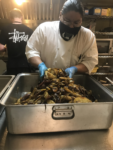 Cuando el Reverendo Robert Dos Toros visitó y entrevisto en la iglesia de “Todos Los Santos” después, expreso sus esperanzas de que un ministerio de alimentación empezara y fuera sostenible. Esto se concatena con lo expresado por el Padre Robert al expresar: “Alimentar y dar de beber al hambriento y sediento, hospedar al forastero, son tanto un mandato del evangelio como una practica Lakota.” Mateo 25: 35-36 establece, “Porque tuve hambre, y me diste de comer, tuve sed y me diste de beber, fui un forastero y me hospedaste, estuve desnudo y me cobijaste, estuve enfermo y cuidaste de mí, estuve en prisión, y me visitaste.”
 El Reverendo Robert Dos Toros aceptó el llamado a servir como el vicario de la iglesia de “Todos Los Santos” y el misionero para el departamento del Trabajo Indio en la Iglesia Episcopal en Minnesota o sus siglas en inglés (ECNM). Un plan detallado y cuidadoso se puso en marcha, y “La Cocina de las Primeras Naciones” o como lo indican sus siglas en inglés (FNK) empezó sirviendo el día de todos los santos, el 1 de noviembre de 2008. El Padre Robert ideo el nombre “La Cocina de Todas Las Naciones”, notando que vivimos cerca de la frontera con Canadá y el termino “Primeras Naciones” es usado para describir a los pueblos indígenas de Canadá. Estas palabras encapsulan el hecho de que los pueblos indígenas en los Estados Unidos también son oriundos de otras naciones y enfatiza las comidas que servimos: Orgánicas e indígenas.
 Since the pandemic started back in 2020, the Communique’ editorial staff has witnessed as well as discussed what services local ECW groups provide that have the largest impact in their community. Food by no surprise continued to rise to the forefront of community needs.
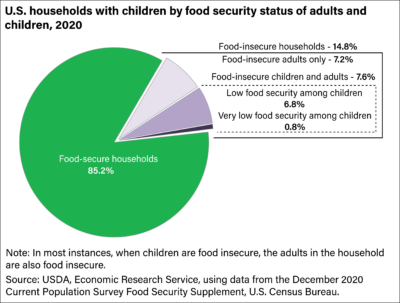
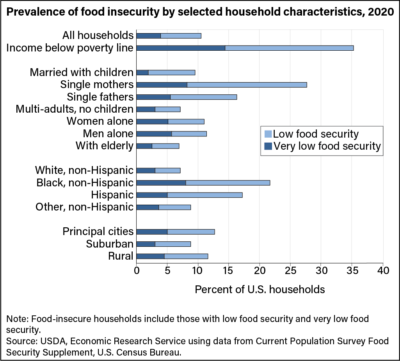 w food security, even when the parents themselves are food insecure. In 2020, 14.8 percent of households with children were food insecure. In about half of those food-insecure households with children, only the adults experienced food insecurity. But in 7.6 percent of households with children, both children and adults were food insecure sometime during the year. In 0.8 percent of U.S. households with children (322,000 households), both children and adults experienced instances of very low food security.
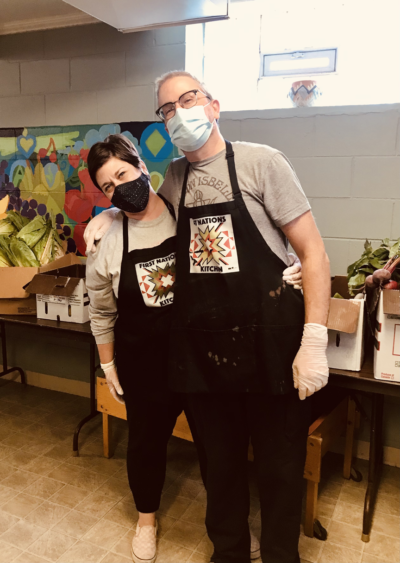 The story of First Nations Kitchen has its roots in the late 1990s with the Reverend Melanie Spears, her husband George and family, and the congregation of All Saints Indian Mission. During this time Path Crossing conferences were being held. Path Crossing encouraged the exploration of cross-cultural partnerships, linking predominantly Native American congregations with mostly Anglo congregations in the United States.
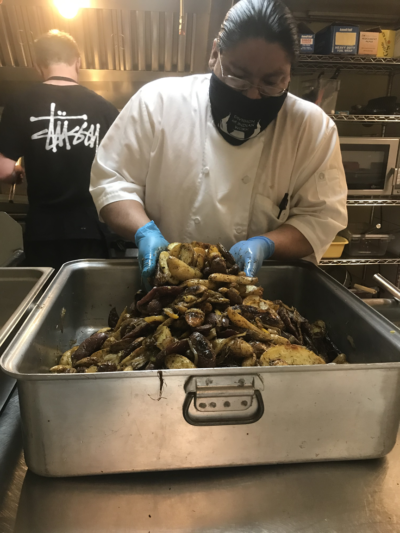 Afterward, a question was posed: “What would you like to do if you could have something here?” The answer that came: “Open a soup kitchen.” The need for a feeding program in the community was apparent. In time a commercial kitchen was built, enabling the beginning of such a ministry. The space was beautifully prepared, and the seeds were planted. Mother Melanie had to take early medical retirement in 2000 which halted the next steps, but at the time she recounts having “a vision of a Native man coming to the church… a person who was supposed to be there.”
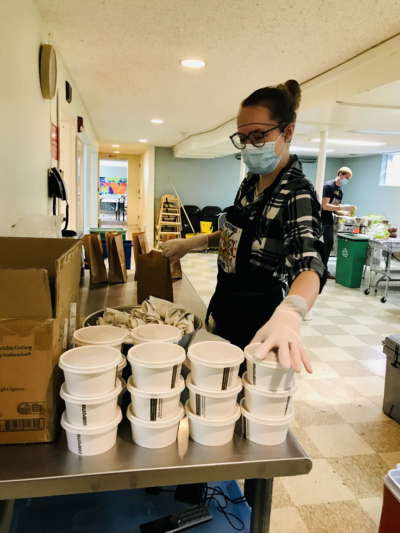 The Reverend Robert Two Bulls accepted the call to serve as the Vicar of All Saints and the Missioner for the Department of Indian Work in the Episcopal Church in Minnesota (ECMN). Detailed and careful planning ensued, and First Nations Kitchen (FNK) began serving on All Saints Day, November 1, 2008. Father Robert came up with the name First Nations Kitchen, noting that we live close to the Canadian border and the term “First Nations” is used to describe the indigenous peoples of Canada. These words capture the fact that the indigenous peoples here in the U.S. also hail from sovereign nations and further emphasize the foods that we serve: indigenous and organic.
 El Archidiácono Louis Maberry de la Diócesis Episcopal del Oeste de Luisiana y asignado a la iglesia Episcopal de San Jorge ubicado en la ciudad de Bossier en el estado de Luisiana.