Episcopal Church Women

About Episcopal Church Women

This author has not yet filled in any details.
So far Episcopal Church Women has created 453 blog entries.

Season of Creation We Are Living Waters
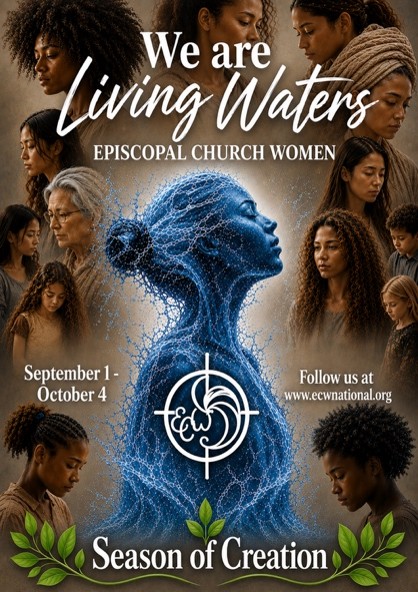
Season of CreationThe National Episcopal Church Women are hosting The Season of Creation, an annual ecumenical commemoration running from September 1 to October 4. The 2026 program centers around the theme Living Water, which unites Christians globally to pray, worship, and take action to protect the environment. Over the coming weeks, the program will explore how human beings interact with and impact physical and spiritual water sources, emphasizing that humans are interconnected with the global water cycle.

Participants are invited to engage with these lessons by sharing their own personal stories, reflections, and photographs on the ECW’s Facebook page.

Estación de la creación. Agua Viva

La Asociación Nacional de Mujeres de la Iglesia Episcopal está organizando La estación de la creación, una conmemoración ecuménica anual que se extiende desde el 1° de septiembre hasta el 4 de octubre. El programa de 2026 se centra en el tema del Agua Viva, que une a los cristianos de todo el mundo para orar, rendir culto y tomar medidas para proteger el medio ambiente. En las próximas semanas, el programa
explorará cómo los seres humanos interactúan con las fuentes de agua física y espiritual, así como el impacto que tienen sobre ellas, enfatizando que los humanos están interconectados con el ciclo del agua a nivel mundial.

Acompáñenos en Facebook y en las lecciones guiadas en el sitio web para unirnos y explorar la trayectoria del Agua Viva durante el mes de septiembre.

Season of Creation: We Are Living Waters Week 1 – September 1 – ‘see below’
Semana 1 Estación de la creación. Somos Agua Viva: Semana 1

Season of Creation: We Are Living Waters – Week 2 -September 8
Estación de la creación. Somos Agua Viva: Semana 2

Season of Creation: We Are Living Waters – Week 3 – September 15
Estación de la creación. Somos Agua Viva Lamento: Semana 3

Season of Creation: We Are Living Waters – Week 4 – September 22
Estación de la creación. Somos Agua Viva: Semana 4

Season of Creation: We Are Living Waters – Week 5 – September 29
Estación de la creación. Somos Agua Viva: Semana 5

Week 1

This week’s curriculum highlights a project by artist-in-residence Kweli Kitwana, who collects water stories to examine how local waterways connect people across geographies, histories, and ancestry.

From the Book of Genesis (NRSVue):

1 When God began to create the heavens and the earth, 2 the earth was complete chaos, and darkness covered the face of the deep, while a wind from God swept over the face of the waters.

6 And God said, “Let there be a dome in the midst of the waters, and let it separate the waters from the waters.” 7 So God made the dome and separated the waters that were under the dome from the waters that were above the dome. And it was so.

9 And God said, “Let the waters under the sky be gathered together into one place, and let the dry land appear.” And it was so. 10 God called the dry land Earth, and the waters

20 And God said, “Let the waters bring forth swarms of living creatures, and let birds fly above the earth across the dome of the sky.” 21 So God created the great sea monsters and every living creature that moves, of every kind, with which the waters swarm and every winged bird of every kind. And God saw that it was good. 22 God blessed them, saying, “Be fruitful and multiply and fill the waters in the seas. .

26 Then God said, “Let us make humans in our image, according to our likeness, and let them have dominion over the fish of the sea and over the birds of the air and over the cattle and over all the wild animals of the earth and over every creeping thing that creeps upon the earth.”

27 So God created humans in his image, in the image of God he created them. . .

Without water, there is no creation as we have come to know it. There is no life as we have come to know it and live it.

Welcome to The Season of Creation which is an annual ecumenical commemoration that runs from September 1 to October 4. However, as part of God’s creation, this season is with us each and every day. Yet, in this time set aside to focus on creation and how we, as human beings interact and impact it, Christians worldwide unite during these weeks to pray, worship, and take action to protect the environment, God’s creation. The 2026 theme is “Living Water,” inspired by the prophet Ezekiel 47:9-12 (NRSVue):

9 Wherever the river goes, every living creature that swarms will live, and there will be very many fish once these waters reach there. It will become fresh, and everything will live where the river goes. 10 People will stand fishing beside the sea from Engedi to Eneglaim; it will be a place for the spreading of nets; its fish will be of a great many kinds, like the fish of the Great Sea. 11 But its swamps and marshes will not become fresh; they are to be left for salt. 12 On the banks, on both sides of the river, there will grow all kinds of trees for food. Their leaves will not wither nor their fruit fail, but they will bear fresh fruit every month, because the water for them flows from the sanctuary. Their fruit will be for food and their leaves for healing.”

As we begin this journey together, you are invited and encouraged to watch alone or in groups, a video invitation from faith leaders: https://www.youtube.com/watch?v=fnho_aeql2w

There is also a guide which includes prayers, services, and other resources that can be used during these weeks and after:

https://drive.google.com/file/d/1WeWEjt_WxyS6Ed5qD8tnRIahSMJ5SUmi/view

Each week, there will be resources provided for review and reflection on the ECW webpage and you are encouraged to join the community on our Facebook page to share those reflections: https://www.facebook.com/ecwnational. Take time to be with the information provided, to include your reflections and those who also share. Don’t rush.

Reflecting on the theme, Living Water, the Episcopal Church Women recognize the words refer to Jesus being the Living Water that spiritually sustains and heals us. In John 7:37-39 (NRSVue), he promises:

37 On the last day, the climax of the festival, Jesus stood and shouted to the crowds, “Anyone who is thirsty may come to me! 38 Anyone who believes in me may come and drink! For the Scriptures declare, ‘Rivers of living water will flow from his heart.’” 39 (When he said, “living water,” he was speaking of the Spirit, who would be given to everyone believing in him.)

In John 4:13-14 (NRSVue), Jesus contrasts this spiritual water that is him with physical water as he advises the Samaritan woman:

13 Jesus replied, “Anyone who drinks this water will soon become thirsty again. 14 But those who drink the water I give will never be thirsty again. It becomes a fresh, bubbling spring within them, giving them eternal life.”

And yet we know physical water is also important to the life and well-being of God’s creation, to include us, those created in God’s image. Therefore, during this period of reflection, we, as Episcopal Church Women, will focus on Living Waters, that we are living waters because we are comprised of water and there are various sources of water important to life on this planet with which we interact and affect. While eternal life is important, we understand it is also important to care for and nourish life as we live it in the here and now, that we care for and protect creation.

In Genesis, the human did not live until God shared her breath and as we breathe, we exchange 10-17 ounces of water with the atmosphere on a daily basis. Each time we exhale, our breath carries invisible water vapor into the air. Our bodies, on average are 60% water and our skin constantly loses invisible moisture (insensible perspiration) directly to the air, adding another 13 – 20 ounces daily. These numbers increase if we actively exercise and perspire. As we breathe and perspire, our water joins the global water cycle. Once our breath water and perspiration enter the air as gas and join with water that evaporates from oceans, lakes, plants, and other sources, it all rises to form clouds and eventually falls back to earth as rain or snow.

We are one with the waters of creation

This week we will focus on how we are one with the waters of creation. As part of this journey, I’d like to introduce you to Kweli Kitwana. Kweli is an artist, a creative and she is an Artist in Residence with MANGO for the Ocean VII International Virtual Residency! https://oceandecade.org/events/ocean-virtual-art-residency/. As part of this residency, she has used Facebook postings to share her journey. I share, with her permission, a recent edited post- https://www.facebook.com/AfricanAmericanFabrics

This week, my project moved more deeply into the physical collection of memory. I have been gathering water and water stories as part of my exploration of the ocean as a sacred witness and keeper of memory. I am thinking about water not simply as something I observe, but as something that moves, carries, connects, and transforms. My collection is beginning to include very different relationships with water.

I have received from many of you actual water and stories connected to the Arkansas River, Memphis tap water drawn from the ancient Memphis Sands aquifer, Berkeley water, and stories connected to the Ohio River, Hawaii, and the Nile River in Egypt. One story remembers a childhood creek behind an elementary school our sons attended. Another brought me the Chinese saying, “When drinking water, remember the source.”

People have described water as cleansing and calming, as something that helps them sleep, as a place to float, and as a force that can carry the body through waves. These contributions are helping me understand something important about my project: we do not have to live beside an ocean to have a relationship with it.

A person may experience water through the river behind their home, a childhood creek, rain falling in their neighborhood, a well, an underground aquifer, a lake, or the water flowing from their kitchen tap. These seemingly local waters are part of much larger hydrological systems. Rivers travel toward other rivers, estuaries, bays, and oceans. Rain rises and returns. Underground water holds traces of ancient rainfall. Water continually crosses the boundaries we use to separate places.

For people who live inland, the ocean may therefore be present in their own “backyard” through the waterways that surround and sustain them.

This expands my understanding of interconnectedness. The Pacific Ocean I encounter from Ruby (her boat) at the Berkeley Marina is not the only entry point into this work. Someone standing beside the Arkansas River or remembering a childhood creek can enter the conversation too. The Memphis Sands aquifer introduces another scale of memory, water held underground over immense periods of time. The Nile carries another geography and cultural history. A caregiver befriended at a local swimming pool is another entry point. The Ohio River story carries an especially powerful ancestral dimension through its association with ancestors navigating toward freedom from enslavement.

These waters do not carry identical histories, and I do not want to collapse them into a single story. I am interested in what happens when they are allowed to exist beside one another as individual memories within an interconnected water system.

My visit to the UC Berkeley Botanical Garden expanded this exploration further. I spent time learning about dye plants and was given plant cuttings, flowers, leaves, and roots to continue experimenting with in my studio. I am now working with Indigofera, woad, madder root, alkanna, Cota tinctoria, and Coreopsis.

I began to realize I am interested in these plants as more than sources of color. I am thinking about them as remnants and carriers of histories. Because some of these plants have traveled across continents and oceans through trade, migration, colonization, and cultural exchange. Indigo, in particular, carries a complicated history connected to colonial economies and the labor and knowledge of enslaved Africans. Other plants allow me to think more symbolically about roots, land, sunlight, survival, hidden knowledge, and the places descendants eventually make home.

As a descendant of enslaved Africans, this brings another layer to my investigation. I am asking what my ancestors carried forward when so much was taken from them. Not only trauma, but knowledge, creativity, spirituality, resilience, love, beauty, and ways of understanding the natural world.

I am beginning to map each plant into this larger story: Indigo as passage, woad as empire, madder as roots, alkanna as hidden memory, Cota as light, and Coreopsis as descendant and place. I will extract colors from these plants onto cloth and paper while preserving some of the original plant material as part of my growing archive.

Now the water and plants are beginning to come together.

I am considering how collected waters, plant dyes, earth pigments, cloth, paper, photographs, and other remnants might become material records of these relationships. A piece of cloth may hold color extracted from a plant while also carrying the story of a particular water. A bottle of water may sit beside the plant remnant and textile it helped create. The process itself can become a mapping of place, movement, ancestry, and memory.

The word “remnant” has become important to me. A remnant is what remains, but it is not necessarily something incomplete. It can contain evidence of an entire story. A root, a piece of cloth, a photograph, a bottle of collected water, a dried flower, or a stain of pigment can hold a relationship to something much larger.

This week’s work is helping me understand that my project is not about recreating the past. It is about recognizing what remains, what has traveled, what connects us, and what continues.

The creek connects to the river.
The river connects to the ocean.
The rain connects to the aquifer.
The plant connects to the land.
The pigment connects to the plant.
The remnant connects to memory.
The ancestor connects to the descendant.

And I am somewhere within all of these relationships, receiving, observing, creating, and carrying something forward.

The water carries.
The plants carry.

I carry.

We are one with the waters of creation

If you are reading this on the ECW website, you are now invited to go to the ECW Facebook https://www.facebook.com/ecwnationalpage to participate in the first week’s assignment/reflection. If you are reading this on the ECW Facebook page, then you are ready to go.

  • How did the bible verses affect how you understand water? How are you “one” with the waters of creation? What are those waters? Where do you find those waters? You might take a walk along a creek and realize your breath; your perspiration has been co-mingled with those waters. You might take a shower or turn on the tap or gather water from a well and realize you are also one with those waters. Or you must might go for a run and perspire and realize that water will join with others to form rain that will fall to the earth and replenish lakes, oceans, and aquifers or water the plants in your garden. As you dress and continue to reflect on Kweli’s writing, you realize how the fibers that form the cloth to make your clothes contains your breath, your sweat. How do you as “Living Waters” interact with other waters of creation? Share your stories past and present. Post pictures if you wish.

As you post your reflections (and pictures), take time to read what others are posting. Think about what you might have in common.
2026-09-08T14:06:03+00:00August 21st, 2026|

Season of Creation We Are Living Waters Week 2

Season of Creation“Then Adonai Elohim formed the human out of the dust from the ground and God breathed into the human’s nostrils a breath of life—so the human became a living being.” (TLV)

We are Living Waters

 Let us pray.

Let the sea and everything in it roar; and the world and all its inhabitants too. Let all the rivers clap their hands. (Ps 98:7-8a)

Why do we destroy your oceans with plastic and filth knowing we are one with these waters?

Why do we destroy your oceans with plastic and filth knowing your water is needed for the life of your people?

Why, oh Lord?

The sea gave up the dead that were in it; and Death and the Grave gave up the dead that were in them, and people were judged by what they had done. (Rev. 20:13)

Amen.

When God breathed into the human, that breath had moisture – water – and that moisture, that water was shared with the human. When that human exhaled, the shared water was then shared with other living creatures. It became part of the cycle of life. That breath, that water has been shared with us and we continue to share it around the world. We are connected to each other by that water, by that breath.

We are one with the waters of creation.

We are one with each other through the waters of creation.

We are Living Waters.

 Thank you for sharing your stories, your reflections, and your pictures. As we continue to delve into our connection to and with each other through water, we will again travel around the world. Too many of us take water for granted. We turn on the tap or faucet and clean water comes out – as much as we want, for as long as we want. The water goes down the drain or if we are outside, down the sewer and then where? Whose lives are affected along the way? What life is affected along the way? All water is recycled. Clean, dirty, it doesn’t matter. Nothing new is ever created. We are in the business of recycling what God created in those six days.

While 70% of the planet is covered in water, only 2% is available to sustain life. Every living creature vies for that 2%.

Watch the following videos and then share your reflections to the questions that follow on the ECW Facebook page (https://www.facebook.com/ecwnational/). If your language is other than English, the videos have sub-titles.

Questions for Reflection:

  • Do you believe in climate change and how has it affected where you live?
  • What is the current status concerning water in the cities/countries mentioned in the videos?
  • How are the lives of children affected by the lack of clean, available water?
  • Are you aware of how much water it takes to grow the food you eat or produce the clothes you wear?
  • Do you believe water should be considered a commodity from which people make a profit? Do you purchase water?
  • As you walk or drive, do you see water being wasted?
  • Is there anything else you learned about how we use and perhaps misuse/abuse water?
  • Be sure to read and reflect on what others share.
2026-09-07T17:45:34+00:00August 21st, 2026|

Women in Healing and Theology Scholarship 2026 Winners

The National Episcopal Church Women is proud to recognize the recipients of its inaugural 2026 Graduate Scholarship Program, celebrating women who are answering God’s call through advanced study in theology and the healing professions. These exceptional scholars exemplify faithful leadership, academic excellence, and a deep commitment to serving Christ through their ministries and vocations. As the first recipients of these scholarships, they establish a meaningful legacy that reflects NECW’s commitment to investing in women whose gifts will strengthen the Church and transform communities for generations to come.

Women in Healing Ministries Scholarship Recipient

Adrienne Hubbard Adrienne Hubbard —Diocese of Olympia / Diocese of Washington (Province VIII)
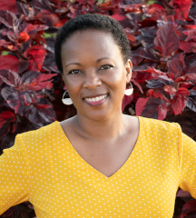
Program: Entry MSN, Johns Hopkins University School of Nursing

Graduation: May 2027

Adrienne’s call to nursing emerged after the death of her godmother Kim, a “nurse, healer, and compassionate spirit,” whose legacy she seeks to carry forward. Her grief drew her back to church and into a vocation where her “path to God and path to nursing are inextricably linked.” Adrienne is active in parish life at Saint Mark’s Cathedral and Ascension & St. Agnes; serves as eucharistic minister and on the 20s/30s leadership team. She highlights intergenerational mentorship from women in caregiving professions. She plans to work as a bedside nurse in DC; long-term goals include maternal-child health policy, advocacy, and a future PhD.

Lisa Richardson Lisa Richardson —Diocese of Southwest Florida (Province IV)
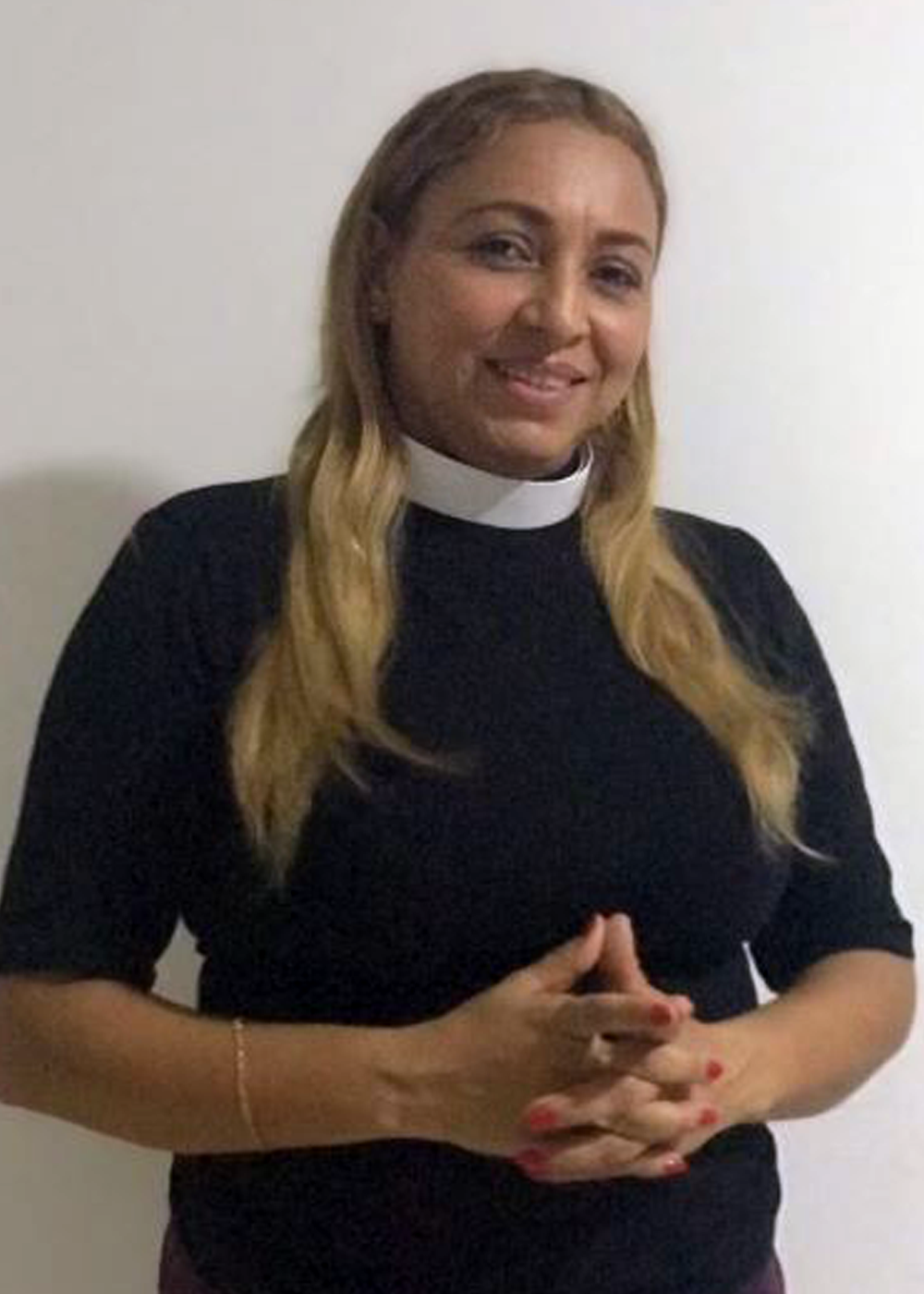
Program: PhD in Art Therapy at Adler University

Graduation: May 2027

Lisa’s calling to the healing professions began through work with at-risk youth and grew into a passion for using creativity and art therapy to support emotional and spiritual wellness. She views creativity as a reflection of being made in God’s image and is committed to making expressive arts programs accessible to underserved communities.

Following a cancer diagnosis, Lisa experienced a period of deep spiritual reflection that strengthened her commitment to helping others heal through faith and creativity. Her doctoral work now focuses on developing expressive arts programs that promote mental wellness and emotional regulation.

Women in Theology Scholarship

Rev-Luz-Garces-ECWLuz María Lambis Garcés —Diocese of Colombia (Province IX)
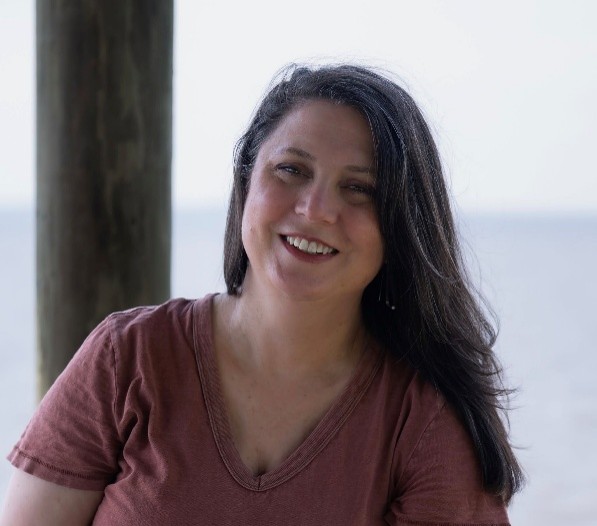
Program: Master of Divinity, Universidad Santo Tomás

Graduation: TBD

Luz María is enrolled in a Master’s in Theology at Universidad Santo Tomás and is discerning a call to ordained ministry with a focus on pastoral accompaniment.

She serves as Women’s Coordinator for Province IX and is a regional formation leader, offering cross-cultural leadership that strengthens women’s ministries across diocesan boundaries. Her financial need is tied to tuition for a four-semester program. She articulates her vocation as a desire “to be a bridge between God and people,” reflecting a deeply rooted pastoral identity.

Susan MuellerSusan L. Mueller —Diocese of Ohio (Province V)
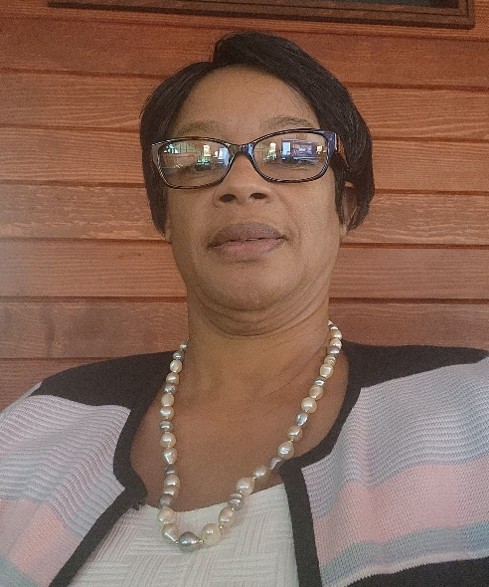
Program: Master of Divinity, Virginia Theological Seminary

Graduation: May 2028

Sue is pursuing an M.Div. at Virginia Theological Seminary with a call to priesthood and sacramental ministry. Her formation is grounded in justice, creation care, and a strong liturgical sensibility. She brings extensive leadership through the Diocesan and National ECW, including service as Creation Care Chair and in worship planning roles.

She writes that she has encountered Christ “in both brokenness and hope,”a theme that shapes her pastoral imagination.

Lucinda DennisLucinda Dennis —Diocese of Missouri (Province V)
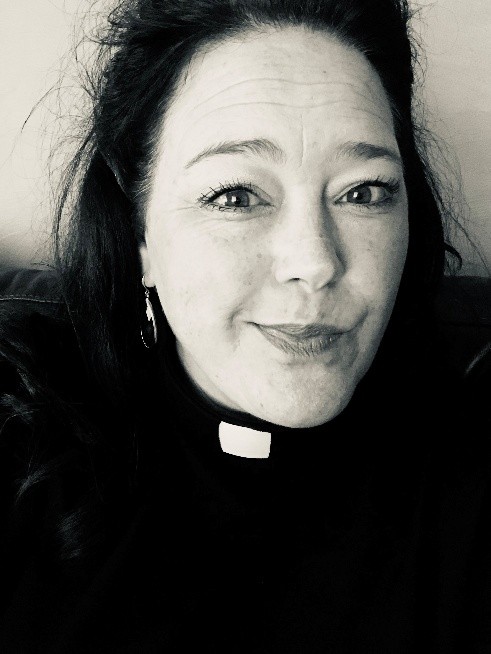
Program: Master of Divinity, Virginia Theological Seminary

Graduation: May 2028

Lucinda describes a lifelong call to ordained ministry that deepened through life experiences, volunteer ministry, and spiritual discernment. After years serving in parish leadership and outreach, she felt called to fully dedicate her life to ministry and theological education. Her leadership has been shaped through Episcopal Church Women, pastoral care ministries, Eucharistic visitation, and outreach to nursing homes and homebound parishioners. She emphasizes servant leadership, compassion, and community-building, particularly through ministries developed during and after the COVID-19 pandemic. Lucinda left employment and relocated to attend seminary full time, viewing the transition as an act of faith and obedience to God’s call.

Alicia HagerAlicia Hager — Diocese of the Great Lakes (Province V)
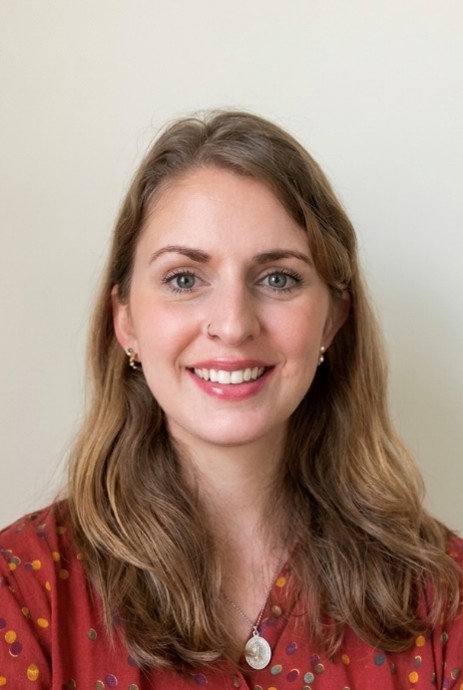
Program: Master of Divinity, The General Theological Seminary

Graduation: May 2027

Alicia’s call to ordained ministry began through lay leadership and discernment toward the diaconate before evolving into a call to the priesthood. After years of formation, delayed by diocesan transitions and the pandemic, she was ordained in 2022 and now leads a growing parish community. She is pursuing her M.Div. to strengthen her formation and expand future opportunities for diocesan and parish leadership. Her ministry is deeply shaped by the women of the Episcopal Church who mentored and supported her through parish life, choir, and outreach ministries. Alicia describes her leadership style as pastoral and relational, centered on guiding and caring for her congregation with compassion and authenticity.

Susanne O’ DaySusanne O’ Day —Diocese of Georgia (Province IV)
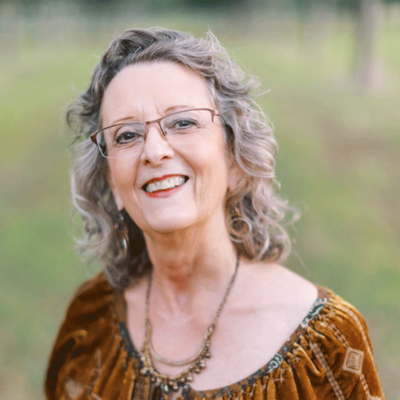
Program: Master of Divinity, General Theological Seminary

Graduation: May 2028​

Her application reflected a lifelong call to ordained ministry that has grown through parish leadership, children’s ministry, preaching, and women’s Bible studies. She is passionate about Christian formation, pastoral care, and creating welcoming communities where women, children, and those on the margins are fully seen, valued, and empowered. The committee was particularly impressed by her thoughtful vocational discernment, demonstrated leadership, and commitment to serving the Church through compassionate, inclusive ministry.​ Suzanne is a dedicated church leader whose theological studies support an ongoing commitment to spiritual formation, service, and leadership within the Episcopal Church.

2026-07-31T16:24:21+00:00July 31st, 2026|

President’s Report June 2026

Lisa BortnerA Season of Faith in Action

Dear ECW Sisters and Friends,

As I reflect on the first months of 2026 and our recent National ECW Board meeting in Providence, Rhode Island, I am filled with gratitude for the faithful witness of Episcopal Church Women across our Church. This season has been marked by prayer, advocacy, service, planning, and renewed connection—reminding me once again that ECW continues to be a vibrant and vital ministry grounded in faith and action.

Throughout January, February, March, and April, I continued hosting Morning Prayer on Facebook Live along with others, creating intentional spaces for reflection, encouragement, and community. These moments of prayer have served as an important reminder that our ministry must always begin with listening for the guidance of the Holy Spirit. Whether we are serving locally, advocating globally, or tending to the work of governance, we do so rooted in prayer.

One of the most meaningful experiences of this season was participating in the 70th session of the United Nations Commission on the Status of Women. Gathering alongside women and leaders from around the world was both inspiring and sobering as we explored issues surrounding justice, equality, and dignity for women and girls. Episcopal Church Women were present not only as observers, but as active participants and advocates.

A particular highlight was our National ECW virtual parallel event, “Raising Awareness for Missing and Murdered Indigenous Women.” This powerful presentation reflected our commitment to advocacy, education, and justice while bringing attention to the ongoing crisis impacting Indigenous communities. I remain deeply grateful to everyone who contributed their gifts and leadership to this important work. The Board later reaffirmed this commitment during our Providence meeting by approving additional efforts to increase the diversity of our Social Justice Committee and strengthen our MMIW advocacy initiatives.

This spring also brought opportunities for collaboration across the wider Church. Conversations continued through the Episcopal Indigenous Justice Roundtable, NGO Commission on the Status of Women gatherings, Creation Care initiatives, International Anglican Women’s Network and General Convention and Triennial planning. Completing Climate Ambassador certification was especially meaningful as we continue to integrate environmental justice into our shared mission.

Communication and connection remain central priorities. Alongside our Second Vice President and website editor, work continues to strengthen the National ECW’s digital presence and communications infrastructure. This was especially important in supporting the virtual platform used during the UN Commission on the Status of Women event.

One of the greatest blessings of these past months has been time spent with women across the Church. I had the privilege of speaking and presenting in Springfield, Western North Carolina, Chicago, Province VIII, Mentone, Alabama and other gatherings. These visits are always deeply life-giving and remind me of the faithfulness, creativity, and commitment that define ECW ministry at every level. It was also encouraging to support the beginnings of a new ECW chapter at St. Cecilia’s in Round Top, Texas, as well as efforts to restart the Diocese of Texas ECW.

Our recent National ECW Board meeting in Providence, Rhode Island, hosted by Province I, beautifully reflected the spirit of service and fellowship that defines this organization. One of the most moving moments of the gathering was attending Church Beyond the Walls in Burnside Park. Despite cold drizzle and gray skies, the bilingual outdoor Eucharist radiated warmth, welcome, and joy. Following worship, Board members assisted in serving meals and distributing bread and clothing to those in need—a powerful reminder that ministry happens not only in meeting rooms, but also in direct service to our neighbors.

The hospitality extended by the Diocese of Rhode Island ECW and St. David’s on the Hill was extraordinary. Sharing fellowship, meals, worship, and conversation with women from across the region was a gift. We also concluded our gathering worshipping together at Grace Episcopal Church in Providence, giving thanks for the ministry entrusted to us.

Much of our Board meeting focused on preparations for the 2027 Triennial, which will be held in Phoenix, Arizona, from July 3–8, 2027, under the theme Women at the Well: Faith in Action. Planning is well underway as we prepare workshops, worship opportunities, a Share Fair, leadership elections, and the Distinguished Woman’s Luncheon. We are especially excited about opportunities for fellowship, learning, and celebrating the ministries happening throughout the Church.

The Board also approved several significant actions during our meeting, including grants and donations supporting Church Beyond the Walls, dioceses impacted by natural disasters in Hawaii and Nebraska, sponsorship for the Big Provincial V Gathering, and the establishment of start-up grants for parish ECWs. We also committed support for the Prayer Vigil on the Doctrine of Discovery and approved the adjusted Triennial budget.

As I look back on these months, I see a season defined by faithful movement—showing up in spaces both local and global, tending carefully to governance and stewardship, advocating for justice, and continuing to strengthen the ministry of Episcopal Church Women. Everywhere I travel, I am reminded that ECW is alive with compassion, creativity, resilience, and hope.

Thank you for the countless ways you continue to serve Christ and the Church through Episcopal Church Women. It is a privilege to serve alongside each of you as together we continue living out our call to faith in action.

Faithfully,

Lisa Bortner

2026-05-27T14:09:28+00:00May 25th, 2026|

President’s Report May 2026

Lisa BortnerPresident’s Report to the National ECW Board
Reporting Period: January–April 2026

This season has been filled with meaningful opportunities for prayer, leadership, advocacy, and connection across the Church and beyond. I remain deeply grateful for the ways in which this Board continues to support and engage the mission and ministry of Episcopal Church Women.

A steady rhythm of spiritual leadership has grounded my work during this time. Through hosting Morning Prayer on Facebook Live across several weeks in January, February, March, and April, I have sought to create space for reflection, encouragement, and community. These gatherings continue to be a reminder that our work must always be rooted in prayer and guided by the Holy Spirit.

In the area of governance and administration, an important action taken following our January meeting was the communication of the Board’s decision to suspend distributions from all National ECW Trust Funds for the 2026 calendar year. In that same correspondence, I shared the Board’s resolution regarding the Wright Legacy Trust Fund (#630). After careful consideration, the Board determined that changes to the United Thank Offering’s bylaws—expanding leadership eligibility beyond women—mean that it no longer meets the original intent of the fund, which was designated for the work of the Woman’s Auxiliary Division. As a result, we have requested that our Executive Council revoke the current allocation arrangement so that the trust may be fully directed to the National ECW. Our resolution is now being reviewed by Executive Council’s Finance Committee. In addition, I met with DFMS leadership to continue conversations around our accounting systems as well as new DFMS systems that are to be used for travel, reimbursements and payments.

Communication and infrastructure have also been a focus during this time. I met regularly with our 2nd Vice President and website/editor to address ongoing communications needs and to strengthen our digital presence. Much work went into the Whova platform that was used by the NGO Commission on the Status of Women to host our virtual event focusing on Missing and Murdered Indigenous Women.

A significant highlight of this reporting period was my participation in the 70th session of the United Nations Commission on the Status of Women. This experience was both inspiring and sobering, as global leaders gathered to address the theme of ensuring and strengthening access to justice for all women and girls. Our presence there as Episcopal Church Women was a powerful witness. We began the week in fellowship, hosting a welcome gathering for our delegation and guests, and continued with worship, relationship-building, and engagement in both official UN sessions and parallel events.

One of the most meaningful contributions of the National ECW during this time was our virtual parallel event, “Raising Awareness for Missing and Murdered Indigenous Women.” This presentation brought critical attention to an ongoing crisis and reflected our commitment to advocacy, education, and justice. I am deeply thankful to all who contributed their time and leadership to make this event impactful.

Much of this season has also been shaped by engagement with the wider Church and global partners. I participated in ongoing conversations through the Episcopal Indigenous Justice Roundtable, as well as gatherings connected to the NGO Commission on the Status of Women. Hosting the Province Presidents and Representatives meeting in February provided an important opportunity to listen, collaborate, and strengthen relationships across our provinces.

Throughout this period, I have also remained engaged in the life of The Episcopal Church through webinars, panel discussions, and Creation Care initiatives. Completing the Climate Ambassador certification was a particularly meaningful step, equipping me to further integrate environmental justice into our shared work.

Equally important has been my connection with diocesan ECW groups. I have had the privilege of serving as a speaker and presenter at several diocesan gatherings, including in Springfield, Western North Carolina, Chicago, and Province VIII. These moments of being present with women across the Church are deeply life-giving and affirm the strength, faith, and dedication that continue to define ECW at every level. It was also a joy to support the beginnings of a new ECW chapter at St. Cecilia’s in Round Top, Texas as well as a group that hope to restart the Diocese of Texas ECW—an encouraging sign of renewal and growth.

In addition to these engagements, I have remained active in the work of our committees, including Finance, Bylaws, and Triennial planning, as well as in conversations supporting General Convention preparations.

Taken together, these months reflect a season of faithful movement—of showing up in spaces both local and global, of tending to the responsibilities of governance, and of continuing to lift up the voices and concerns of women. The work of Episcopal Church Women remains vital, and it is a privilege to serve alongside each of you as we carry this mission forward.

Respectfully submitted,
Lisa Bortner
President, National Episcopal Church Women


2026-05-02T13:02:24+00:00May 2nd, 2026|

Presidents Report April 2026

I’m honored to share a brief reflection on what it was like for the National Episcopal Church Women to participate in CSW70.

Participating was both inspiring, energizing, and exhausting. For National ECW, it was an opportunity not only to listen and learn, but also to actively contribute to important global conversations—particularly those that intersect with faith, advocacy, and justice.

One of the highlights of our participation was our own parallel event titled “Advocating for Missing and Murdered Indigenous Women,” which took place virtually on March 11. I’m pleased to share that this event was a meaningful success. We created a space for education, reflection, and advocacy around the crisis of Missing and Murdered Indigenous Women—often referred to as MMIW. The conversation was powerful, informative, and deeply moving, and it reinforced the importance of continuing this work beyond CSW70.

For those who were unable to attend, the recording of this event is now available on our YouTube channel, National Episcopal Church Women. I encourage everyone to watch, share, and continue learning.

While CSW70 has concluded, our work certainly has not. There are many ways Episcopalians can stay connected with National ECW and continue supporting our efforts in parishes and dioceses across the country.

For those who feel called to support the cause of Missing and Murdered Indigenous Women in a tangible way, we offer an opportunity to give. Donations can be made online through our website. For a contribution of $30, donors will receive an MMIW t-shirt, with all proceeds going directly toward advocacy efforts supporting this critical cause.

Additionally, we invite everyone to participate in the Red Dress Movement, observed each year on May 5. This powerful movement raises awareness and honors the lives of Indigenous girls, women and two-spirit people who have been lost. Participation can take many forms, and we encourage involvement at the parish and Diocesan levels. We encourage our ECW sisters to wear red on May 5, hang red dresses in windows or trees or on their porches, support local indigenous-led events, and educate others on MMIW issues. Women can gather for prayer or hold a prayer vigil on May 5. They can also host gatherings to view our MMIW presentation on the National ECW YouTube channel. Social media is also a great way to share stories and information using hashtags like #RedDressDay and #MMIW.

In closing, CSW70 was not just an event—it was a catalyst. It reminded us that our voices matter, our actions matter, and together, we can and must continue to advocate for justice, healing, and change. We have come along way in gaining rights for girls and women, but as CSW70 made very clear, we still have many obstacles to overcome, and it will take a concerted effort on the part of all women to make sure we don’t continue to slide backwards rather than moving forward. I encourage everyone to talk to their church leaders regarding this. Talk to your mothers and fathers. Talk to your husbands. Talk to your children and most importantly talk to your elected officials. Women’s justice is everyone’s justice.

Thank you.

Lisa Bortner

NECW President 2024 – 2027

2026-04-02T19:52:51+00:00April 2nd, 2026|

Women in Healing Scholarship

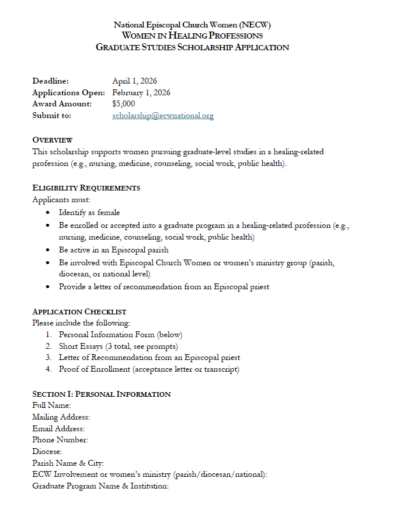
Women in Healing Professions Graduate Studies Scholarship Application

Deadline:                   April 1, 2026

Applications Open:   February 1, 2026

Award Amount:         $5,000

Submit to:                   scholarship@ecwnational.org

Download the Application

Overview

This scholarship supports women pursuing graduate-level studies in a healing-related profession (e.g., nursing, medicine, counseling, social work, public health).

Eligibility Requirements

Applicants must:

  • Identify as female
  • Be enrolled or accepted into a graduate program in a healing-related profession (e.g., nursing, medicine, counseling, social work, public health)
  • Be active in an Episcopal parish
  • Be involved with Episcopal Church Women or women’s ministry group (parish, diocesan, or national level)
  • Provide a letter of recommendation from an Episcopal priest

Application Checklist

Please include the following:

  1. Personal Information Form (below)
  2. Short Essays (3 total, see prompts)
  3. Letter of Recommendation from an Episcopal priest
  4. Proof of Enrollment (acceptance letter or transcript)

Section I: Personal Information

Full Name:

Mailing Address:

Email Address:

Phone Number:

Diocese:

Parish Name & City:

ECW Involvement or women’s ministry (parish/diocesan/national):

Graduate Program Name & Institution:

Degree Pursued:

Anticipated Graduation Date:

Section II: Essay Prompts (300 words each)

  1. Describe your call to a healing profession. What motivated your pursuit of graduate study in your field (e.g., nursing, medicine, social work, counseling)? How does your faith inform your approach to care and justice?
  2. How has your involvement in ECW and parish life nurtured your sense of service and vocation?
  3. How would this scholarship support your academic and professional goals in the healing professions?

Section III: Letter of Recommendation

Please include one letter of recommendation from an Episcopal priest who knows you well and can speak to your faith, character, and commitment to ministry or healing work. Please email letter of recommendation to scholarship@ecw.org.

Submission Instructions

All application materials, except for letter of recommendation, must be submitted as a single PDF by April 1, 2026. Incomplete applications will not be considered.

Email to:          scholarship@ecw.org

2026-02-11T21:07:30+00:00February 6th, 2026|

ERD Tool Kit

16 Days Activism 2025Grace, Justice & Hope

for Women & Girls Everywhere

A Toolkit To Work Together For Lasting Change

The National Episcopal Church Women (NECW) Board Social Justice Committee is joining hands with Episcopal Relief & Development to answer a shared call: to uplift women and girls everywhere and help them thrive in safety, dignity, and opportunity. Together, we invite our faith communities, families, and friends to engage in this transformative work through a powerful and flexible collaborative toolkit.

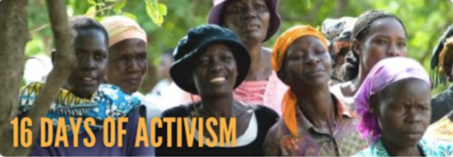
This initiative calls us to action — to empower women, strengthen economic stability, cultivate women leaders, and work boldly to reduce violence in all its forms. Grounded in faith and justice, the Social Justice Committee has also lifted up two urgent commitments within this effort: the 16 Days of Activism Against Gender-Based Violence and advocacy for Missing and Murdered Indigenous Women and Girls.

We are called not only to care, but to act. This toolkit offers a meaningful pathway to become part of the solution. A simple yet impactful first step is completing the Wellness of Women & Girls in Your Community survey (page 9), helping us listen deeply and discern where our communities are most needed.

Episcopal Relief & Development invites us to engage through four guiding priorities:

Joy and Wonder – Faithfully nurturing early childhood development
Grace, Justice & Hope – Standing with women and girls everywhere
Nurture & Sustain – Building resilience through climate-focused action
Restore & Renew – Responding with compassion when disaster strikes

We encourage you to explore the full Episcopal Relief & Development toolkit — a rich collection of prayers, studies, outreach ideas, and resources from across the Church — and to let it inspire faithful action rooted in love, justice, and hope.

View the tool kit at the Episcopal Relief and Development website

2026-02-06T16:27:18+00:00February 5th, 2026|

January 2026 National ECW Board Meeting Summary

The National Episcopal Church Women (ECW) Board convened in San Antonio, Texas, from January 15–19, 2026.

On Sunday, the Board worshiped at Christ Episcopal Church, located in the historic Monte Vista District of San Antonio. The church’s beautiful stained-glass windows provided a peaceful and prayerful setting for worship. In keeping with longstanding tradition, the National ECW Board donates $1,000 to a charitable organization within the host diocese. This year, the Board is pleased to award a $1,000 grant to Threads of Blessing, an outreach ministry of Christ Episcopal Church that supports Ugandan women who create hand-stitched items sold in the United States.

Over the past year, the Board’s Social Justice initiative has focused on advocacy for Missing and Murdered Indigenous Women (MMIW). Building on this work, the Board is now bringing this issue to the global stage through participation at the 70th Commission on the Status of Women (CSW). The NGO Committee on the Status of Women, New York (NGO CSW/NY), is a coalition of civil society organizations and individuals advocating for gender equality and the rights and empowerment of women and girls in all their diversity. The priority theme for CSW 70 is ensuring and strengthening access to justice for all women and girls.

The NGO CSW will take place both virtually and in person from March 9–19, 2026. A National ECW virtual session titled Raising Awareness of Missing and Murdered Indigenous Women will be held on Wednesday, March 11, at 11:30 a.m. Central Standard Time. Indigenous Episcopal leaders will share insights on this critical issue and ways individuals and communities can advocate for justice and change. Registration will be required, and additional details will be shared when registration opens.

As part of its commitment to the spiritual, intellectual, and professional empowerment of women, the National ECW Board is proud to offer two annual scholarships funded through the NECW Memorial Fund. Each scholarship provides $5,000 to one recipient annually. Applicants must be actively involved in an Episcopal parish and demonstrate participation in Episcopal Church Women at the parish, diocesan, or national level. Applications open February 1, 2026, and must be submitted by April 1, 2026. Late or incomplete applications will not be accepted.

Scholarship Opportunities

  • Women in Theology Graduate Scholarship
    Supports women pursuing graduate degrees in theology or religious studies who seek to serve in ordained or lay ministry within The Episcopal Church or a related religious community.
  • Women in Healing Professions Graduate Scholarship
    Supports women pursuing graduate degrees in healing professions, including but not limited to nursing, medicine, social work, counseling, public health, or occupational therapy.

Another significant initiative approved at this meeting establishes a grant program offering up to $1,000 to new or inactive Diocesan ECWs. These grants are intended to support the creation of women’s ministries in dioceses without an ECW or to help re-energize those that have become inactive. A copy of the grant application is attached, and additional information will be available on the National ECW website.

Motions Approved During the San Antonio Meeting:

  • Approved Fran Bramblette as Secretary of the Board
  • Approved a $1,000 Province VII grant to Threads of Blessing
  • Corrected the Unified Gift recipient for Triennial to Native Health
  • Approved the donation of $1,341 from the MMIW fund to the Snowbird Fund of the Montana Community Foundation
  • Awarded $3,000 disaster relief grants to the Dioceses of Alaska, Jamaica, Olympia, and Taiwan
  • Awarded a $2,000 disaster relief grant to the Diocese of Los Angeles
  • Awarded $1,000 to the Diocese of West Texas in support of the Threads of Blessing ministry at Christ Episcopal Church, San Antonio
  • Approved proposed bylaw changes to be presented at the 2027 Triennial Assembly
  • Passed the 2026 budget
  • Approved the publication of three Communiqués in 2026
  • Approved compensating writers for Communiqué articles
  • Adopted an initiative to support Episcopal women’s participation—both in person and virtually—at the United Nations Commission on the Status of Women and to promote grassroots engagement at the parish, diocesan, and provincial levels

The Board also approved a motion to partner and collaborate with Lynnaia Main, The Episcopal Church Representative to the United Nations, including:

  • Sharing information about the UNCSW, its structure, and the global advocacy work carried out by participants
  • Assisting, as needed, with The Episcopal Church Bishops’ Delegation and the Anglican Communion delegation
  • Supporting The Episcopal Church’s engagement with the United Nations and the resulting advocacy and civic engagement throughout the Church

In addition to full Board sessions, the following committees met in San Antonio: Social Justice; Triennial; Finance; Creation Care and Environmental Justice; Marketing; Scholarship; Startup Grants; and Bylaws, Policies, and Procedures.

Your National ECW Board remains committed to advancing new programs that strengthen the Kingdom of God and serve the women of The Episcopal Church. Those interested in becoming more involved are encouraged to contact their Diocesan or Provincial President. A complete list of contacts is available at www.ecwnational.org

2026-02-05T18:22:54+00:00February 5th, 2026|

President Report 12-2025

President’s Report
National Episcopal Church Women Board Meeting
Reporting Period: September–December 2025

Since the September 2025 Board Meeting, I have remained actively engaged in representing and advancing the mission and ministry of the National Episcopal Church Women through worship leadership, governance, communications, partnerships, and provincial and diocesan engagement.

Provincial, Diocesan, and National Engagement
In October, I had the honor of serving as keynote speaker at the Arkansas ECW Fall Gathering (October 10–11), offering reflections on the theme “Cultivate and Let Go.” I also attended the Province I ECW Annual Meeting via Zoom on October 18, along with the virtual event Balancing Act: Master the Art of ECW Budgeting, which was later posted to the NECW YouTube channel on October 19. On December 4, I was also in attendance for the stellar presentation of Saying ‘No” to Gender Violence: The Rape of Tamar” by the National ECW Chaplain Rev. Dr. Gayle Fisher-Stewart. This presentation was later posted on our YouTube channel also.

On November 15, I attended the Diocese of North Carolina ECW Annual Meeting in Winston-Salem, NC, where I served as keynote speaker. My presentation included my personal testimonial, an overview of National ECW initiatives, reflections on spiritual cultivation and release, and a visioning session focused on the future of ECW. I also participated as a speaker at the Province V ECW Meeting held November 22–23 at Bellwether in Ohio.

Committee Work and Governance
Throughout this reporting period, I remained engaged in National ECW governance. On October 14, 2025 the National ECW Secretary, Patricia Rutenberg, resigned from her position. The Executive Committee met on October 16 to discuss possible candidates for the office. I present to the board for consideration as Secretary, Fran Bramblette. Fran has served the Diocese of Alabama ECW as the Birmingham Convocation Co-Coordinator for two two-year terms, as President-Elect for one term and as President for one term. She was recognized as the Distinguished Woman from the Diocese of Arkansas at Triennial 2024.

I also attended the Joint Standing Committee on Planning and Arrangements meeting via Zoom on November 5 and the Finance Committee meeting on November 19. Additionally, I attended the Church Women United Common Council meeting on November 20. On December 3, I met with the Ad Hoc Committee that is developing a grant program for inactive and new Diocesan ECWs to start or restart ECWs. This is a promising new program that we are hoping will promote new Diocesan ECW Chapters.

I have sought clarification from DFMS on per diem reimbursements for the board. In response I was informed that DFMS would be moving to a new platform for reimbursements in 2026 and that new travel policies would be announced at the introduction of this new system.

Communications and Digital Ministry
I met regularly with our communications team—John Wilkerson and Gloria Rogers—on October 27, November 24, and December 22 for communications review and planning. Topics discussed

included the monthly News Blasts, website updates, upcoming virtual events, and planning for the next Communiqué.

I continued to lead Morning Prayer on Facebook Live on October 1, October 8, October 29, November 26, and December 24, while also recruiting additional leaders to share in this ministry.

Justice, Advocacy, and Partnerships
I participated in multiple planning sessions with the International Anglican Women’s Network on October 20 and November 10 in preparation for the 16 Days of Activism, including Break the Silence Sunday. As part of this work, I scheduled the 16 Days of Activism posts on Facebook. I also attended Sacred Ground on October 26 and participated in the Coalition to Dismantle the Doctrine of Discovery Episcopal Indigenous Justice Roundtable via Zoom on December 16.

On behalf of the National ECW an application to host a Virtual Parallel Event at the NGO CSW70 Forum in New York City was submitted and accepted. The National ECW will be presenting a virtual workshop on “Raising Awareness of Missing and Murdered Indigenous Women” on Wednesday, March 11 at 12:30pm. The Social Justice and Communications Committees are now working on orchestrating this momentous event. On December 19, I met with Lynnaia Main and Annie Kate Jacobs to discuss attendance at UN NGO/CSW70 and National ECW’s potential participation.

Future Planning
Looking ahead, I solicited hotel bids for the January 2027 Board Meeting from locations in Cartagena, Colombia; Jackson, Mississippi; Fort Lauderdale, Florida; San Juan, Puerto Rico; Richmond, Virginia; and Santo Domingo, Dominican Republic. After careful consideration, the Hyatt Hotel in Cartagena, Colombia has been booked for the January 14-19, 2027 Board Meeting.

Conclusion
This season has been marked by deep engagement across the Church, strengthened partnerships, intentional communications planning, and faithful leadership in worship, justice, and governance. I am grateful for the continued collaboration of the Board, officers, and committees as we move forward together in this ministry.

Respectfully submitted,
Lisa Bortner
President, National Episcopal Church Women

2026-02-06T16:00:14+00:00February 5th, 2026|
Go to Top